Featured
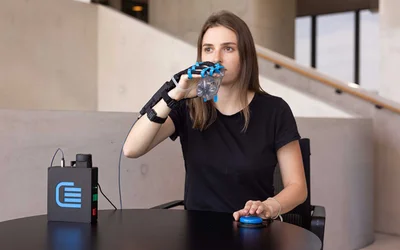
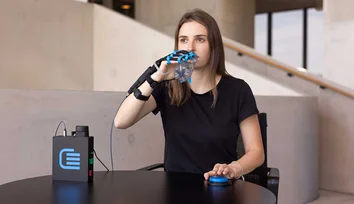
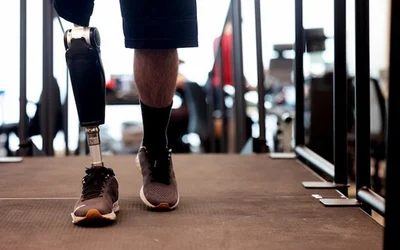
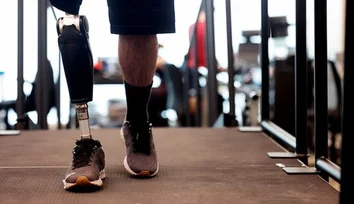
Prostheses that connect to the nervous system have been available for several years. Now, researchers at ETH Zurich have found evidence that neuroprosthetics work better when they use signals that are inspired by nature.
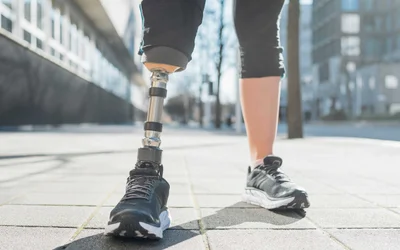
Prostheses that connect to the nervous system have been available for several years. Now, researchers at ETH Zurich have found evidence that neuroprosthetics work better when they use signals that are inspired by nature.
Prostheses that connect to the nervous system have been available for several years. Now, researchers at ETH Zurich have found evidence that neuroprosthetics work better when they use signals that are inspired by nature.
Bioengineered advancement may have implications for more natural-looking reconstructive surgery outcomes, according to international research team
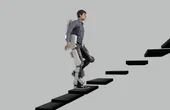
Somanity aims to revolutionize mobility for individuals with motor disabilities by developing an affordable 3D-printed exoskeleton.
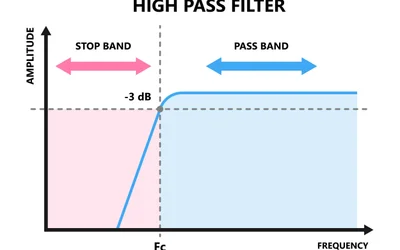
Active high-pass filters remove unwanted low-frequency signals while preserving useful higher frequencies. This article covers first- and second-order filter design, Sallen-Key and multiple-feedback topologies, and practical applications in audio electronics, instrumentation, and signal processing.
16 minutes read.
15 minutes read.
19 minutes read.
12 minutes read.
14 minutes read.


Entertainment
The Next Byte Podcast is hosted by two young engineers - Daniel and Farbod - who select the most interesting tech/engineering cont...
165 Posts

High Tech
High Tech Campus Eindhoven is Europe's smartest square km and has the ultim...
49 Posts

University for science and technology
Freedom and individual responsibility, entrepreneurial spirit and open-min...
43 Posts

University
At the Harvard John A. Paulson School of Engineering and Applied Sciences (...
42 Posts
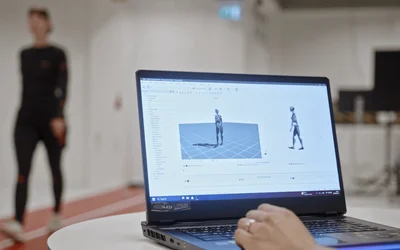
with Xsens motion capture
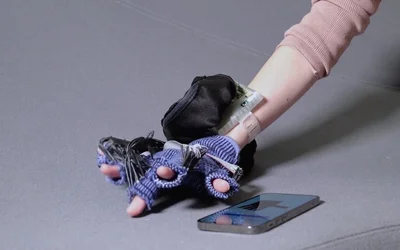
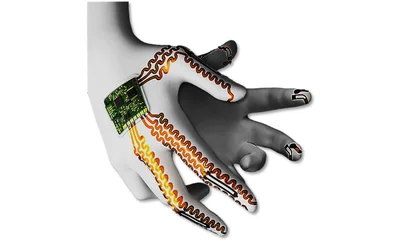
A new glove with more than three dozen actuators across all five fingers and the palm, developed by Cornell researchers, aims to reduce swelling for people suffering from edema.
AI-powered artificial muscles made from pliable materials are reshaping recovery, from stroke rehabilitation to prosthetic design. These machines help people regain motion, strength, and confidence.
Researchers at ETH Zurich have developed an innovative hand exoskeleton that helps persons after stroke re-learn how to grasp. Its accordion-like structure makes it light, robust and easy to integrate into everyday life.
AI-powered artificial muscles made from pliable materials are reshaping recovery, from stroke rehabilitation to prosthetic design. These machines help people regain motion, strength, and confidence.
Paired with custom control software, Össur's powered knee prosthesis helped study participants sit, stand and walk more easily.
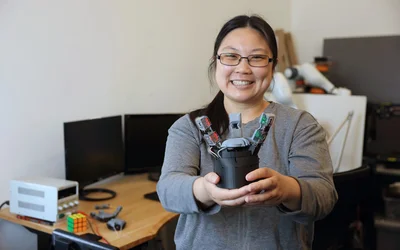
MIT CSAIL researchers enhance robotic precision with sophisticated tactile sensors in the palm and agile fingers, setting the stage for improvements in human-robot interaction and prosthetic technology.
In this episode, we discuss a breakthrough from ETH Zurich to mimic natural foot signals to the brain using state of the art neuroprosthetics.
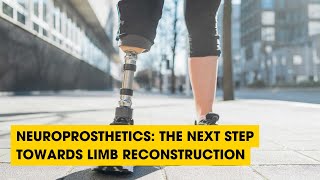
Prostheses that connect to the nervous system have been available for several years. Now, researchers at ETH Zurich have found evidence that neuroprosthetics work better when they use signals that are inspired by nature.

6 minutes read
Bioengineered advancement may have implications for more natural-looking reconstructive surgery outcomes, according to international research team

4 minutes read
Somanity aims to revolutionize mobility for individuals with motor disabilities by developing an affordable 3D-printed exoskeleton.
Silver/silver chloride (Ag/AgCl) is a conductive ink typically used to print electrodes for biomedical applications.

3 minutes read
Explore and address needs in assistive technology, creating meaningful solutions for individuals with disabilities. Win great prizes!
Researchers at EPFL have developed a new, uniquely modular machine learning model for flexible decision-making. It is able to input any mode of text, video, image, sound, and time-series and then output any number, or combination, of predictions.

3 minutes read
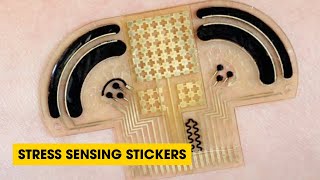
In this episode, we discuss the shortcomings of previous attempts at making flexible wearable sensors and how researchers at CalTech have addressed them to create high performance stress sensor stickers.

19 minutes read
For those with stroke, involuntary contractions of the hands and arms often follow. A simple, wearable vibrating glove may offer a more effective treatment.

4 minutes read
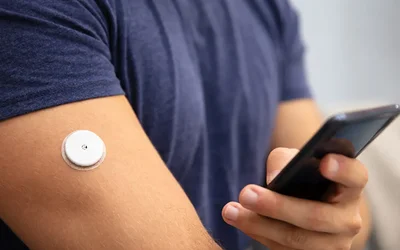
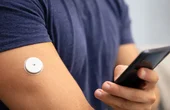
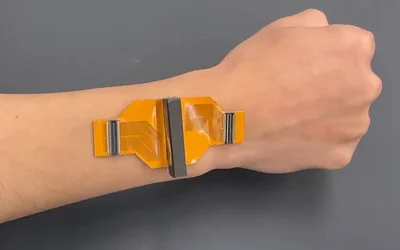
The sticky, wearable sensor could help identify early signs of acute liver failure.
As the IoT matures, analysts forecast that NB-IoT and LTE-M (cellular IoT) are likely to become the dominant technologies for connecting local area networks (LANs) or standalone wireless devices over kilometer distances to the Cloud.

4 minutes read
In this episode, we talk about a new AI designed catheter that is 100x safer than and how it came to be after a passive conversation about fun facts between two researchers.
17 minutes read
Nanorobotics is the next step in creating life-changing technology for the medical industry. These microscopic robots will be able to travel and think autonomously to find and fix health issues in the body.

4 minutes read
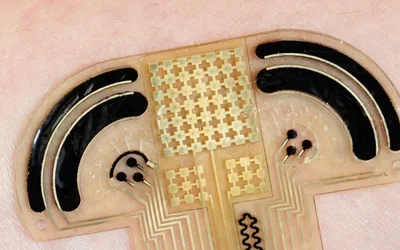
In the latest of a series of innovative designs for wearable sensors that use sweat to identify and measure physiological conditions, Caltech's Wei Gao has devised an "electronic skin" that continuously monitors nine different markers that characterize a stress response.

4 minutes read
Although artificial intelligence in health has shown great promise, pressure is mounting for regulators around the world to act, as AI tools demonstrate potentially harmful outcomes.
In this episode, we discuss the breakthrough in tissue engineering from Rensselaer Polytechnic Institute which enables the creation of skin tissue with functional hair follicles and its benefits to the medical field.
13 minutes read