Featured
Georgia Tech engineers have solved common problems (slow lithium-ion transport and poor mechanical properties) using rubber electrolytes.

Georgia Tech engineers have solved common problems (slow lithium-ion transport and poor mechanical properties) using rubber electrolytes.
Georgia Tech engineers have solved common problems (slow lithium-ion transport and poor mechanical properties) using rubber electrolytes.
A new biologically inspired battery membrane has enabled a battery with five times the capacity of the industry-standard lithium ion design to run for the thousand-plus cycles needed to power an electric car.
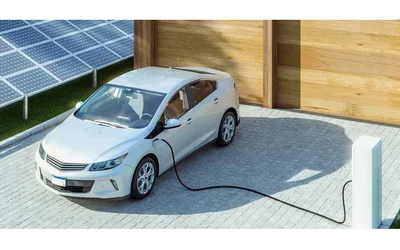
An electric car that runs on PV power sounds appealing. But is it really possible to enjoy flexibility with a vehicle charged through a home photovoltaic system? An ETH research team has reached some surprising conclusions.
The motor control center puts the starters, protection and controls for many electric motors into one lineup of cabinets. This guide explains what it is, how it is built, how it differs from switchgear and a VFD, and what current standards expect for safety and maintenance.
17 minutes read.
13 minutes read.
13 minutes read.
17 minutes read.
16 minutes read.
16 minutes read.



Electrical and Electronic Manufacturing
Drop-in power cords that improve battery performance.
18 Posts

University
KIT is one of the biggest research and education institutions worldwide and...
17 Posts

University
For almost two centuries DTU, Technical University of Denmark, has been ded...
16 Posts
Developers report equivalent capacity, first-cycle efficiency, fast charging, and an estimated 130 kg less direct CO₂e per tonne of coated graphite.
A solid oxide fuel cell converts fuel directly into electricity through a ceramic electrolyte that conducts oxygen ions at high temperatures. This guide covers the electrochemistry, the material choices, where the efficiency really comes from, and the degradation mechanisms.
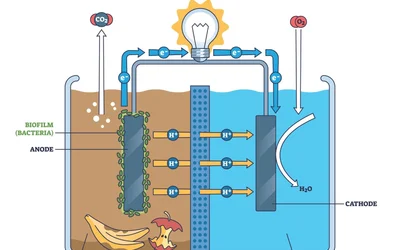
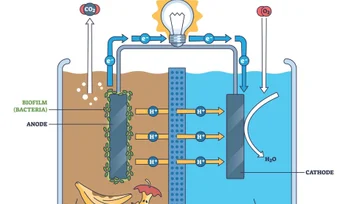
A microbial fuel cell turns the metabolism of living bacteria into an electrical current. This guide covers the electrochemistry, microbiology, materials, real performance numbers from pilot plants, and the economics that still keep the technology out of mainstream power generation.
A PEM fuel cell converts hydrogen and oxygen into electricity at around 80 degrees C, with water and heat as the only products. This guide covers electrochemistry, layer materials, efficiency limits, and cost and durability to help you understand the practical applications of this technology.
This article explains how load cells work, the main types, what accuracy specs and OIML/NTEP classes mean, and best practices for sizing, wiring, and installation.
Georgia Tech engineers have solved common problems (slow lithium-ion transport and poor mechanical properties) using rubber electrolytes.

3 minutes read
A new biologically inspired battery membrane has enabled a battery with five times the capacity of the industry-standard lithium ion design to run for the thousand-plus cycles needed to power an electric car.

3 minutes read
An electric car that runs on PV power sounds appealing. But is it really possible to enjoy flexibility with a vehicle charged through a home photovoltaic system? An ETH research team has reached some surprising conclusions.

4 minutes read
Cold-weather-friendly formula foils snow/ice accumulation in Alaska test.
3 minutes read
A guide to leverage energy harvesting technology, meet peak power requirements for data transmission, and pairing batteries with supercapacitors as an energy storage system.

7 minutes read
Together with European research partners, the German Aerospace Center (DLR) has developed a process that can generate electricity in a climate-neutral way using sulphur and solar energy. Initial tests with a pilot-scale plant have now been successfully completed.

4 minutes read
In this episode, we talk about some of our favorite projects from Wevolver’s Student Researcher Program ranging from hydrogen powered cars and planes, a novel approach for battery recycling, and an innovative machine for boring new tunnels for hyperloop systems.

In this episode, we talk about how Australian National University researchers broke the world record for solar cell efficiency and a new AI-powered device coming out of MIT that can help you determine if the material you want to use for laser cutting is safe + what settings to use.
using Xsens Inertial Motion Tracking technology

3 minutes read
In this episode, we talk about a research out of Stanford University shedding light on the effectiveness of AI policing social media, How studying Marsquakes is providing valuable insight regarding the red planet’s origin, an EPFL effort to prevent lead leakage from solar cells using phosphate salts
2 minutes read
In this episode, we talk about a graduate student’s thesis which resulted in a robot that’ll allow you to hug loved ones that are far away, how artificial photosynthesis might hold the key to our energy crisis, and a novel technique to conduct spinal stimulation therapy via non-invasive surgery.
In this episode, we talk about NASA’s new packable solar sail for deep space travel, how to prevent cyber attacks by fixing memory vulnerabilities, and how flying robots could be the solution to our space trash problem.
Automated systems can run on pulses of light which are absorbed and stored in phosphorescent material.

3 minutes read
Smartphone battery life remains a frustration for many users. The same problem also applies to a wide range of IoT devices. Although it’s easy to bury yourself in detail seeking a perfect solution, it’s important not to lose sight of the broader picture.

4 minutes read
Community-scale batteries are already achievable in Australia, will complement existing household batteries and will allow more solar energy to be stored in our suburbs, analysis from The Australian National University (ANU) shows.