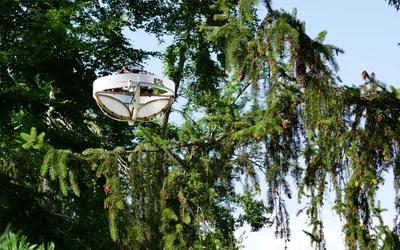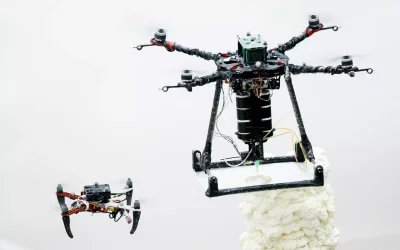
Researchers at ETH Zurich and the Swiss Federal research institute WSL have developed a flying device that can land on tree branches to take samples. This opens up a new dimension for scientists previously reserved for biodiversity researchers.
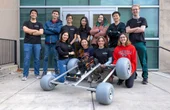
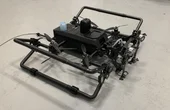
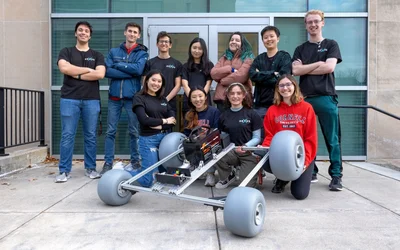
Beach cleaning operations focus on removing the waste we can see, such as plastic water bottles and trash, often using gas-powered tractors that bury microplastics beneath the top layer of sand. In contrast, the Cornell Nexus robot will use renewable solar energy to collect and remove microplastic waste.
Unveiling the Duel of Digital Design - A Comprehensive Exploration of History, Syntax, and Applications of the two popular hardware description languages
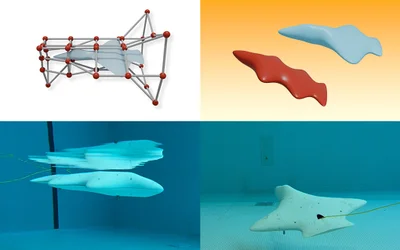
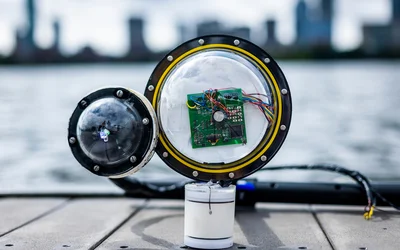
An AI pipeline developed by CSAIL researchers enables unique hydrodynamic designs for bodyboard-sized vehicles that glide underwater and could help scientists gather marine data.
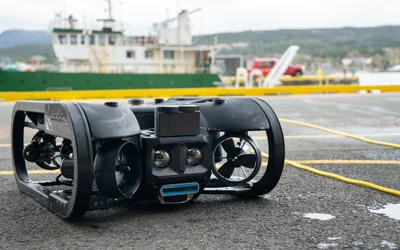
Discover how Deep Trekker rigorously tests and evaluates IMU technologies, comparing MEMS and FOG systems to ensure precise underwater navigation for ROVs.
Discover the vital role of underwater positioning in marine science, and how remotely operated vehicles (ROVs) are leading the way in location tracking.
Researchers at ETH Zurich and the Swiss Federal research institute WSL have developed a flying device that can land on tree branches to take samples. This opens up a new dimension for scientists previously reserved for biodiversity researchers.
Beach cleaning operations focus on removing the waste we can see, such as plastic water bottles and trash, often using gas-powered tractors that bury microplastics beneath the top layer of sand. In contrast, the Cornell Nexus robot will use renewable solar energy to collect and remove microplastic waste.
Hummingbirds have extreme aerial agility and flight forms, which is why many drones and other aerial vehicles are designed to mimic hummingbird movement. Using a novel modeling method, researchers gained new insights into how hummingbirds produce wing movement, which could lead to design improvements in flying robots.
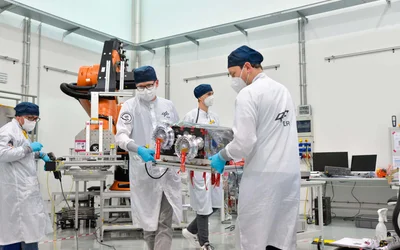
The origin of Mars’ two moons, Phobos and Deimos, is still unclear. To unravel this mystery, the Japan Aerospace Exploration Agency (JAXA) Martian Moons eXploration (MMX) mission is scheduled to launch in 2024.
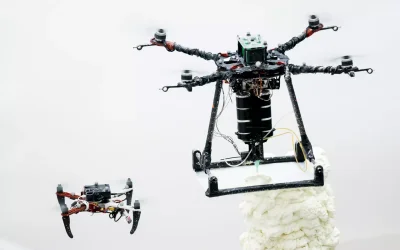
In this episode, we talk about how a team from TUM has developed a system composed of collaborative drones that can create structure in remote and/or disastrous areas.
Flightmare is an open-source simulator for quadrotors that moves away from rigid paradigms and proposes a flexible modular structure that empowers the users or automated algorithms to fine-tune the simulator to the task at hand.
In this episode, we talk about how researchers are developing tools to keep us safe using technology that ranges from ultra-heat resistant tents for fighters to drones capable of discovering hidden landmines.