Featured
Scientists at EPFL have unraveled the details of the first crucial step in the oxygen evolution reaction, a bottleneck for clean hydrogen production, using advanced simulations and machine learning techniques.

Scientists at EPFL have unraveled the details of the first crucial step in the oxygen evolution reaction, a bottleneck for clean hydrogen production, using advanced simulations and machine learning techniques.
Scientists at EPFL have unraveled the details of the first crucial step in the oxygen evolution reaction, a bottleneck for clean hydrogen production, using advanced simulations and machine learning techniques.
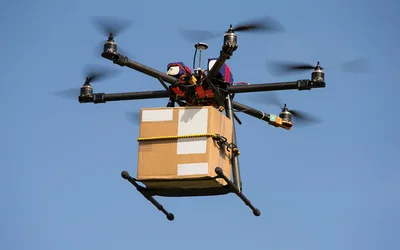
The system automatically learns to adapt to unknown disturbances such as gusting winds.
A team of international researchers led by EPFL developed a multilingual benchmark to determine Large Language Models ability to grasp cultural context.
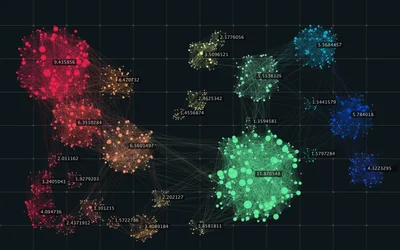
Unsupervised learning is a machine learning approach that finds patterns, structure, or useful representations in unlabeled data. It groups similar observations, compresses high-dimensional features, detects outliers, discovers item relationships, and supports modern representation learning.
13 minutes read.
17 minutes read.
11 minutes read.
16 minutes read.
14 minutes read.
14 minutes read.



High Tech
High Tech Campus Eindhoven is Europe's smartest square km and has the ultim...
49 Posts

University for science and technology
Freedom and individual responsibility, entrepreneurial spirit and open-min...
43 Posts
From leading experts at the CDFAM Computational Design Symposium
eCozy 2.0 system addresses the limitations of traditional thermostats for water heating radiators, delivering efficiency, convenience and sustainability benefits to households
Protect the cloud by securing the edge with hardware-based security, TPMs, HSMs, and resilient edge computing architectures.
Explore the rise of intelligent EV hardware and how real-time processing, ML acceleration, and hardware virtualization are enabling safer, smarter, software-defined electric vehicles.
With MVN Analyze
how Last Praetorian Interactive made Project Vesperi with one Xsens suit
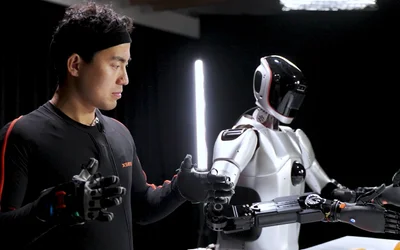
With Xsens Motion Capture
Scientists at EPFL have unraveled the details of the first crucial step in the oxygen evolution reaction, a bottleneck for clean hydrogen production, using advanced simulations and machine learning techniques.

3 minutes read
The system automatically learns to adapt to unknown disturbances such as gusting winds.
A team of international researchers led by EPFL developed a multilingual benchmark to determine Large Language Models ability to grasp cultural context.
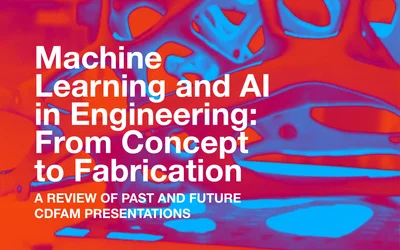
A REVIEW OF PAST AND FUTURE CDFAM PRESENTATIONS

6 minutes read
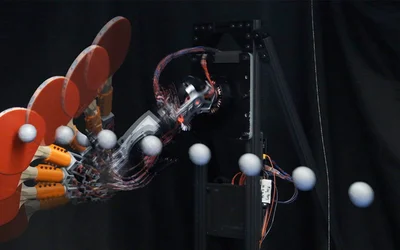
In addition to training future players, the technology could expand the capabilities of other humanoid robots, such as for search and rescue.
EPFL researchers have discovered key 'units' in large AI models that seem to be important for language, mirroring the brain's language system. When these specific units were turned off, the models got much worse at language tasks.
4 minutes read
New type of "state-space model" leverages principles of harmonic oscillators.
Explore how advanced computer vision technology transforms quality control in metal manufacturing and why it represents the industry's future.
"IntersectionZoo," a benchmarking tool, uses a real-world traffic problem to test progress in deep reinforcement learning algorithms.
A new method helps convey uncertainty more precisely, which could give researchers and medical clinicians better information to make decisions.
A new approach could enable intuitive robotic helpers for household, workplace, and warehouse settings.
EPFL researchers have developed the first AI model of language in the brain that captures both how neurons are arranged and how they function.
3 minutes read
ETH Zurich researchers have developed a method that makes AI responses increasingly reliable. Their algorithm specifically selects data relevant to the question. In addition, even AI models up to 40 times smaller achieve the same output performance as the best large AI models.

4 minutes read
A new method from the MIT-IBM Watson AI Lab helps large language models to steer their own responses toward safer, more ethical, value-aligned outputs.
The approach maintains an AI model’s accuracy while ensuring attackers can’t extract secret information.