Featured
This article explores the future of JFET technology in a world increasingly defined by sensor proliferation, distributed intelligence, and hybrid analog-digital systems.

This article explores the future of JFET technology in a world increasingly defined by sensor proliferation, distributed intelligence, and hybrid analog-digital systems.
This article explores the future of JFET technology in a world increasingly defined by sensor proliferation, distributed intelligence, and hybrid analog-digital systems.
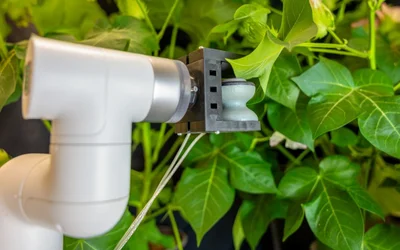
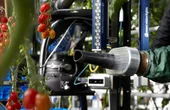
Cornell researchers have developed a soft robotic device that gently grips and injects living plant leaves with sensors that help it detect and communicate with its environment. The robot can also inject genetic material that could be used for bioengineering plants in the future.
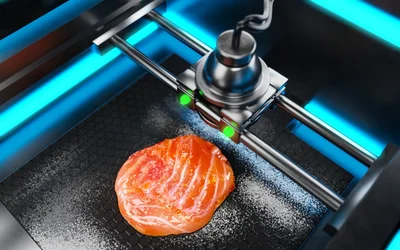
Explore the rise of 3D printing food, including market growth, printing technologies, material science, and real-world applications.
18 minutes read.

Production of industrial robots
At PeK Automotive, we develop a wide range of low voltage autonomous electr...
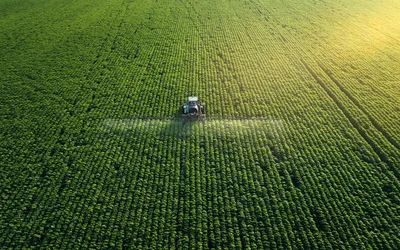
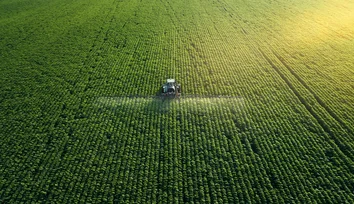
A deep dive into the technologies driving next-generation agriculture.
Nearly 30% of the energy consumed in the world is by the agriculture sector. However, with rising energy costs and increasing demand for sustainability, farms are being pushed to rethink the way they consume power.
Agricultural technology is now part of clean technology. As global demand for food continues to rise, farmers need to maximize agricultural productivity while ensuring environmental sustainability. This article examines advances in agritech within the context of cleantech.
Agriculture must feed 10 billion people by 2050 while cutting emissions and waste. Integrated photonics offers a solution with advanced sensors for efficient, high-yield farming.
How Aratas Is Enabling Climate Smart Data Driven Farming
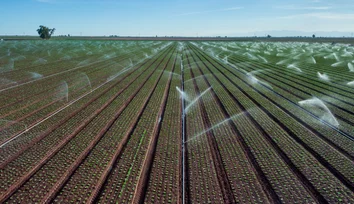
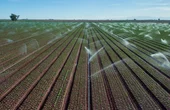
With a growing population and a changing environment, smart irrigation technology democratization could revolutionize global food production and water management.
With the expected population of the UK to be 73.7 million by 2036 and increased pressure to reach net zero by 2050, how does the Agriculture industry fair when challenged with growing populations, climate change, sustainability goals and resource inefficiencies?
It's no secret that digital manufacturing is revolutionising the agriculture industry. In this blog, we explore the five root causes of the insatiable appetite for digital manufacturing adoption in agriculture to understand how is making such an impact.
This article explores the future of JFET technology in a world increasingly defined by sensor proliferation, distributed intelligence, and hybrid analog-digital systems.
Cornell researchers have developed a soft robotic device that gently grips and injects living plant leaves with sensors that help it detect and communicate with its environment. The robot can also inject genetic material that could be used for bioengineering plants in the future.

4 minutes read
In this episode, we recap our favorite episodes from 2024!

25 minutes read
Agriculture must feed 10 billion people by 2050 while cutting emissions and waste. Integrated photonics offers a solution with advanced sensors for efficient, high-yield farming.
Vehicle and engine manufacturers, suppliers and science have joined forces in the "PoWer" project to comprehensively investigate the cross-application use of hydrogen engine drive train concepts for construction and agricultural applications.

3 minutes read
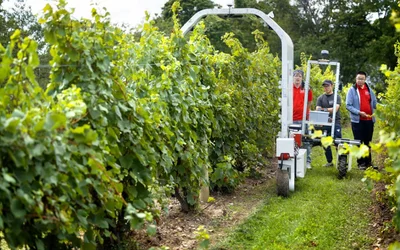
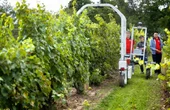
An autonomous robot – a base on wheels fitted with computer vision technology that snaps images of grapevines in near real-time – rolls down a long row of plants in a vineyard at Cornell AgriTech in Geneva, New York.
5 minutes read
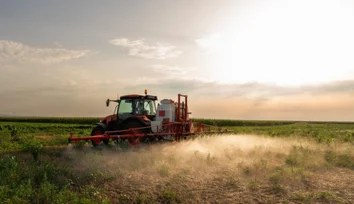
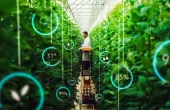
Learn about some of the trends driving the use of technology in agriculture.

9 minutes read
Agriculture has been a vital part of human history for over 12,000 years, marking a significant transition from hunting and gathering. Although the exact reasons for this shift are not clear, one theory suggests it was driven by the need for a more efficient way to obtain food.

4 minutes read
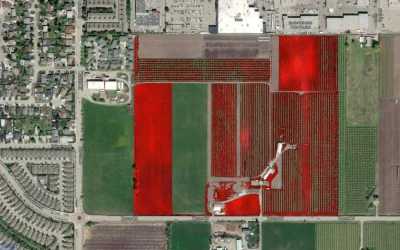
Kelowna Precision Agriculture Project

8 minutes read
With a growing population and a changing environment, smart irrigation technology democratization could revolutionize global food production and water management.
4 minutes read
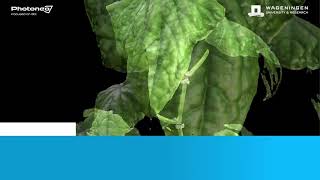
Wageningen University & Research is spearheading a pilot project focused on advancing cucumber plant phenotyping with unprecedented speed and accuracy, leveraging Photoneo's cutting-edge MotionCam-3D Color camera for the creation of digital twins with color and texture.

3 minutes read
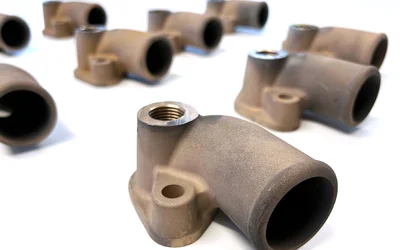
MAN Truck & Bus is embracing Replique’s production platform to manufacture spare parts on-demand. Starting with the production of bronze manifolds for the cooling water supply of a marine engine, MAN aims to undertake further projects in the future to reduce costs and further optimize their service.

3 minutes read
Explore the transformative power of precision agriculture, highlighting innovations like Particle's M-Series and the future of sustainable farming. Dive into the evolution, technologies, and trends shaping tomorrow's agriculture.
With the expected population of the UK to be 73.7 million by 2036 and increased pressure to reach net zero by 2050, how does the Agriculture industry fair when challenged with growing populations, climate change, sustainability goals and resource inefficiencies?

25 minutes read
Wi-Fi-enabled Edge AI is redefining how technology is leveraged in real time.