Featured
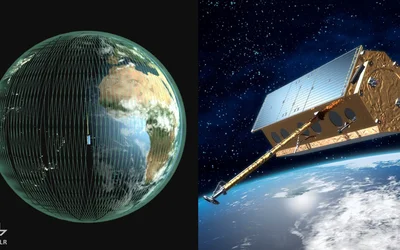
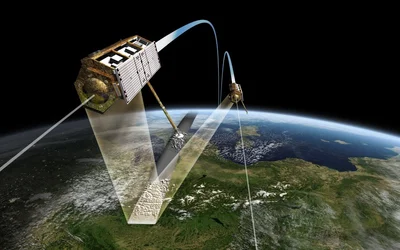
The German radar satellite TerraSAR-X will complete its 100,000th Earth orbit on 26 June 2025.

This white paper explains how precision timing solutions support reliable PNT architectures across aerospace, defense, and industrial systems.
The German radar satellite TerraSAR-X will complete its 100,000th Earth orbit on 26 June 2025.
Polymer glass transition temperature (Tg) refers to the temperature at which an amorphous polymer transitions from a glassy, rigid state to a rubbery, flexible state. Understanding the polymer glass transition temperature is crucial for various industries, including engineering and manufacturing.
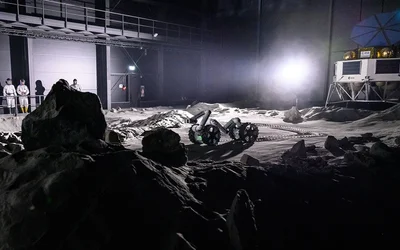
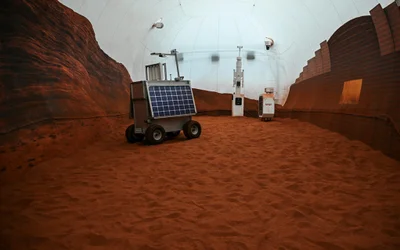
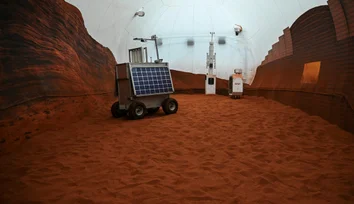
In recent days, rovers from Japan's Tohoku University have driven across LUNA's 'moon dust'. The robots, developed to operate and adapt using artificial intelligence (AI), have practised picking up stones, navigating independently and assembling themselves into larger robotic units.
Aerospace CNC machining is the backbone of modern aircraft production. This guide explains the theory and practice behind it.
12 minutes read.
16 minutes read.
16 minutes read.
9 minutes read.

Robotics and Drones
We empower R&D by providing the computational power, ROS packages, payloads...
14 Posts
Learn why growing hardware teams slow down as they scale, and how aligned workflows, parallel collaboration, and real-time design visibility restore speed and momentum.
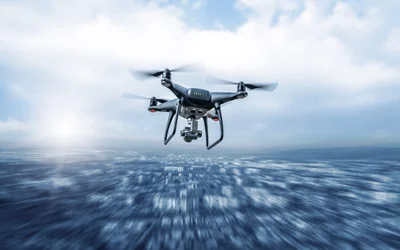
How standardized electronic identification will enable high-volume, complex drone operations.
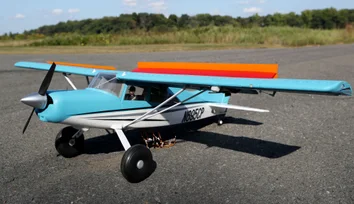
In this episode, we explore how the mechanics of bird wings are inspiring new approaches to prevent airplanes from stalling and learn how bio-mimetic designs from nature are paving the way for innovations in aviation, enhancing stability and safety for future flights.
Taking inspiration from bird feathers, Princeton engineers have found that adding rows of flaps to a remote-controlled aircraft’s wings improves flight performance and helps prevent stalling, a condition that can jeopardize a plane’s ability to stay aloft.
In this episode, we explore NASA's successful test of a powerful new lithium-fed electric thruster that could one day power human missions to Mars.
A novel electromagnetic thruster passed an initial test in a specialized chamber at JPL. With further development, these thrusters could support human missions to the Red Planet.
Humanity's drive to explore has taken us across the solar system, with astronaut boots, various landers and rovers' wheels exploring the surfaces of several different planetary bodies.
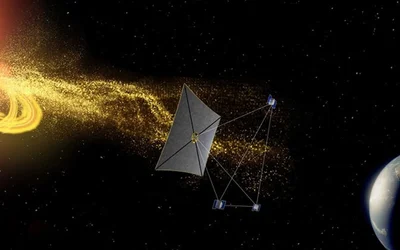
A spacecraft that sails on light could provide new vantage point on solar eruptions that can disrupt modern electrical and navigation systems.
The German radar satellite TerraSAR-X will complete its 100,000th Earth orbit on 26 June 2025.

3 minutes read
Polymer glass transition temperature (Tg) refers to the temperature at which an amorphous polymer transitions from a glassy, rigid state to a rubbery, flexible state. Understanding the polymer glass transition temperature is crucial for various industries, including engineering and manufacturing.
In recent days, rovers from Japan's Tohoku University have driven across LUNA's 'moon dust'. The robots, developed to operate and adapt using artificial intelligence (AI), have practised picking up stones, navigating independently and assembling themselves into larger robotic units.
5 minutes read
French company leverages AdaCore's tools, training, and mentorship services to produce flight software for small satellite launchers
Researchers show how collecting fewer, higher-quality data points can speed simulation algorithms and produce better results.

3 minutes read
Aerospace 3D printing has emerged as a transformative technology in the aviation and space industries, revolutionizing component design, prototyping, and manufacturing.

10 minutes read
On-site printing of lightweight PSU fillers slashes carbon impact and supply chain complexity—Finnair now sources spare parts locally in Dubai, Singapore, and beyond.

2 minutes read
One of the goals of building the Mars Rover is to demonstrate SPARK. As an early step, Fabien introduced a new hardware abstraction layer (HAL) on top of the existing HALs that had been developed for the various pieces of hardware that make up the Mars Rover.
By eliminating greenhouse-gas shielding and enabling 20% savings, this wire-based process could reshape aerospace and mobility parts manufacturing.
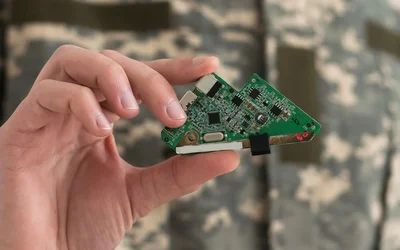
Reliability is a top priority in defense and aerospace electronics in harsh, unforgiving environments. The MIL-I-C standard is a guideline for conformal coating materials that helps keep PCBAs safe from military environments, ensuring dependable performance.
JFETs are vital components in satellite systems due to their low-noise performance, high input impedance, and superior radiation tolerance.
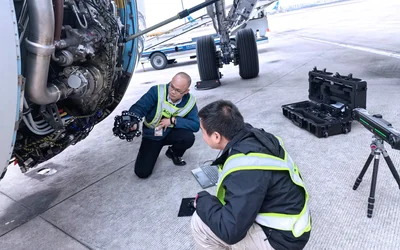
NimbleTrack delivers precision-tailored MRO fixture for aviation, solving the challenges of low accuracy and poor fit with traditional tools. It allows instant scanning right on the airport apron, capturing high-precision 3D data in just 10 minutes and significantly boosting maintenance efficiency.

4 minutes read
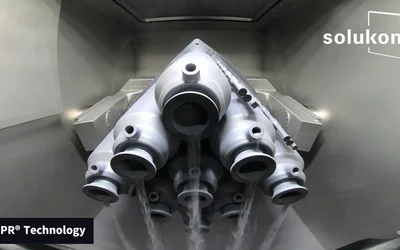
Comprehensive, repeatable, and scalable depowdering is the secret to L-PBF manufacturing efficiency
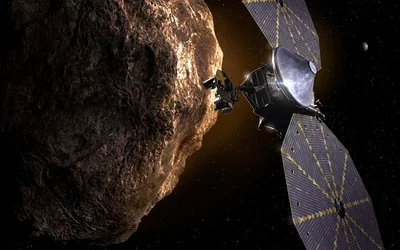
On 20 April 2025, NASA's Lucy spacecraft will fly past asteroid (52246) Donaldjohanson, which measures nearly four kilometres in diameter, at a distance of 960 kilometres.
5 minutes read
The world's first in-flight measurements of contrails from a hydrogen-powered turbojet engine have been conducted.
4 minutes read