Featuredcase study
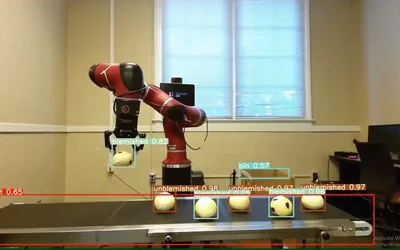
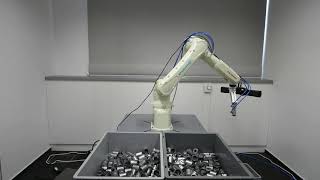
The University of Ostrava developed an application to automate the search for unknown objects within a large database using point clouds acquired from the 3D vision from Photoneo.
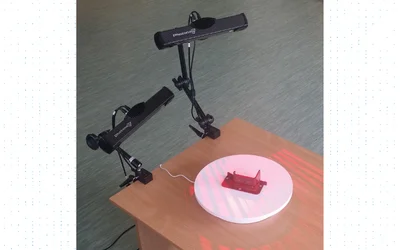
The University of Ostrava developed an application to automate the search for unknown objects within a large database using point clouds acquired from the 3D vision from Photoneo.
The University of Ostrava developed an application to automate the search for unknown objects within a large database using point clouds acquired from the 3D vision from Photoneo.
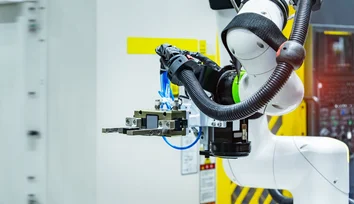
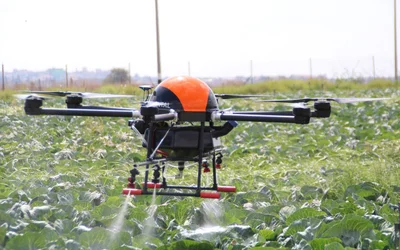
Photoneo 3D vision is used for dynamic generation of robot trajectory to navigate a robot in automated pressure washing of trailer tanks and lorries.
Let's take the well-known sea-rescuer, the dolphin, for example. Dolphin’s sensorium is more intended for the search of biological objects under water by use echolocation. At the same time, the military prefer to use dolphins to find metal objects (mines) rather than search & rescue drowning people
Artificial intelligence (AI) is a wide-ranging tool that enables people to rethink how we integrate information, analyze data, and use the resulting insights to improve decision making
15 minutes read.
20 minutes read.
13 minutes read.
17 minutes read.
25 minutes read.
11 minutes read.


Entertainment
The Next Byte Podcast is hosted by two young engineers - Daniel and Farbod - who select the most interesting tech/engineering cont...
165 Posts

High Tech
High Tech Campus Eindhoven is Europe's smartest square km and has the ultim...
49 Posts

University for science and technology
Freedom and individual responsibility, entrepreneurial spirit and open-min...
43 Posts
From leading experts at the CDFAM Computational Design Symposium
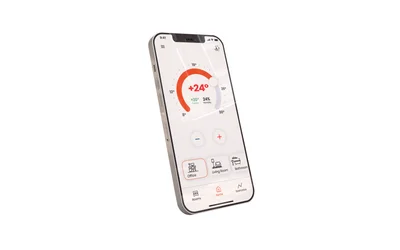
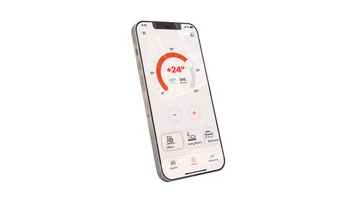
eCozy 2.0 system addresses the limitations of traditional thermostats for water heating radiators, delivering efficiency, convenience and sustainability benefits to households
Protect the cloud by securing the edge with hardware-based security, TPMs, HSMs, and resilient edge computing architectures.
Explore the rise of intelligent EV hardware and how real-time processing, ML acceleration, and hardware virtualization are enabling safer, smarter, software-defined electric vehicles.
EPFL researchers are developing AI models that could one day enable vision prosthetics able to restore meaningful, object-level sight for the blind.
A deep-dive listicle guiding controls, automation, and quality engineers toward the best vision systems for manufacturing applications in 2026.
Understanding industrial vision systems by examining their components, imaging fundamentals, AI integration since 2020, and how to choose the right solution for every application.
The AI-powered tool could inform the design of better sensors and cameras for robots or autonomous vehicles.
The University of Ostrava developed an application to automate the search for unknown objects within a large database using point clouds acquired from the 3D vision from Photoneo.

Photoneo 3D vision is used for dynamic generation of robot trajectory to navigate a robot in automated pressure washing of trailer tanks and lorries.
Let's take the well-known sea-rescuer, the dolphin, for example. Dolphin’s sensorium is more intended for the search of biological objects under water by use echolocation. At the same time, the military prefer to use dolphins to find metal objects (mines) rather than search & rescue drowning people
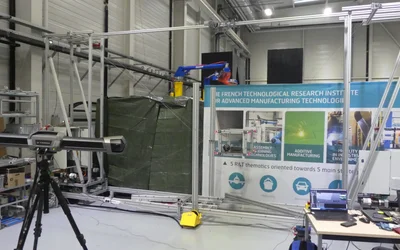
French manufacturing companies exist in a constantly changing economic sector. In order to better respond to their customers’ requirements and market pressures, they have to demonstrate innovation and a readiness to invest in factory modernization.

3 minutes read
A short guide to the technologies behind the next agricultural revolution.
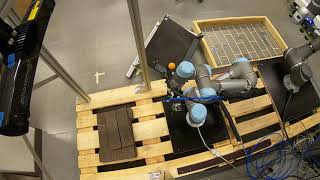
The JAMK University of Applied Sciences uses Photoneo PhoXi 3D Scanner and Bin Picking Studio to test bin picking for external companies and their specific applications.
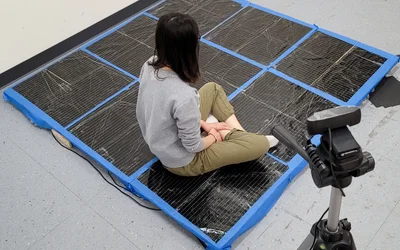
In this episode, we talk about how MIT has built a magic carpet to avoid privacy concerns with human body tracking, an initiative from Texas A&M to track nanoparticles in produce, and the novel approach from Carnegie Mellon to turn household items into sensors.

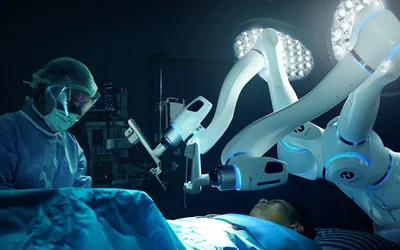
Advanced sensors and sophisticated AI power intuitive robotic assistant.

6 minutes read
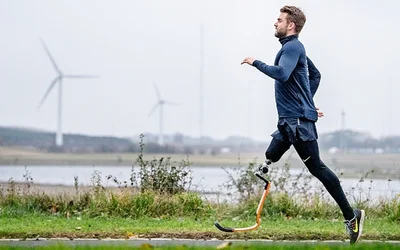
In this episode, we talk about a new machine learning model developed by NIST to predict flashover in burning buildings and protect firefighters, NASA’s new ultrasonic additive manufacturing approach, and an affordable, high performance athletic prosthetic.
AI on its own is not a Unique Selling Point but a commodity. Defining your use cases and applying AI in a smart way is what sets you apart from the rest. Your domain knowledge is what distinguishes you from your competitors.

5 minutes read
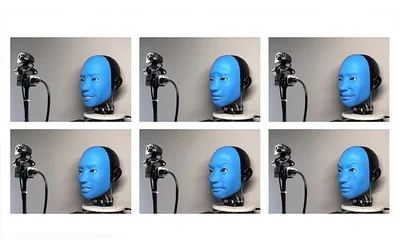
Columbia Engineering researchers use AI to teach robots to make appropriate reactive human facial expressions, an ability that could build trust between humans and their robotic co-workers and care-givers
Cobots when combined with Artificial Intelligence(AI), can effectively work alongside humans in the real world on their daily tasks. With an AI technique called Inverse Reinforcement learning (IRL), the robot can observe a human performing the task and learn how to do it quite intuitively.

3 minutes read
In this episode, we talk about the injectable microchip from Columbia University along with its applications in clinical settings, a global effort to develop two dimensional transistors, and a NASA Pathways Intern who created an AI powered system capable of detecting spacecraft failures.
Engineers at EPFL have developed a predictive control model that allows swarms of drones to fly in cluttered environments quickly and safely. It works by enabling individual drones to predict their own behavior and that of their neighbors in the swarm.

2 minutes read
There are two ways to mount a 3D vision system in the robotic cell, each having its advantages and each being more suitable for certain applications. However, there are many cases where hand-eye calibration surpasses the more traditional setup in a number of respects.
4 minutes read