Featured
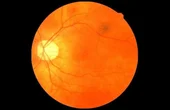
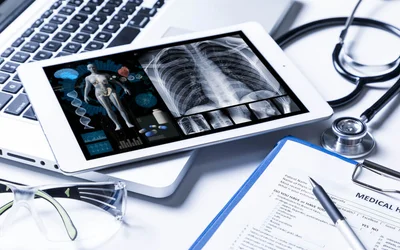
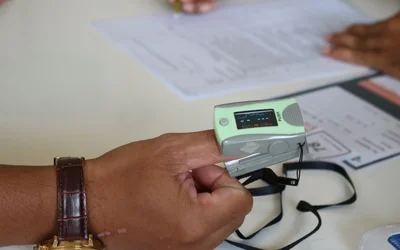
The proposed AI system has an accuracy between 70% and 80% that can be employed as a second referral mechanism for cardiovascular examination.
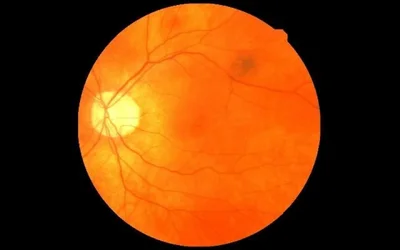
The proposed AI system has an accuracy between 70% and 80% that can be employed as a second referral mechanism for cardiovascular examination.
The proposed AI system has an accuracy between 70% and 80% that can be employed as a second referral mechanism for cardiovascular examination.
With research suggesting feral pigeons do as much as $1.1 billion in damage in the US alone, a project which pairs a commercial drone with machine learning to scare them away — without injury — could prove key to their control.
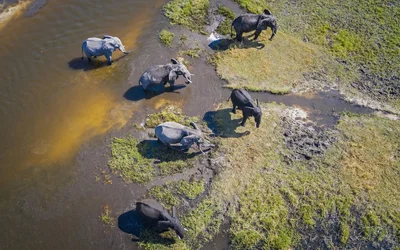
A team of experts in artificial intelligence and animal ecology have put forth a new, cross-disciplinary approach intended to enhance research on wildlife species and make more effective use of the vast amounts of data now being collected thanks to new technology.
Artificial intelligence (AI) is a wide-ranging tool that enables people to rethink how we integrate information, analyze data, and use the resulting insights to improve decision making
15 minutes read.
20 minutes read.
13 minutes read.
17 minutes read.
25 minutes read.
11 minutes read.


Entertainment
The Next Byte Podcast is hosted by two young engineers - Daniel and Farbod - who select the most interesting tech/engineering cont...
165 Posts

High Tech
High Tech Campus Eindhoven is Europe's smartest square km and has the ultim...
49 Posts

University for science and technology
Freedom and individual responsibility, entrepreneurial spirit and open-min...
43 Posts
From leading experts at the CDFAM Computational Design Symposium
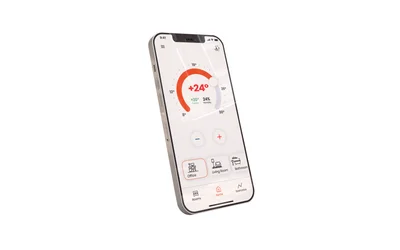
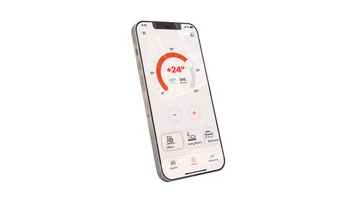
eCozy 2.0 system addresses the limitations of traditional thermostats for water heating radiators, delivering efficiency, convenience and sustainability benefits to households
Protect the cloud by securing the edge with hardware-based security, TPMs, HSMs, and resilient edge computing architectures.
Explore the rise of intelligent EV hardware and how real-time processing, ML acceleration, and hardware virtualization are enabling safer, smarter, software-defined electric vehicles.
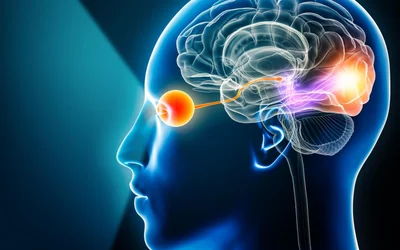
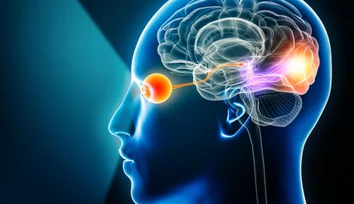
EPFL researchers are developing AI models that could one day enable vision prosthetics able to restore meaningful, object-level sight for the blind.
A deep-dive listicle guiding controls, automation, and quality engineers toward the best vision systems for manufacturing applications in 2026.
Understanding industrial vision systems by examining their components, imaging fundamentals, AI integration since 2020, and how to choose the right solution for every application.
The AI-powered tool could inform the design of better sensors and cameras for robots or autonomous vehicles.
The proposed AI system has an accuracy between 70% and 80% that can be employed as a second referral mechanism for cardiovascular examination.
With research suggesting feral pigeons do as much as $1.1 billion in damage in the US alone, a project which pairs a commercial drone with machine learning to scare them away — without injury — could prove key to their control.
A team of experts in artificial intelligence and animal ecology have put forth a new, cross-disciplinary approach intended to enhance research on wildlife species and make more effective use of the vast amounts of data now being collected thanks to new technology.

4 minutes read
A system developed by Grégoire Courtine and Jocelyne Bloch now enables patients with a complete spinal cord injury to stand, walk and even perform recreational activities like swimming, cycling and canoeing.
4 minutes read
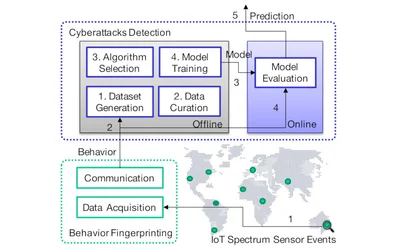
The CyberSpec framework is designed to detect anomalous behavior linked to cyber-attacks against crowd-sensing spectrum sensors, even when said sensors are running on lightweight resource-constrained hardware like a Raspberry Pi.
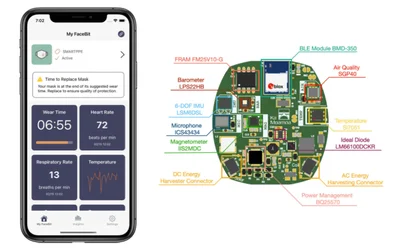
FaceBit aims to be low-cost, energy-efficient, and easy-to-integrate hardware with rich sensing functionalities– monitors physiological signals
By reconfiguring neural networks in artificial intelligence (AI) devices, a multi-institute team that included Penn State researchers facilitated AI systems to continually learn and adapt new data and tasks in ways that were not possible or practical before.

4 minutes read
ML can be deployed on Embedded Sensors to unleash the full power of Industry 4.0.
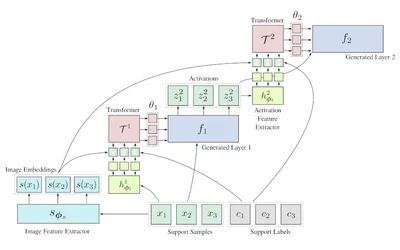
Developed at Google Research, HyperTransformer decouples the task space and individual task complexity to generate all model weights in just one pass — while also offering support for unlabeled sample ingestion.
In this article, we take a look at two tinyML projects related to healthcare. The first project helps gather Mean Radiant Temperature data outdoors to protect people from extreme heat, and the other one is a solution for affordable, accurate, & rapid detection of pneumonia.
Hardware and software engineers will be the lifeblood of tomorrow's connected world. Academia is working hard to ensure a steady supply, in part by adapting engineering education to train the next generation of IoT innovators.

3 minutes read
In this article, we look at two tinyML projects for education. We show how Backyard Brains uses low-cost experiment kits to make neuroscience education more accessible. We also introduce our readers to a specialisation offered by Harvard & Google to help students learn tinyML like never before.
Designed to dramatically reduce the amount of training data needed for an image recognition system, this one-shot approach "inspired by nativism" takes a leaf from humans' ability to intuit and abstract.
BottleFit framework applied DNN models in image classification achieves 77.1% data compression with up to 0.6% accuracy loss on the ImageNet dataset.
With the help of new technologies, artificial intelligence, and digital monitoring, more healthcare will be provided in patients’ homes.

3 minutes read