Featured
Considered obsolete since the introduction of vision transformers, ConvNeXt proves there's life in convolution yet — outperforming its rivals by adopting some of their own tricks.
Considered obsolete since the introduction of vision transformers, ConvNeXt proves there's life in convolution yet — outperforming its rivals by adopting some of their own tricks.
Considered obsolete since the introduction of vision transformers, ConvNeXt proves there's life in convolution yet — outperforming its rivals by adopting some of their own tricks.
A holistic open-source framework to improve the performance of multiple modalities and outperform the existing single-modality algorithms.
#6 of our 'Voice of Innovation' fireside chat series: Robotics and AI reporter Rachel Gordon speaks to IoT networking savant Wienke Giezeman.
Artificial intelligence (AI) is a wide-ranging tool that enables people to rethink how we integrate information, analyze data, and use the resulting insights to improve decision making
15 minutes read.
20 minutes read.
13 minutes read.
17 minutes read.
25 minutes read.
11 minutes read.


Entertainment
The Next Byte Podcast is hosted by two young engineers - Daniel and Farbod - who select the most interesting tech/engineering cont...
165 Posts

High Tech
High Tech Campus Eindhoven is Europe's smartest square km and has the ultim...
49 Posts

University for science and technology
Freedom and individual responsibility, entrepreneurial spirit and open-min...
43 Posts
From leading experts at the CDFAM Computational Design Symposium
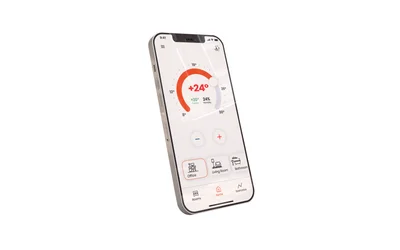
eCozy 2.0 system addresses the limitations of traditional thermostats for water heating radiators, delivering efficiency, convenience and sustainability benefits to households
Protect the cloud by securing the edge with hardware-based security, TPMs, HSMs, and resilient edge computing architectures.
Explore the rise of intelligent EV hardware and how real-time processing, ML acceleration, and hardware virtualization are enabling safer, smarter, software-defined electric vehicles.
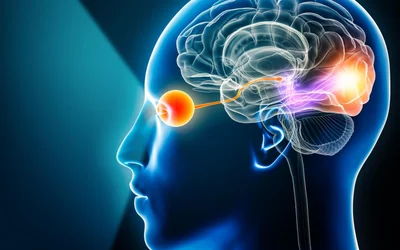
EPFL researchers are developing AI models that could one day enable vision prosthetics able to restore meaningful, object-level sight for the blind.
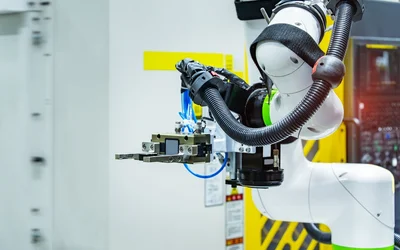
A deep-dive listicle guiding controls, automation, and quality engineers toward the best vision systems for manufacturing applications in 2026.
Understanding industrial vision systems by examining their components, imaging fundamentals, AI integration since 2020, and how to choose the right solution for every application.
The AI-powered tool could inform the design of better sensors and cameras for robots or autonomous vehicles.
Considered obsolete since the introduction of vision transformers, ConvNeXt proves there's life in convolution yet — outperforming its rivals by adopting some of their own tricks.
A holistic open-source framework to improve the performance of multiple modalities and outperform the existing single-modality algorithms.
#6 of our 'Voice of Innovation' fireside chat series: Robotics and AI reporter Rachel Gordon speaks to IoT networking savant Wienke Giezeman.
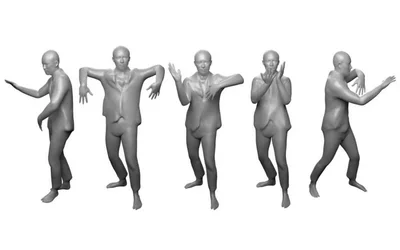
Soon, internet users will be able to meet each other in cyberspace as animated 3D avatars. Researchers at ETH Zurich have developed new algorithms for creating virtual humans much more easily.

4 minutes read
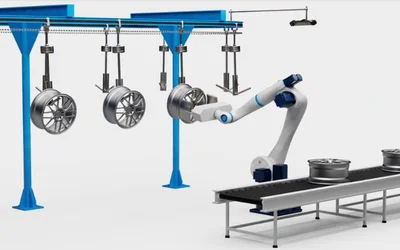
MotionCam-3D by Photoneo enables 3D scanning & handling of objects that are moving on an overhead conveyor without interruption. The camera provides high-quality 3D data even while the objects are moving, swinging, or slightly rotating.

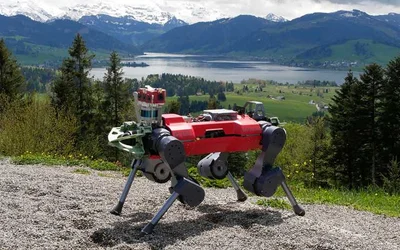
ETH researchers led by Marco Hutter developed a new control approach that enables a legged robot, called ANYmal, to move quickly and robustly over difficult terrain. Thanks to machine learning, the robot can combine its visual perception of the environment with its sense of touch for the first time.
3 minutes read
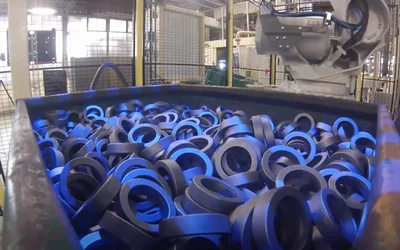
This handbook introduces the concept of bin-picking, and explores its complexity through real-case studies.

2 minutes read
Voice interface demands application-specific chips that can understand language.
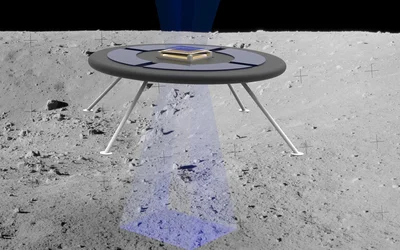
In this episode, we talk about MIT’s new ion propelled hovering rover destined to change the way we explore our universe and an emergency drone coming from TUM hoping to reduce the fatalities caused by cardiac arrest episodes.

Whether for squats or sit-ups, the software created by the start-up VAY alerts exercisers about incorrect movements via a smartphone screen. Now the ETH spin-off has been acquired by connected fitness equipment manufacturer Nautilus.
4 minutes read
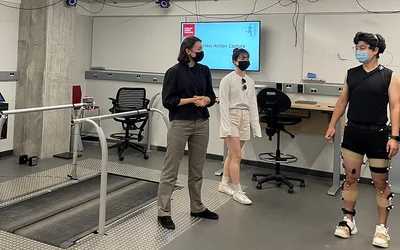
Wearable sensors plus computer vision could reduce the likelihood of degenerative joint disease.

3 minutes read
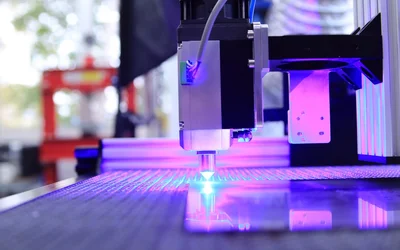
In this episode, we talk about how a breakthrough with compact laser nano-printers can make them more accessible for researchers and how leveraging 3D printing technology and machine learning will provide essential insight for developing next-gen cochlear implants.
Removing litter from oceans and seas is a costly and time-consuming process. As part of a European cooperative project, a team at the Technical University of Munich (TUM) is developing a robotic system that uses machine learning methods to locate and collect waste under water.
Ultra-precise lasers can be used for optical atomic clocks, quantum computers, power cable monitoring, and much more. But all lasers make noise, which researchers from DTU Fotonik want to minimize using machine learning.

4 minutes read
At READY we want to engage the landscape of developers outside the robotics industry to be programmers in the robotics industry.

4 minutes read