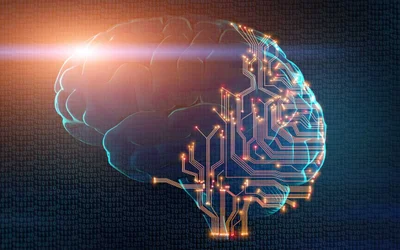
Artificial intelligence (AI) is a wide-ranging tool that enables people to rethink how we integrate information, analyze data, and use the resulting insights to improve decision making
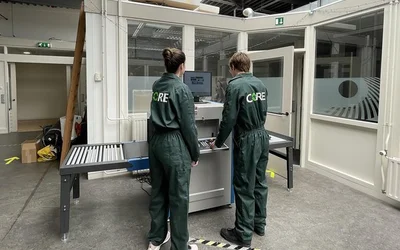
In large-scale warehousing and distribution operations, conveyor belts are an essential infrastructure that must operate with near-zero downtime to ensure the timely delivery of products. The presence of loose or foreign items on a conveyor belt can pose a serious risk to these operations.

To reduce waste, the Refashion program helps users create outlines for adaptable clothing, such as pants that can be reconfigured into a dress. Each component of these pieces can be replaced, rearranged, or restyled.
Smart eyewear promises to transform how we see and interact with the world. Among its many potential advantages, the technology offers hands-free access to information, vision enhancement, and accessibility tools.
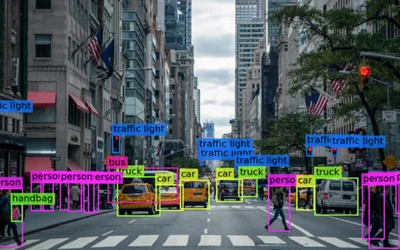
Matroid builds no-code computer-vision detectors that can spot everything from microscopic material defects to real-time safety hazards on a factory floor.
In large-scale warehousing and distribution operations, conveyor belts are an essential infrastructure that must operate with near-zero downtime to ensure the timely delivery of products. The presence of loose or foreign items on a conveyor belt can pose a serious risk to these operations.
In this post, we'll walk through how to evaluate that progress using the same metrics our platform provides automatically, so you can build detectors that get smarter, sharper, and more reliable over time.
The no-code platform from Matroid trains ordinary cameras to act like expert inspectors, turning simple footage into a pixel-level defect checklist. Even a handheld GoPro can spot issues human eyes miss—using remarkably small datasets.
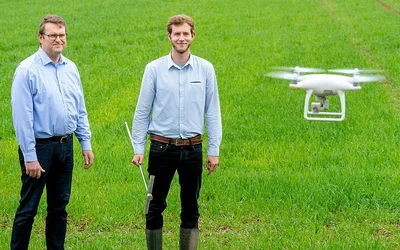
In this episode, we talk about a collaboration between two professors at Cornell University to combat the multi-billion dollar annual loss of grapes by combating powdery mildew using AI and how a novel material developed by NASA JPL researchers can significantly reduce the cost of robotics worldwide
Abagy Robotic Systems, the winner of Photoneo’s contest for the Best Application 2021, developed a revolutionary approach to automated welding enabled by advanced object detection and robot navigation.
In this episode, we talk about why we are going back to the Saturn system with NASA’s Dragonfly mission, how MIT PhD student’s AI Algorithm could expedite the drug that could cure duchenne muscular dystrophy, and a Cornell professors invention that can track your facial features throughout the day.
In this episode, we talk about how TUM researchers are trying to model the effects of climate change on forest fires using a neural network, why robots assisting with getting dressed is more challenging than it seems, how drones are being used to evacuate elderly in nursing homes during emergencies.
In this episode, we talk about a research out of Stanford University shedding light on the effectiveness of AI policing social media, How studying Marsquakes is providing valuable insight regarding the red planet’s origin, an EPFL effort to prevent lead leakage from solar cells using phosphate salts
The University of Ostrava developed an application to automate the search for unknown objects within a large database using point clouds acquired from the 3D vision from Photoneo.
Let's take the well-known sea-rescuer, the dolphin, for example.
Dolphin’s sensorium is more intended for the search of biological objects under water by use echolocation. At the same time, the military prefer to use dolphins to find metal objects (mines) rather than search & rescue drowning people
French manufacturing companies exist in a constantly changing economic sector. In order to better respond to their customers’ requirements and market pressures, they have to demonstrate innovation and a readiness to invest in factory modernization.
The JAMK University of Applied Sciences uses Photoneo PhoXi 3D Scanner and Bin Picking Studio to test bin picking for external companies and their specific applications.
In this episode, we talk about how MIT has built a magic carpet to avoid privacy concerns with human body tracking, an initiative from Texas A&M to track nanoparticles in produce, and the novel approach from Carnegie Mellon to turn household items into sensors.
In this episode, we talk about a new machine learning model developed by NIST to predict flashover in burning buildings and protect firefighters, NASA’s new ultrasonic additive manufacturing approach, and an affordable, high performance athletic prosthetic.