Featured
To be truly useful, drones—that is, autonomous flying vehicles—will need to learn to navigate real-world weather and wind conditions.
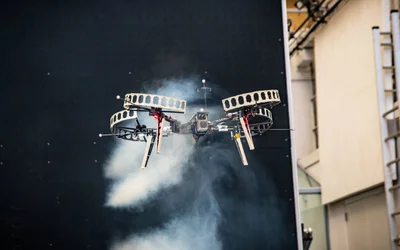
To be truly useful, drones—that is, autonomous flying vehicles—will need to learn to navigate real-world weather and wind conditions.
To be truly useful, drones—that is, autonomous flying vehicles—will need to learn to navigate real-world weather and wind conditions.
The fourth industrial revolution has the potential to fundamentally transform the way humans and machines work today. Will it lead to an improvement in the quality of life? Or will it be a cause of widespread job losses and unrest?
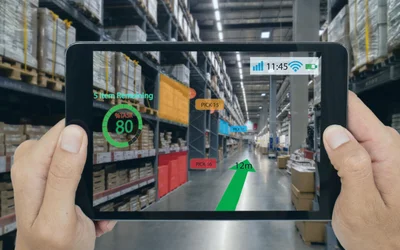
How retail uses IoT, AI, Computer Vision, VR, and AR to transform into an automated, data-rich, and highly personalized environment.
Artificial intelligence (AI) is a wide-ranging tool that enables people to rethink how we integrate information, analyze data, and use the resulting insights to improve decision making
15 minutes read.
20 minutes read.
13 minutes read.
17 minutes read.
25 minutes read.
11 minutes read.


Entertainment
The Next Byte Podcast is hosted by two young engineers - Daniel and Farbod - who select the most interesting tech/engineering cont...
165 Posts

High Tech
High Tech Campus Eindhoven is Europe's smartest square km and has the ultim...
49 Posts

University for science and technology
Freedom and individual responsibility, entrepreneurial spirit and open-min...
43 Posts
From leading experts at the CDFAM Computational Design Symposium
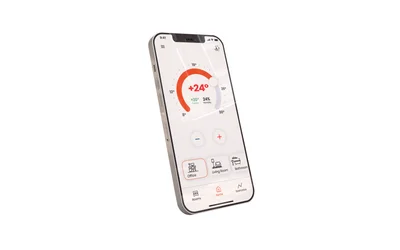
eCozy 2.0 system addresses the limitations of traditional thermostats for water heating radiators, delivering efficiency, convenience and sustainability benefits to households
Protect the cloud by securing the edge with hardware-based security, TPMs, HSMs, and resilient edge computing architectures.
Explore the rise of intelligent EV hardware and how real-time processing, ML acceleration, and hardware virtualization are enabling safer, smarter, software-defined electric vehicles.
EPFL researchers are developing AI models that could one day enable vision prosthetics able to restore meaningful, object-level sight for the blind.
A deep-dive listicle guiding controls, automation, and quality engineers toward the best vision systems for manufacturing applications in 2026.
Understanding industrial vision systems by examining their components, imaging fundamentals, AI integration since 2020, and how to choose the right solution for every application.
The AI-powered tool could inform the design of better sensors and cameras for robots or autonomous vehicles.
To be truly useful, drones—that is, autonomous flying vehicles—will need to learn to navigate real-world weather and wind conditions.

4 minutes read
The fourth industrial revolution has the potential to fundamentally transform the way humans and machines work today. Will it lead to an improvement in the quality of life? Or will it be a cause of widespread job losses and unrest?
How retail uses IoT, AI, Computer Vision, VR, and AR to transform into an automated, data-rich, and highly personalized environment.

9 minutes read
Axelera has recently joined the AI Innovation Center at High Tech Campus Eindhoven. The company is designing chips for AI on the edge with the aim to revolutionise the field and make AI accessible to everyone. They picked up an impressive 10 million euros in their seed investment round.

5 minutes read
In this episode, we talk about how an app leveraging 3 sets of machine learning algorithms aims to reduce waste and emissions by creating 3D models of feet and the hoverfly inspired AI that will be keeping airfields safe from small drones via acoustic mapping and filtering.

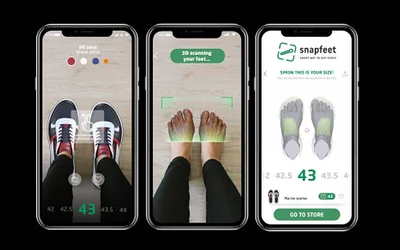
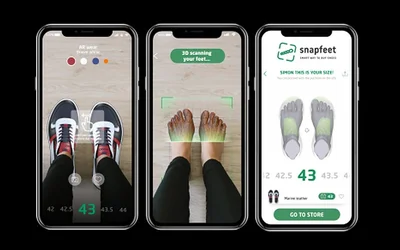
Snapfeet is a new mobile phone app that shows how well shoes will fit based on the 3D shape of the user’s foot. It also offers a simple augmented reality (AR) visualisation of what the shoes will look like on the feet.
Deep learning increases reliability and reduces false alarms
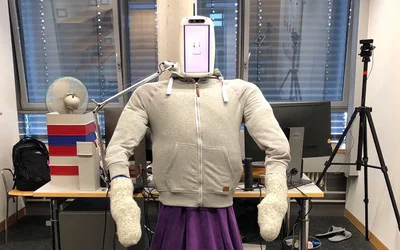
While the concept of a hugging robot may sound bizarre, the researchers behind the project — now in its third generation — believe that such a device could have a major impact on everything from social telepresence to elder care.
Imagine you could create thousands of options for a single design the push of a button and then you just pick the best option! Generative design makes this possible.

8 minutes read
Columbia computer scientists have built an algorithm that blocks a rogue microphone from correctly hearing your words—in English so far—80% of the time
With growing concern over microplastics from ocean waste, autonomous underwater vehicles — AUVs — have been proposed as a tool for cleaning up our seas, but only if they can pick the plastics out from the fish: Enter these tweaked EfficientDets, boosting accuracy for the task.
Designed to monitor the whole sky for signs of meteors, which can be traced back to their cometary origins, the CAMS project has recently received a big upgrade to its detection and visualization pipeline — with the SpaceML project bringing citizen scientists into the mix.
In this episode, we talk about how robotic technology is being leveraged to create a system capable of handling pizza dough and to offer an autonomous alternative that should address the primary shortcomings of conventional wheelchairs.
EPFL engineers have developed a silicone raspberry that can help teach harvesting robots to grasp fruit without exerting too much pressure.

3 minutes read
A framework that uses both audio and image modality for event classification– tested on COVID-19 prescreening and battlefield object detection, later evaluated on the Raspberry Pi 4 single-board computer.