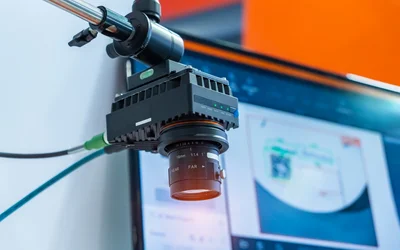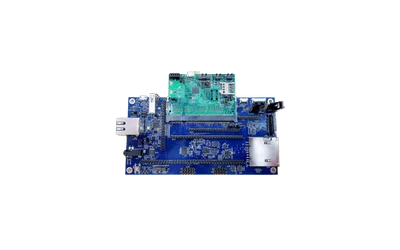
Artificial intelligence (AI) is a wide-ranging tool that enables people to rethink how we integrate information, analyze data, and use the resulting insights to improve decision making
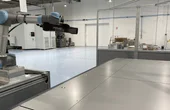
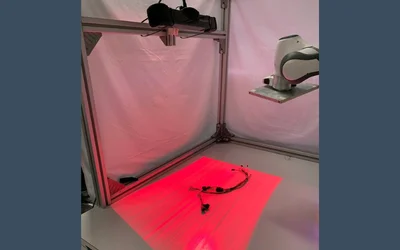
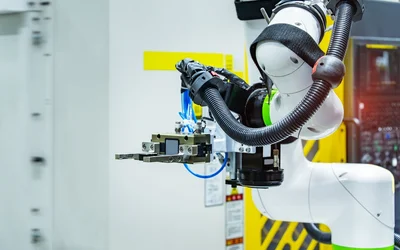
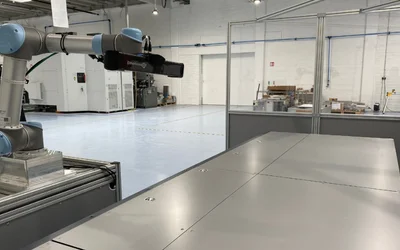
In large-scale warehousing and distribution operations, conveyor belts are an essential infrastructure that must operate with near-zero downtime to ensure the timely delivery of products. The presence of loose or foreign items on a conveyor belt can pose a serious risk to these operations.

To reduce waste, the Refashion program helps users create outlines for adaptable clothing, such as pants that can be reconfigured into a dress. Each component of these pieces can be replaced, rearranged, or restyled.
Smart eyewear promises to transform how we see and interact with the world. Among its many potential advantages, the technology offers hands-free access to information, vision enhancement, and accessibility tools.
Matroid builds no-code computer-vision detectors that can spot everything from microscopic material defects to real-time safety hazards on a factory floor.
In large-scale warehousing and distribution operations, conveyor belts are an essential infrastructure that must operate with near-zero downtime to ensure the timely delivery of products. The presence of loose or foreign items on a conveyor belt can pose a serious risk to these operations.
In this post, we'll walk through how to evaluate that progress using the same metrics our platform provides automatically, so you can build detectors that get smarter, sharper, and more reliable over time.
The no-code platform from Matroid trains ordinary cameras to act like expert inspectors, turning simple footage into a pixel-level defect checklist. Even a handheld GoPro can spot issues human eyes miss—using remarkably small datasets.
Columbia computer scientists have built an algorithm that blocks a rogue microphone from correctly hearing your words—in English so far—80% of the time
With growing concern over microplastics from ocean waste, autonomous underwater vehicles — AUVs — have been proposed as a tool for cleaning up our seas, but only if they can pick the plastics out from the fish: Enter these tweaked EfficientDets, boosting accuracy for the task.
In this episode, we talk about how robotic technology is being leveraged to create a system capable of handling pizza dough and to offer an autonomous alternative that should address the primary shortcomings of conventional wheelchairs.
Designed to monitor the whole sky for signs of meteors, which can be traced back to their cometary origins, the CAMS project has recently received a big upgrade to its detection and visualization pipeline — with the SpaceML project bringing citizen scientists into the mix.
A framework that uses both audio and image modality for event classification– tested on COVID-19 prescreening and battlefield object detection, later evaluated on the Raspberry Pi 4 single-board computer.
In this episode, we talk about how a group at MIT has developed an easy-to-use handheld device to treat internal bleeding and a joint effort between MIT and Imperial College London which resulted in a marine mammal call sensor that can leverage machine learning models locally
Using satellite imagery or road schematic maps as "side information," the ViKiNG robot can plan its own miles-long route to a goal — measurably outperforming its strongest competitors, even when its side information is inaccurate or outdated.
#7 of our 'Voice of Innovation' fireside chat series: Robotics and AI reporter Rachel Gordon speaks to Kokotov on his vision to understand every human voice.
There have been two distinct worlds in Artificial Intelligence for Robotics, the world of research, and the world of robotics in the factory. More and more, the promise of AI in the factory is setting these two worlds on a collision course.
Humans are usually pretty good at recognising when they get things wrong, but artificial intelligence systems are not. According to a new study, AI generally suffers from inherent limitations due to a century-old mathematical paradox.
Designed to bring machine learning to the Earth's last great frontier, a prototype smart sensor platform users on-device inference to classify marine mammal calls — powering itself exclusively from the sounds it captures.