Artificial intelligence (AI) is a wide-ranging tool that enables people to rethink how we integrate information, analyze data, and use the resulting insights to improve decision making
In large-scale warehousing and distribution operations, conveyor belts are an essential infrastructure that must operate with near-zero downtime to ensure the timely delivery of products. The presence of loose or foreign items on a conveyor belt can pose a serious risk to these operations.

To reduce waste, the Refashion program helps users create outlines for adaptable clothing, such as pants that can be reconfigured into a dress. Each component of these pieces can be replaced, rearranged, or restyled.
Smart eyewear promises to transform how we see and interact with the world. Among its many potential advantages, the technology offers hands-free access to information, vision enhancement, and accessibility tools.
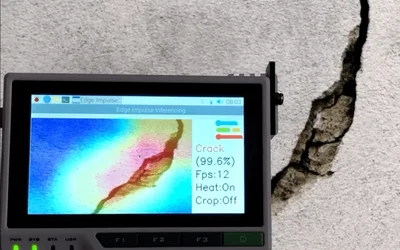
Matroid builds no-code computer-vision detectors that can spot everything from microscopic material defects to real-time safety hazards on a factory floor.
In large-scale warehousing and distribution operations, conveyor belts are an essential infrastructure that must operate with near-zero downtime to ensure the timely delivery of products. The presence of loose or foreign items on a conveyor belt can pose a serious risk to these operations.
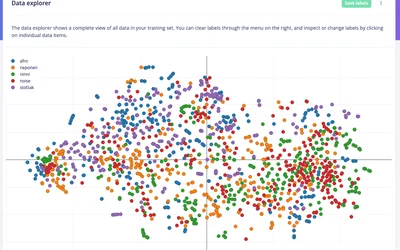
In this post, we'll walk through how to evaluate that progress using the same metrics our platform provides automatically, so you can build detectors that get smarter, sharper, and more reliable over time.
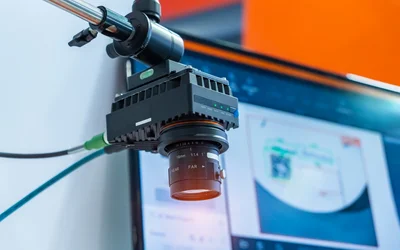
The no-code platform from Matroid trains ordinary cameras to act like expert inspectors, turning simple footage into a pixel-level defect checklist. Even a handheld GoPro can spot issues human eyes miss—using remarkably small datasets.
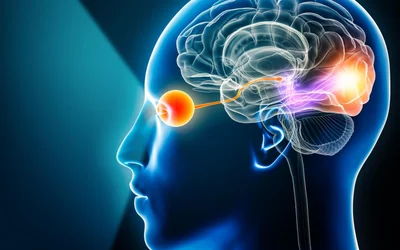
A dive into how AI is helping overcome limitations with current prosthetics by offering improved signal decoding, functionality and more intuitive control.
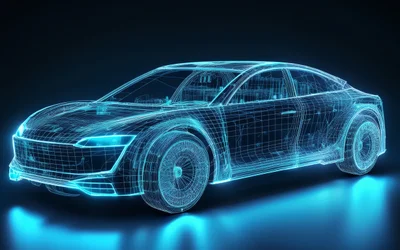
Study shows that if autonomous vehicles are widely adopted, hardware efficiency will need to advance rapidly to keep computing-related emissions in check.
Trustworthy and reliable applications are fueling the worldwide IoT success story. This article explains why protecting IoT edge devices is crucial in an environment with threats on the rise.
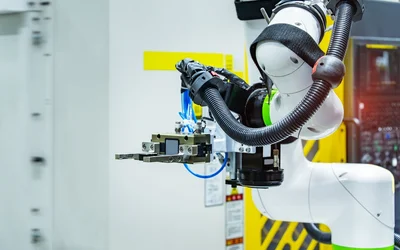
Fast localization and picking of multiple objects with Photoneo's Locator Studio for 3D picking in collision-free environments, PhoXi 3D Scanner, and a universal gripper.
Article #6 of the "Why Edge?" Series. A short guide to how Edge AI can boost electric vehicle performance and safety when applied to the Battery Management System (BMS).
In this episode, we talk about about how an ant inspired robotics platform could be the future of swarm robotics due to its simple, affordable, flexible, and scalable nature.
The Industrial Revolution began in Britain sometime around 1760. It ushered in a period where coal-fired steam engines powered increased mechanization and productivity and transformed a largely agrarian society into a manufacturing one.
An artificial intelligence algorithm can determine non-invasively, with about 70% accuracy, if an in vitro fertilized embryo has a normal or abnormal number of chromosomes, according to a new study from researchers at Weill Cornell Medicine.
Combining Digital Twins with Artificial Intelligence (AI) decision-making technologies can transform agrifood production systems and supply chains – offering possible remedies to the problems of malnutrition, greenhouse gas (GHG) emissions, and food waste, say researchers.
You've probably heard about the amazing capabilities of some recent AI models, such as GPT, AI21, or BLOOM. Perhaps you use one of these models yourself. Either directly, or through another product like Wordtune, YouWrite, Jasper – or ChatGPT.
It turns out that while these models are trained on language data, they can be used for other applications as well.
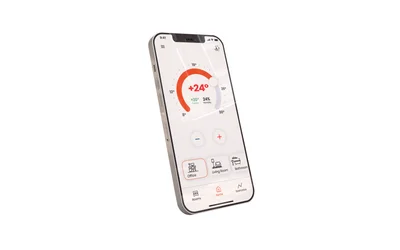
In my latest article, you can read more about applications in materials discovery, cybersecurity, and even building management.
EPFL researchers have teamed up with Dartfish and the Lausanne Hockey Club to push the boundaries of sports-performance analysis by applying computer vision and machine-learning technology to action on the ice.
The manufacturing industry (largely) welcomed artificial intelligence with open arms. Less of the dull, dirty, and dangerous? Say no more. Planning for mechanical assemblies still requires more than scratching out some sketches, of course — it’s a complex conundrum that means dealing with arbitrary 3D shapes and highly constrained motion required for real-world assemblies.