Featuredcase study
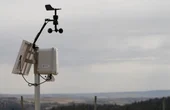
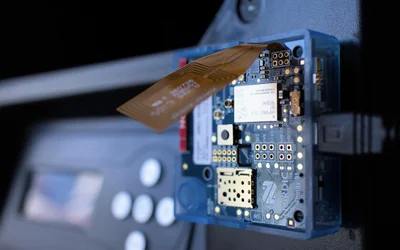
Qube was designing IoT devices that needed to be deployed in remote environments and required very little maintenance. They needed a platform that offered low power, was affordable, and that could scale across the world.
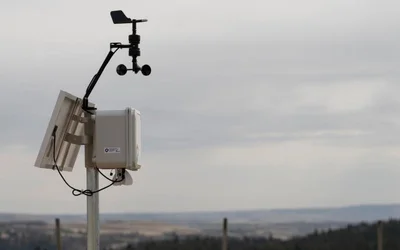
Qube was designing IoT devices that needed to be deployed in remote environments and required very little maintenance. They needed a platform that offered low power, was affordable, and that could scale across the world.
Qube was designing IoT devices that needed to be deployed in remote environments and required very little maintenance. They needed a platform that offered low power, was affordable, and that could scale across the world.
Introducing the Bringing Intelligence to the Edge Series: Exploring how Artificial Intelligence is moving to embedded systems, transforming technology across various applications.
Exploring the integration and impact of microcontrollers and Edge AI across various industries.
Artificial intelligence (AI) is a wide-ranging tool that enables people to rethink how we integrate information, analyze data, and use the resulting insights to improve decision making
15 minutes read.
20 minutes read.
13 minutes read.
17 minutes read.
25 minutes read.
11 minutes read.


Entertainment
The Next Byte Podcast is hosted by two young engineers - Daniel and Farbod - who select the most interesting tech/engineering cont...
165 Posts

High Tech
High Tech Campus Eindhoven is Europe's smartest square km and has the ultim...
49 Posts

University for science and technology
Freedom and individual responsibility, entrepreneurial spirit and open-min...
43 Posts
From leading experts at the CDFAM Computational Design Symposium
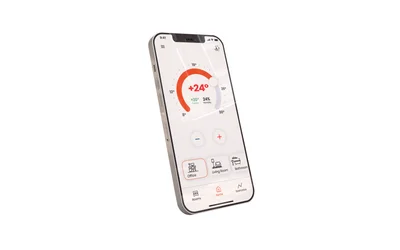
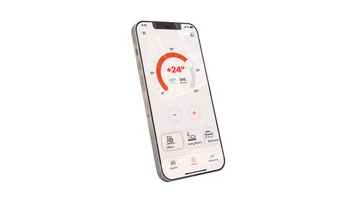
eCozy 2.0 system addresses the limitations of traditional thermostats for water heating radiators, delivering efficiency, convenience and sustainability benefits to households
Protect the cloud by securing the edge with hardware-based security, TPMs, HSMs, and resilient edge computing architectures.
Explore the rise of intelligent EV hardware and how real-time processing, ML acceleration, and hardware virtualization are enabling safer, smarter, software-defined electric vehicles.
EPFL researchers are developing AI models that could one day enable vision prosthetics able to restore meaningful, object-level sight for the blind.
A deep-dive listicle guiding controls, automation, and quality engineers toward the best vision systems for manufacturing applications in 2026.
Understanding industrial vision systems by examining their components, imaging fundamentals, AI integration since 2020, and how to choose the right solution for every application.
The AI-powered tool could inform the design of better sensors and cameras for robots or autonomous vehicles.
Qube was designing IoT devices that needed to be deployed in remote environments and required very little maintenance. They needed a platform that offered low power, was affordable, and that could scale across the world.

10 minutes read
Introducing the Bringing Intelligence to the Edge Series: Exploring how Artificial Intelligence is moving to embedded systems, transforming technology across various applications.
Exploring the integration and impact of microcontrollers and Edge AI across various industries.
In this episode, we discuss a novel new approach for increasing the field of view of autonomous systems by leveraging reflections of blindspots on reflective bodies.

13 minutes read
Learn how Renesas is providing solutions to this urgent edge AI challenge.
Exploring the key concepts related to Unsupervised vs Supervised Learning, understanding the fundamental principles, major algorithms and their real-world applications, and practical distinctions between supervised and unsupervised learning.
Artificial intelligence (AI) is a wide-ranging tool that enables people to rethink how we integrate information, analyze data, and use the resulting insights to improve decision making
Gain a comprehensive understanding of Edge AI by exploring the fundamental concepts, hardware components, software tools, and real-world applications.
The guide to understanding the state of the art in hardware & software in Edge AI.
Introducing a brand new series featuring innovative projects related to edge computing and machine learning. The first article presents a predictive maintenance solution utilizing the Nordic Thingy:91, monitoring machine health through anomaly detection with a TinyML model.
In this article, we will look at the challenges that engineers encounter when deploying a predictive maintenance system and how edge AI platforms like Edge Impulse can help factories optimize and deploy predictive maintenance models on industrial edge devices.
Products referred to as "beauty tech" that utilize AI, IoT, and other technologies are breathing new life into the cosmetics industry. First, let's look at the background that led to the birth of beauty tech.

4 minutes read
Bert Moons, Director of System Architecture at AXELERA AI discusses bottlenecks in transformer inference for generative AI.

10 minutes read
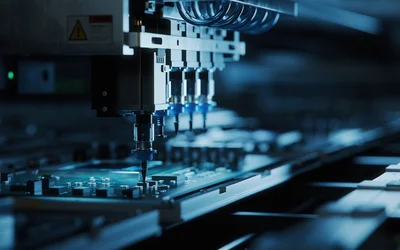
Transforming manufacturing processes through advanced inspection
What’s Next for Artificial Intelligence and Edge Computing?