Featured
A team of EPFL researchers has demonstrated the feasibility of an AI-driven method for crack detection, growth and monitoring, and will soon test it on the railway section between Zermatt and Brig in Valais Canton.

A team of EPFL researchers has demonstrated the feasibility of an AI-driven method for crack detection, growth and monitoring, and will soon test it on the railway section between Zermatt and Brig in Valais Canton.
A team of EPFL researchers has demonstrated the feasibility of an AI-driven method for crack detection, growth and monitoring, and will soon test it on the railway section between Zermatt and Brig in Valais Canton.
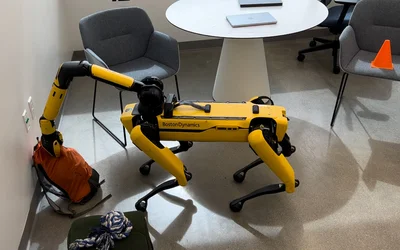
A new method called Clio enables robots to quickly map a scene and identify the items they need to complete a given set of tasks.
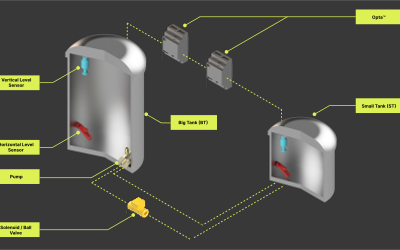
The need for advanced tank monitoring and pump control solutions is growing across industries – from water treatment to aquaculture to industrial utilities. Meanwhile, smart technology is transforming tank management for a variety of liquids, ensuring a streamlined process and minimizing risks.
Artificial intelligence (AI) is a wide-ranging tool that enables people to rethink how we integrate information, analyze data, and use the resulting insights to improve decision making
15 minutes read.
20 minutes read.
13 minutes read.
17 minutes read.
25 minutes read.
11 minutes read.


Entertainment
The Next Byte Podcast is hosted by two young engineers - Daniel and Farbod - who select the most interesting tech/engineering cont...
165 Posts

High Tech
High Tech Campus Eindhoven is Europe's smartest square km and has the ultim...
49 Posts

University for science and technology
Freedom and individual responsibility, entrepreneurial spirit and open-min...
43 Posts
From leading experts at the CDFAM Computational Design Symposium
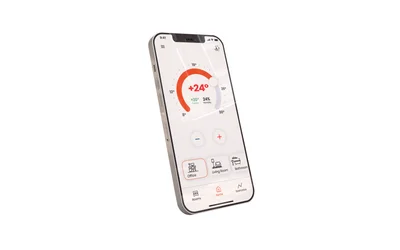
eCozy 2.0 system addresses the limitations of traditional thermostats for water heating radiators, delivering efficiency, convenience and sustainability benefits to households
Protect the cloud by securing the edge with hardware-based security, TPMs, HSMs, and resilient edge computing architectures.
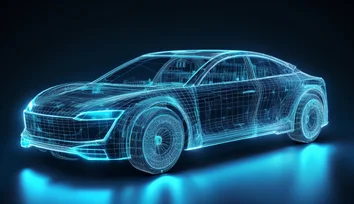
Explore the rise of intelligent EV hardware and how real-time processing, ML acceleration, and hardware virtualization are enabling safer, smarter, software-defined electric vehicles.
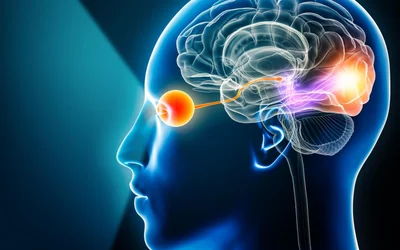
EPFL researchers are developing AI models that could one day enable vision prosthetics able to restore meaningful, object-level sight for the blind.
A deep-dive listicle guiding controls, automation, and quality engineers toward the best vision systems for manufacturing applications in 2026.
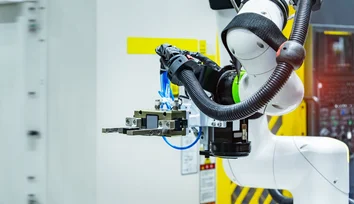
Understanding industrial vision systems by examining their components, imaging fundamentals, AI integration since 2020, and how to choose the right solution for every application.
The AI-powered tool could inform the design of better sensors and cameras for robots or autonomous vehicles.
A team of EPFL researchers has demonstrated the feasibility of an AI-driven method for crack detection, growth and monitoring, and will soon test it on the railway section between Zermatt and Brig in Valais Canton.

2 minutes read
A new method called Clio enables robots to quickly map a scene and identify the items they need to complete a given set of tasks.
The need for advanced tank monitoring and pump control solutions is growing across industries – from water treatment to aquaculture to industrial utilities. Meanwhile, smart technology is transforming tank management for a variety of liquids, ensuring a streamlined process and minimizing risks.

3 minutes read
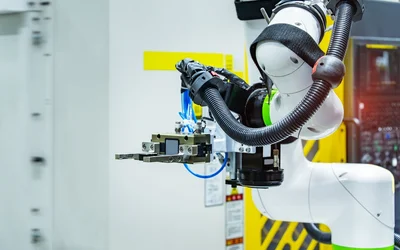
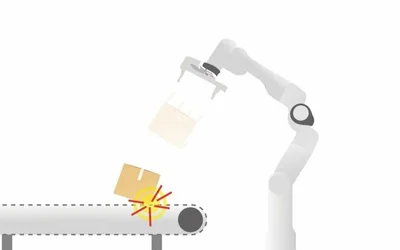
To achieve greater efficiency, robots must develop more human-like skills, such as fast physical interaction. That was the focus of the I.AM project.

4 minutes read
LLMs and GenAI lower barriers to accessing intelligence, shifting AI systems to be built and controlled by domain experts. In the future, organizations can use large scale LLM models instead of building custom machine learning models, impacting sectors like manufacturing and supply chain partners.
Smart manufacturing integrates advanced technologies such as the Internet of Things (IoT), big data analytics, and artificial intelligence (AI) to enhance efficiencies, improve product quality, and gain a competitive advantage.

6 minutes read
Curious about how AI predicts trends or creates new content? In this piece, we dive into Predictive AI vs. Generative AI, exploring their core differences and real-world impact. Discover how these technologies shape everything from recommendations to creativity.
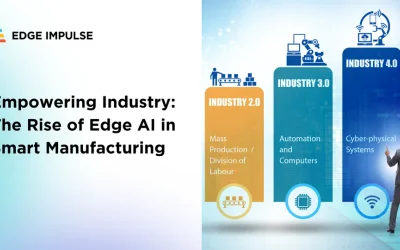
To understand Industry 4.0 and Industry 3.0, we must go back to Industry 1.0, although it wasn't called that then. We learned about the Industrial Revolution in school and there was just one.
Researchers have found that AI large language models, like GPT-4, are better at predicting what comes next than what came before in a sentence. This “Arrow of Time” effect could reshape our understanding of the structure of natural language, and the way these models understand it.
3 minutes read
In this episode, we chat with Karsten Roscher - a renowned AI expert at the Fraunhofer Institute for Cognitive Systems IKS - about the importance of safety in AI products, the current challenges facing experts, and what the future holds.

Unleashing the Power of GPU, understanding the essential strategies for efficient Deep Learning Model Training without compromising on memory and hardware resources in Graphical Processing Units
RISC-V offers the tools needed to foster local AI innovation while also enabling worldwide collaboration and access to a global market
Weighing Latency, Privacy, and Scalability to Optimize Your AI Strategy
Explore the transformative leap from traditional to smart grids, their integration with AI, IoT, and renewable energy, and their future in energy efficiency.