Featured
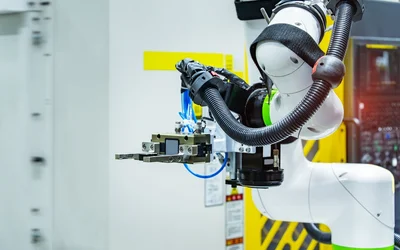
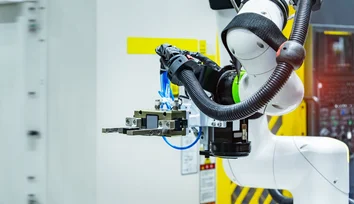
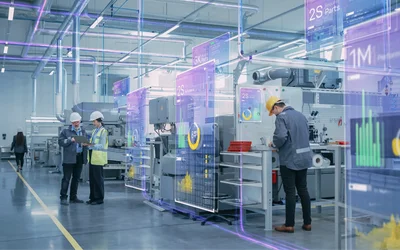
Discover how AI is optimizing manufacturing by increasing quality control, reducing downtime and boosting efficiency.
Discover how AI is optimizing manufacturing by increasing quality control, reducing downtime and boosting efficiency.
Discover how AI is optimizing manufacturing by increasing quality control, reducing downtime and boosting efficiency.
Edge computing: a decentralized computing paradigm that processes data closer to the source, reducing latency and enabling more efficient use of resources.
In the current AI zeitgeist, sequence models have skyrocketed in popularity for their ability to analyze data and predict what to do next. For instance, you’ve likely used next-token prediction models like ChatGPT, which anticipate each word (token) in a sequence to form answers to users’ queries.
Artificial intelligence (AI) is a wide-ranging tool that enables people to rethink how we integrate information, analyze data, and use the resulting insights to improve decision making
15 minutes read.
20 minutes read.
13 minutes read.
17 minutes read.
25 minutes read.
11 minutes read.


Entertainment
The Next Byte Podcast is hosted by two young engineers - Daniel and Farbod - who select the most interesting tech/engineering cont...
165 Posts

High Tech
High Tech Campus Eindhoven is Europe's smartest square km and has the ultim...
49 Posts

University for science and technology
Freedom and individual responsibility, entrepreneurial spirit and open-min...
43 Posts
From leading experts at the CDFAM Computational Design Symposium
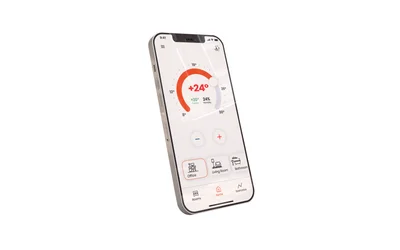
eCozy 2.0 system addresses the limitations of traditional thermostats for water heating radiators, delivering efficiency, convenience and sustainability benefits to households
Protect the cloud by securing the edge with hardware-based security, TPMs, HSMs, and resilient edge computing architectures.
Explore the rise of intelligent EV hardware and how real-time processing, ML acceleration, and hardware virtualization are enabling safer, smarter, software-defined electric vehicles.
EPFL researchers are developing AI models that could one day enable vision prosthetics able to restore meaningful, object-level sight for the blind.
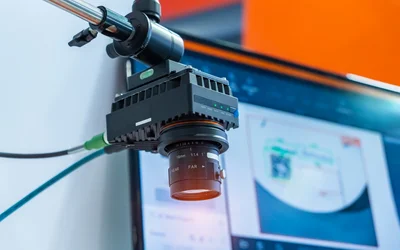
A deep-dive listicle guiding controls, automation, and quality engineers toward the best vision systems for manufacturing applications in 2026.
Understanding industrial vision systems by examining their components, imaging fundamentals, AI integration since 2020, and how to choose the right solution for every application.
The AI-powered tool could inform the design of better sensors and cameras for robots or autonomous vehicles.
Discover how AI is optimizing manufacturing by increasing quality control, reducing downtime and boosting efficiency.
Edge computing: a decentralized computing paradigm that processes data closer to the source, reducing latency and enabling more efficient use of resources.
In the current AI zeitgeist, sequence models have skyrocketed in popularity for their ability to analyze data and predict what to do next. For instance, you’ve likely used next-token prediction models like ChatGPT, which anticipate each word (token) in a sequence to form answers to users’ queries.
Edge AI is the process of running artificial intelligence (AI) and machine learning (ML) algorithms on devices at the network’s edge (periphery), rather than on large cloud servers. In simple terms, edge AI is the fusion of devices and artificial intelligence.

10 minutes read
Alumni-founded Ambience Healthcare automates routine tasks for clinicians before, during, and after patient visits.
Robots, combined with artificial intelligence (AI), are transforming industries such as manufacturing, healthcare, and research.

10 minutes read
In nature, flying animals sense coming changes in their surroundings, including the onset of sudden turbulence, and quickly adjust to stay safe. Engineers who design aircraft would like to give their vehicles the same ability to predict incoming disturbances and respond appropriately.

5 minutes read
In this episode, we explore how AI technology is revolutionizing the detection and monitoring of infrastructure defects and learn how these innovative solutions are enhancing safety, improving maintenance, and preventing failures in critical infrastructure systems

11 minutes read
‘Industry 4.0’—the next stage of the Industrial Revolution—leans heavily on the Industrial Internet of Things (IIoT) to support large scale automation of traditional manufacturing practices.

4 minutes read
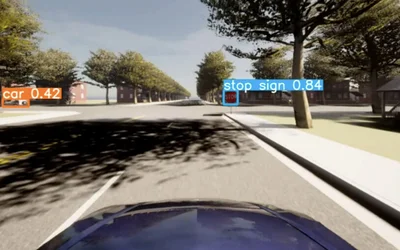
Ding Zhao is teaming up with the City of Pittsburgh to improve road safety and eliminate traffic fatalities using AI.

3 minutes read
For robots, simulation is a great teacher for learning long-horizon (multi-step) tasks — especially compared to how long it takes to collect real-world training data.
EPFL professor’s passion for sustainable flying and expertise in machine learning and computer vision drives innovation in green aviation design and beyond.

3 minutes read
Recognizing Groundbreaking Research in AI, Quantum, and Neuro-Inspired Computing
MIT CSAIL researchers developed an AI-driven approach to “low-discrepancy sampling,” a method that improves simulation accuracy by distributing data points more uniformly across space.
In this episode, we explore an innovative and sustainable wearable device designed by researchers at the Karlsruhe Institute of Technology to improve posture and we discuss why AI isn’t just a novelty in this product but a core feature that sets it apart from the rest!
12 minutes read