Featured
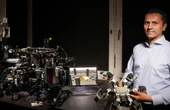
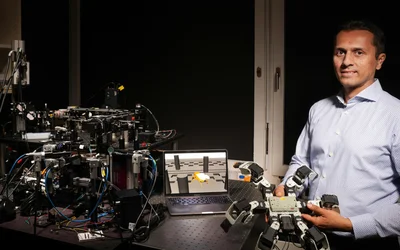
Researchers at EPFL’s Neuroengineering Laboratory, led by Pavan Ramdya, aim to replicate the workings of the brain of the common fruit fly, Drosophila melanogaster. We spoke with Ramdya about the exciting prospects for robotics.
Researchers at EPFL’s Neuroengineering Laboratory, led by Pavan Ramdya, aim to replicate the workings of the brain of the common fruit fly, Drosophila melanogaster. We spoke with Ramdya about the exciting prospects for robotics.
Researchers at EPFL’s Neuroengineering Laboratory, led by Pavan Ramdya, aim to replicate the workings of the brain of the common fruit fly, Drosophila melanogaster. We spoke with Ramdya about the exciting prospects for robotics.
Claire Najjuuko, Chenyang Lu, Fred Ssewamala use AI to target interventions to improve compliance
A nuclear engineering graduate student is researching how generative artificial intelligence can speed up nuclear science research.
Artificial intelligence (AI) is a wide-ranging tool that enables people to rethink how we integrate information, analyze data, and use the resulting insights to improve decision making
15 minutes read.
20 minutes read.
13 minutes read.
17 minutes read.
25 minutes read.
11 minutes read.


Entertainment
The Next Byte Podcast is hosted by two young engineers - Daniel and Farbod - who select the most interesting tech/engineering cont...
165 Posts

High Tech
High Tech Campus Eindhoven is Europe's smartest square km and has the ultim...
49 Posts

University for science and technology
Freedom and individual responsibility, entrepreneurial spirit and open-min...
43 Posts
From leading experts at the CDFAM Computational Design Symposium
eCozy 2.0 system addresses the limitations of traditional thermostats for water heating radiators, delivering efficiency, convenience and sustainability benefits to households
Protect the cloud by securing the edge with hardware-based security, TPMs, HSMs, and resilient edge computing architectures.
Explore the rise of intelligent EV hardware and how real-time processing, ML acceleration, and hardware virtualization are enabling safer, smarter, software-defined electric vehicles.
EPFL researchers are developing AI models that could one day enable vision prosthetics able to restore meaningful, object-level sight for the blind.
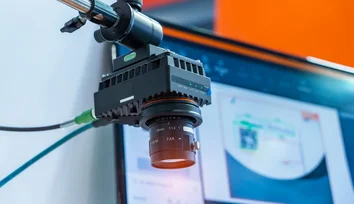
A deep-dive listicle guiding controls, automation, and quality engineers toward the best vision systems for manufacturing applications in 2026.
Understanding industrial vision systems by examining their components, imaging fundamentals, AI integration since 2020, and how to choose the right solution for every application.
The AI-powered tool could inform the design of better sensors and cameras for robots or autonomous vehicles.
Researchers at EPFL’s Neuroengineering Laboratory, led by Pavan Ramdya, aim to replicate the workings of the brain of the common fruit fly, Drosophila melanogaster. We spoke with Ramdya about the exciting prospects for robotics.
Claire Najjuuko, Chenyang Lu, Fred Ssewamala use AI to target interventions to improve compliance

4 minutes read
A nuclear engineering graduate student is researching how generative artificial intelligence can speed up nuclear science research.

4 minutes read
The evolution of MEMS microphones marks a significant leap towards a future of seamless human-to-machine interaction, ensuring that AI can truly listen - and one day even "understand" - beyond our auditory limits.
In the modern era of sport, results are often decided by ultra-fine margins like milliseconds or millimeters. Yet even precise metrics such as speed and distance are still quite rudimentary in nature.

4 minutes read
Altair’s Future.Industry 2025, a premier global virtual event, united professionals, innovators, and technology enthusiasts to explore the convergence of advanced technologies and sustainability.
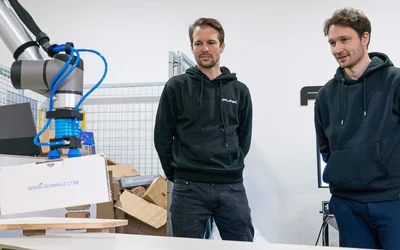
The ETH spin-off Flink Robotics wants to revolutionize the handling of packages. Its founders Moritz Geilinger and Simon Huber have developed software that allows robots to work together and quickly take on new tasks.

5 minutes read
A researcher in the Department of Computer Science and Engineering is developing a security-focused large language model to defend against malware.
2 minutes read
For this article we interviewed Niwa and Omura, who are responsible for the design, development, and operation of the system, as well as Toda, who requested its development and is also a user.

9 minutes read
Researchers from Princeton and Rutgers University have used reinforcement learning, a method frequently deployed to train artificial intelligence, to show how flexible responses can substantially increase the cost-effectiveness of steps to defend cities like New York against climate change.

6 minutes read
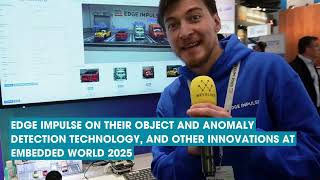
Unveiling the Future of Embedded AI: Object Anomaly Detection and More at Embedded World 2025
It takes ten times more electricity for ChatGPT to respond to a prompt than for Google to carry out a standard search. Still, researchers are struggling to get a grasp on the energy implications of generative artificial intelligence both now and going forward.

6 minutes read
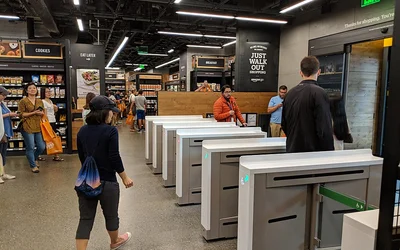
AI and ML-driven cashierless stores not only improve operational efficiency and customer personalization but are also expected to propel the global AI retail market to over $40 billion by 2030.
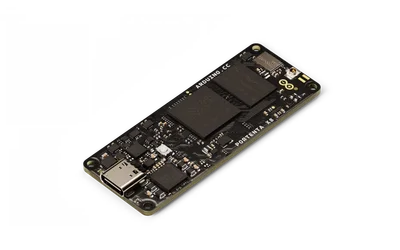
Deploying machine learning models at the edge is crucial for real-time data processing in industrial applications. This article explores how Docker simplifies Edge AI deployment on the Arduino Portenta X8, enabling scalable and secure AI implementations on embedded Linux systems.

3 minutes read