Featuredpodcast
In this episode, we explore how a generative AI tool is marking a major milestone in biology and accelerating advancements in healthcare, genetics, and drug development.

In this episode, we explore how a generative AI tool is marking a major milestone in biology and accelerating advancements in healthcare, genetics, and drug development.
In this episode, we explore how a generative AI tool is marking a major milestone in biology and accelerating advancements in healthcare, genetics, and drug development.
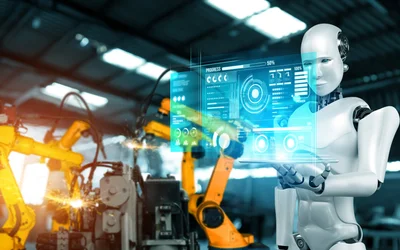
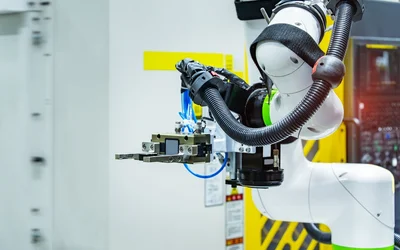
Camera-equipped robotic systems serve as key expansion components within this industry because they improve efficiency and accuracy across multiple fields, including manufacturing, healthcare, logistics, and autonomous vehicle development.
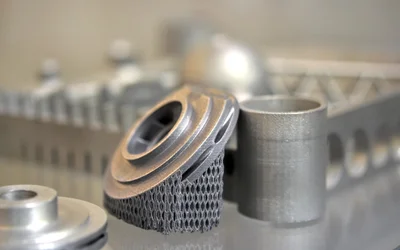
Exploring tangible AI-driven improvements—from ideation to failure prediction—that are transforming additive manufacturing.
Artificial intelligence (AI) is a wide-ranging tool that enables people to rethink how we integrate information, analyze data, and use the resulting insights to improve decision making
15 minutes read.
20 minutes read.
13 minutes read.
17 minutes read.
25 minutes read.
11 minutes read.


Entertainment
The Next Byte Podcast is hosted by two young engineers - Daniel and Farbod - who select the most interesting tech/engineering cont...
165 Posts

High Tech
High Tech Campus Eindhoven is Europe's smartest square km and has the ultim...
49 Posts

University for science and technology
Freedom and individual responsibility, entrepreneurial spirit and open-min...
43 Posts
From leading experts at the CDFAM Computational Design Symposium
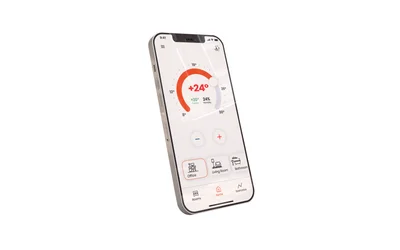
eCozy 2.0 system addresses the limitations of traditional thermostats for water heating radiators, delivering efficiency, convenience and sustainability benefits to households
Protect the cloud by securing the edge with hardware-based security, TPMs, HSMs, and resilient edge computing architectures.
Explore the rise of intelligent EV hardware and how real-time processing, ML acceleration, and hardware virtualization are enabling safer, smarter, software-defined electric vehicles.
EPFL researchers are developing AI models that could one day enable vision prosthetics able to restore meaningful, object-level sight for the blind.
A deep-dive listicle guiding controls, automation, and quality engineers toward the best vision systems for manufacturing applications in 2026.
Understanding industrial vision systems by examining their components, imaging fundamentals, AI integration since 2020, and how to choose the right solution for every application.
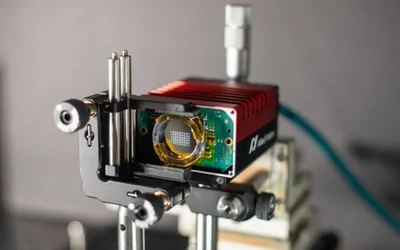
The AI-powered tool could inform the design of better sensors and cameras for robots or autonomous vehicles.
In this episode, we explore how a generative AI tool is marking a major milestone in biology and accelerating advancements in healthcare, genetics, and drug development.

11 minutes read
Camera-equipped robotic systems serve as key expansion components within this industry because they improve efficiency and accuracy across multiple fields, including manufacturing, healthcare, logistics, and autonomous vehicle development.
Exploring tangible AI-driven improvements—from ideation to failure prediction—that are transforming additive manufacturing.

4 minutes read
Event-based computing is transforming AI processing, delivering smarter, faster, and hyper-efficient solutions across industries like IoT, healthcare, and automotive.
The Edge AI industry is at a turning point with big shots investing heavily. Now is the time to define best practices, share experiences and crowdsource high quality data. Who will be taking the lead in guiding the industry forward?

2 minutes read
High-Bandwidth Memory (HBM) is a 3D-stacked DRAM designed for ultra-high bandwidth and efficiency. Used in GPUs, AI, and HPC, it tackles memory bottlenecks by stacking dies vertically near processors. This article explores its evolution, architecture, and impact on modern computing.
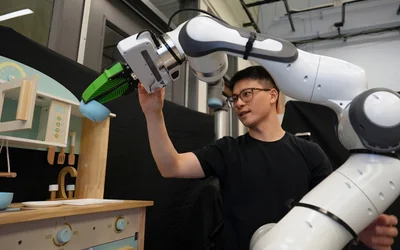
New research could allow a person to correct a robot’s actions in real-time, using the kind of feedback they’d give another human.
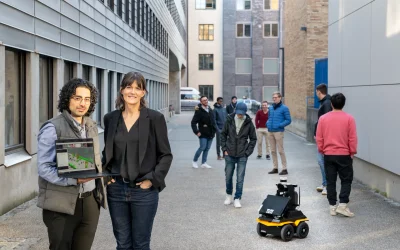
Researchers at the Technical University of Munich (TUM) have developed a wheeled robot that makes its way through a crowd of people safely and without hesitation. A computer on board predicts the movement of people in the vicinity and how they are likely to react to the robot.

3 minutes read
AI for Health Institute team unveils a versatile large language model to enhance perioperative care

3 minutes read
The guide to understanding the current state of the art in hardware & software for Edge AI.
Researchers began to explore metasurfaces — materials whose geometry gives them special properties. Instead of bending light inside a piece of glass or plastic, like a conventional lens, a metasurface diffracts light around tiny objects, like light spreading out as it passes through a slit.

5 minutes read
A team of scientists has developed a method to illuminate the dynamic behavior of nanoparticles, which are foundational components in the creation of pharmaceuticals, electronics, and industrial and energy-conversion materials.

2 minutes read
AI is transforming security through real-time threat detection and intelligent surveillance, with Axelera AI advancing this shift using its Metis AI Processing Unit (AIPU) to enhance proactive, adaptive, and sustainable security solutions.