Featured
A new method helps convey uncertainty more precisely, which could give researchers and medical clinicians better information to make decisions.

A new method helps convey uncertainty more precisely, which could give researchers and medical clinicians better information to make decisions.
A new method helps convey uncertainty more precisely, which could give researchers and medical clinicians better information to make decisions.
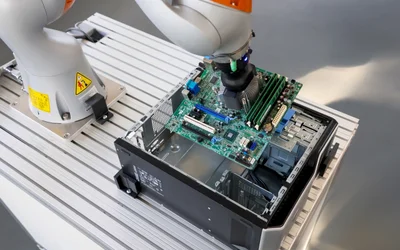
The Fraunhofer Institute for Factory Operation and Automation IFF (Fraunhofer IFF) is working to overcome challenges to e-waste disposal.
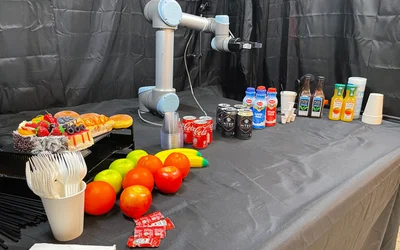
A new approach could enable intuitive robotic helpers for household, workplace, and warehouse settings.
Artificial intelligence (AI) is a wide-ranging tool that enables people to rethink how we integrate information, analyze data, and use the resulting insights to improve decision making
15 minutes read.
20 minutes read.
13 minutes read.
17 minutes read.
25 minutes read.
11 minutes read.


Entertainment
The Next Byte Podcast is hosted by two young engineers - Daniel and Farbod - who select the most interesting tech/engineering cont...
165 Posts

High Tech
High Tech Campus Eindhoven is Europe's smartest square km and has the ultim...
49 Posts

University for science and technology
Freedom and individual responsibility, entrepreneurial spirit and open-min...
43 Posts
From leading experts at the CDFAM Computational Design Symposium
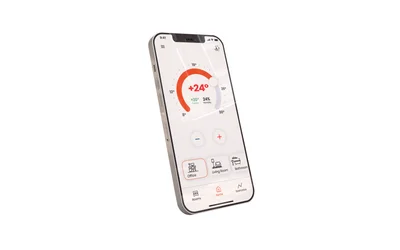
eCozy 2.0 system addresses the limitations of traditional thermostats for water heating radiators, delivering efficiency, convenience and sustainability benefits to households
Protect the cloud by securing the edge with hardware-based security, TPMs, HSMs, and resilient edge computing architectures.
Explore the rise of intelligent EV hardware and how real-time processing, ML acceleration, and hardware virtualization are enabling safer, smarter, software-defined electric vehicles.
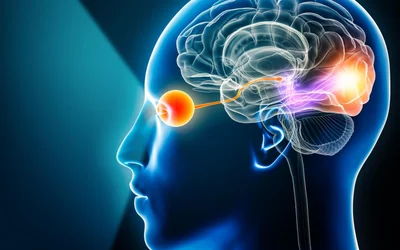
EPFL researchers are developing AI models that could one day enable vision prosthetics able to restore meaningful, object-level sight for the blind.
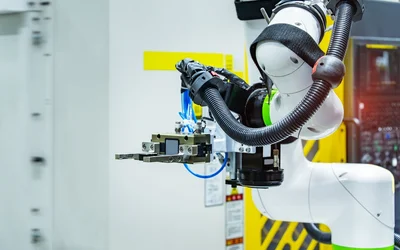
A deep-dive listicle guiding controls, automation, and quality engineers toward the best vision systems for manufacturing applications in 2026.
Understanding industrial vision systems by examining their components, imaging fundamentals, AI integration since 2020, and how to choose the right solution for every application.
The AI-powered tool could inform the design of better sensors and cameras for robots or autonomous vehicles.
A new method helps convey uncertainty more precisely, which could give researchers and medical clinicians better information to make decisions.
The Fraunhofer Institute for Factory Operation and Automation IFF (Fraunhofer IFF) is working to overcome challenges to e-waste disposal.
A new approach could enable intuitive robotic helpers for household, workplace, and warehouse settings.
EPFL researchers have developed the first AI model of language in the brain that captures both how neurons are arranged and how they function.

3 minutes read
ETH Zurich researchers have developed a method that makes AI responses increasingly reliable. Their algorithm specifically selects data relevant to the question. In addition, even AI models up to 40 times smaller achieve the same output performance as the best large AI models.

4 minutes read
A new method from the MIT-IBM Watson AI Lab helps large language models to steer their own responses toward safer, more ethical, value-aligned outputs.
The approach maintains an AI model’s accuracy while ensuring attackers can’t extract secret information.
What’s particularly exciting is not just that Gen AI can write code – it’s that it’s beginning to understand context, reduce time spent on boilerplate, and support developers where they work best: in the flow of creation.

3 minutes read
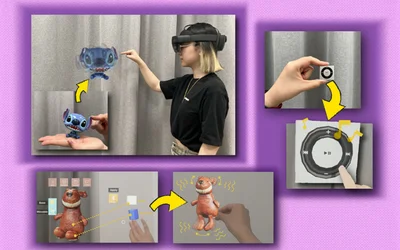
“InteRecon” enables users to capture items in a mobile app and reconstruct their interactive features in mixed reality. The tool could assist in education, medical environments, museums, and more.
Ambiq’s ultra-low-power edge AI technology is pushing health monitoring by enabling always-on, intelligent wearable devices that track vital signs in real time without relying on cloud connectivity.
New apps for cancer patients, cannabis users, others make use of algorithms that continually customize support

3 minutes read
Healthcare is facing a critical workforce shortage, with AI emerging as a key tool to support clinicians by improving diagnostics, treatment planning, and efficiency without replacing human expertise.
This article covers advanced architectural patterns, performance optimisation strategies, and critical operational considerations for building production-grade AI infrastructure systems!
EPFL researchers developed a ground-breaking new tool to help build safer AI.
4 minutes read
Imagine a world where devices respond instantly to your voice commands without relying on cloud processing—that's now possible with keyword spotting. Read more to discover how it is revolutionizing voice-enabled technology.

4 minutes read