Featured
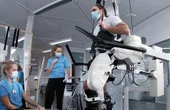
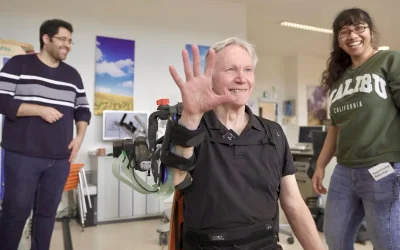
In this episode, we explore a groundbreaking system developed by researchers at the Technical University of Munich that aids stroke patients in regaining arm and hand mobility.

In this episode, we explore a groundbreaking system developed by researchers at the Technical University of Munich that aids stroke patients in regaining arm and hand mobility.
In this episode, we explore a groundbreaking system developed by researchers at the Technical University of Munich that aids stroke patients in regaining arm and hand mobility.
Personalized medicine, also known as precision medicine, represents an approach to healthcare that tailors medical treatment to the individual characteristics of each patient.
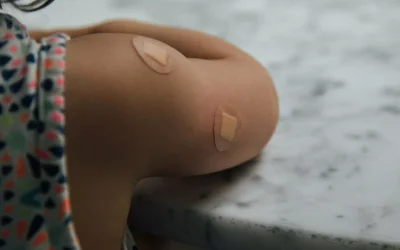
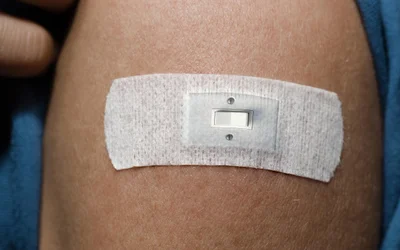
ETH researchers have developed a new gene switch that can be activated using a commercially available nitroglycerine patch applied to the skin. One day, researchers want to use switches of this kind to trigger cell therapies for various metabolic diseases.
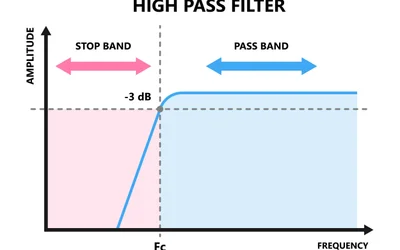
Active high-pass filters remove unwanted low-frequency signals while preserving useful higher frequencies. This article covers first- and second-order filter design, Sallen-Key and multiple-feedback topologies, and practical applications in audio electronics, instrumentation, and signal processing.
16 minutes read.
15 minutes read.
19 minutes read.
12 minutes read.
14 minutes read.


Entertainment
The Next Byte Podcast is hosted by two young engineers - Daniel and Farbod - who select the most interesting tech/engineering cont...
165 Posts

High Tech
High Tech Campus Eindhoven is Europe's smartest square km and has the ultim...
49 Posts

University for science and technology
Freedom and individual responsibility, entrepreneurial spirit and open-min...
43 Posts
University
At the Harvard John A. Paulson School of Engineering and Applied Sciences (...
42 Posts
with Xsens motion capture
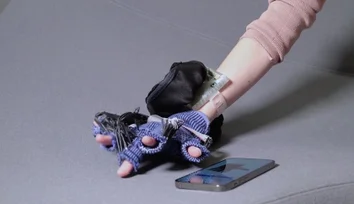
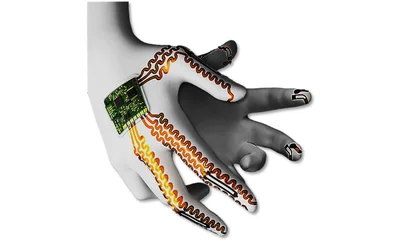
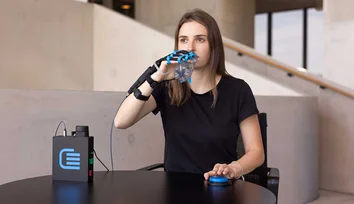
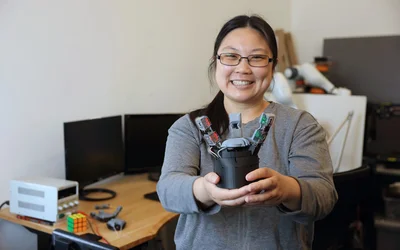
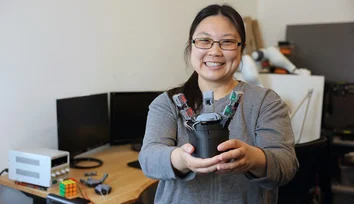
A new glove with more than three dozen actuators across all five fingers and the palm, developed by Cornell researchers, aims to reduce swelling for people suffering from edema.
AI-powered artificial muscles made from pliable materials are reshaping recovery, from stroke rehabilitation to prosthetic design. These machines help people regain motion, strength, and confidence.
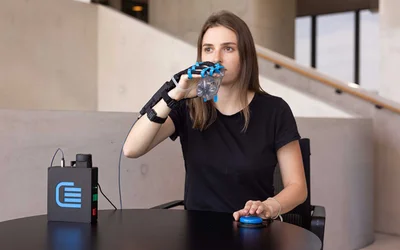
Researchers at ETH Zurich have developed an innovative hand exoskeleton that helps persons after stroke re-learn how to grasp. Its accordion-like structure makes it light, robust and easy to integrate into everyday life.
AI-powered artificial muscles made from pliable materials are reshaping recovery, from stroke rehabilitation to prosthetic design. These machines help people regain motion, strength, and confidence.
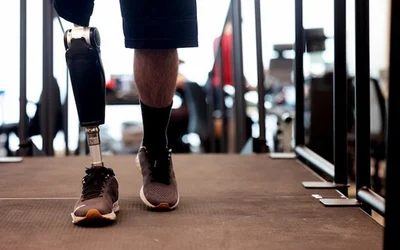
Paired with custom control software, Össur's powered knee prosthesis helped study participants sit, stand and walk more easily.
MIT CSAIL researchers enhance robotic precision with sophisticated tactile sensors in the palm and agile fingers, setting the stage for improvements in human-robot interaction and prosthetic technology.
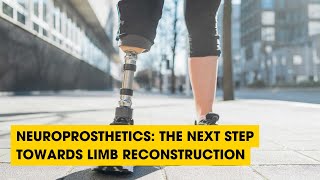
In this episode, we discuss a breakthrough from ETH Zurich to mimic natural foot signals to the brain using state of the art neuroprosthetics.
In this episode, we explore a groundbreaking system developed by researchers at the Technical University of Munich that aids stroke patients in regaining arm and hand mobility.

12 minutes read
Personalized medicine, also known as precision medicine, represents an approach to healthcare that tailors medical treatment to the individual characteristics of each patient.
ETH researchers have developed a new gene switch that can be activated using a commercially available nitroglycerine patch applied to the skin. One day, researchers want to use switches of this kind to trigger cell therapies for various metabolic diseases.

3 minutes read
In this episode, we explore how a generative AI tool is marking a major milestone in biology and accelerating advancements in healthcare, genetics, and drug development.
11 minutes read
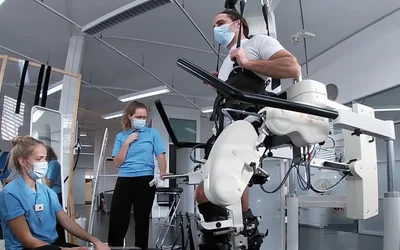
Scientists at .Neurorestore (EPFL/CHUV/UNIL) have developed an approach that combines rehabilitation robotics with spinal cord stimulation to restore movement in people with spinal cord injuries. The technology enhances rehabilitation and enables activities like cycling and walking outdoors.

3 minutes read
Researchers at the Technical University of Munich (TUM) have developed a system that helps patients learn to move their paralyzed arms and hands quickly after a stroke. This requires targeted stimulation of the muscles in the forearm and the support of an exoskeleton.

2 minutes read
AI for Health Institute team unveils a versatile large language model to enhance perioperative care

3 minutes read
In this episode, we discuss a new anti-venom therapy designed with the assistance of AI led by a superstar team of researchers which includes a Nobel laureate!
13 minutes read
Researchers at the Technical University of Munich (TUM) have invented an entirely new field of microscopy, nuclear spin microscopy. The team can visualize magnetic signals of nuclear magnetic resonance with a microscope.
2 minutes read
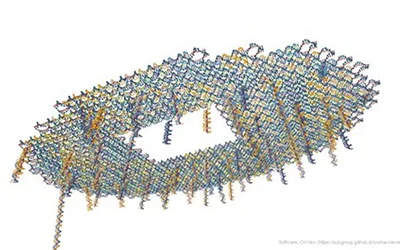
Using an approach called DNA origami, scientists at Caltech have developed a technique that could lead to cheaper, reusable biomarker sensors for quickly detecting proteins in bodily fluids, eliminating the need to send samples out to lab centers for testing.

4 minutes read
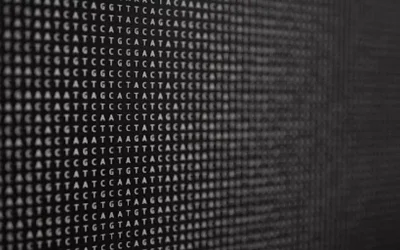
Trained on a dataset that includes all known living species—and a few extinct ones, Evo2 can predict the form and function of proteins in the DNA of all domains of life, identify molecules useful for bioengineering and medicine

5 minutes read
To advance modern medicine, EPFL researchers are developing AI-based diagnostic tools. Their goal is to predict the best treatment a patient should receive.
6 minutes read
EmbeddedWiki is the world's largest embedded projects platform that already details over 1,000,000 projects.
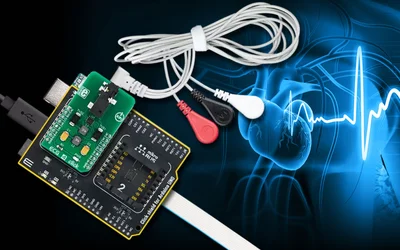
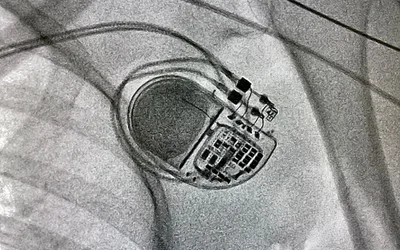
Real-time Clock (RTC) modules are the specialized components designed to maintain accurate timing even in medical devices such as neurostimulators, pacemakers, insulin pumps, and other essential devices.