Featured
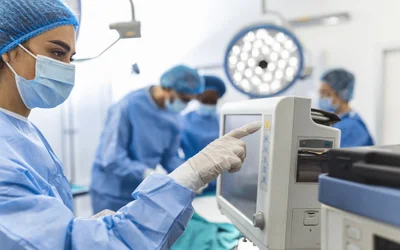
Interdisciplinary team tackles complexity of clinical data in perioperative care
Interdisciplinary team tackles complexity of clinical data in perioperative care
Interdisciplinary team tackles complexity of clinical data in perioperative care
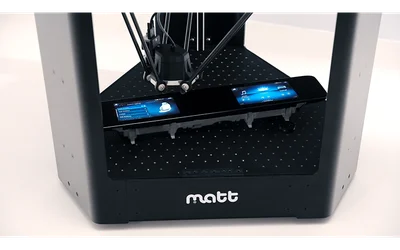
Developing a tool that evaluates button and switch devices from both hardware (through physical input) and software perspectives is the next logical step in the evolution of device testing automation.
Unsupervised learning is a machine learning approach that finds patterns, structure, or useful representations in unlabeled data. It groups similar observations, compresses high-dimensional features, detects outliers, discovers item relationships, and supports modern representation learning.
13 minutes read.
17 minutes read.
11 minutes read.
16 minutes read.
14 minutes read.
14 minutes read.



High Tech
High Tech Campus Eindhoven is Europe's smartest square km and has the ultim...
49 Posts

University for science and technology
Freedom and individual responsibility, entrepreneurial spirit and open-min...
43 Posts
Protect the cloud by securing the edge with hardware-based security, TPMs, HSMs, and resilient edge computing architectures.
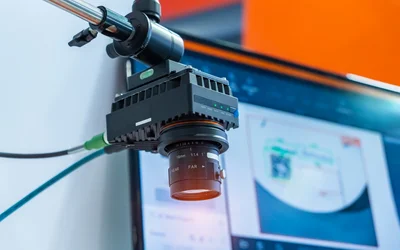
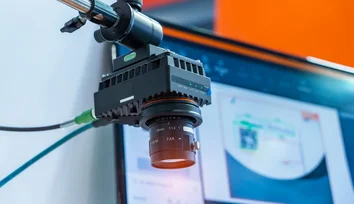
Understanding industrial vision systems by examining their components, imaging fundamentals, AI integration since 2020, and how to choose the right solution for every application.
Explore the rise of intelligent EV hardware and how real-time processing, ML acceleration, and hardware virtualization are enabling safer, smarter, software-defined electric vehicles.
A detailed engineering reference on performance, signaling, and power differences in current graphics memory standards.
how Last Praetorian Interactive made Project Vesperi with one Xsens suit
With Xsens Motion Capture
With Xsens Indie Program
Interdisciplinary team tackles complexity of clinical data in perioperative care
Developing a tool that evaluates button and switch devices from both hardware (through physical input) and software perspectives is the next logical step in the evolution of device testing automation.

5 minutes read
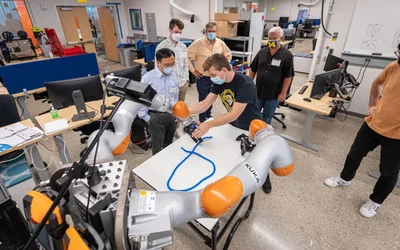
Resilient robot teams juggle competing priorities without deadlock

3 minutes read
For now, at least, machines need humans as much as humans need machines. At this intersection, machine learning (ML) offers intriguing possibilities for managing the billions of end devices that comprise the IoT. ML is a practical, mathematical field.

3 minutes read
UTEP 2022 ends with 12 submissions in the final month. The recent articles covered different areas of technology like smart farming, AI, 3D printing, wind energy, structural engineering, biotechnology, and more. As we eagerly wait for the results, here is an article summarizing the new submissions.
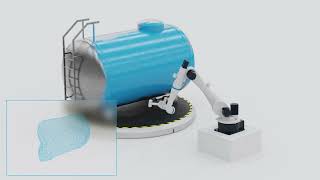
Real-time 3D model creation in motion with Photoneo’s MotionCam-3D enables automated sandblasting/painting of large objects without interruption.

3 minutes read
Before the pandemic, research suggested that adoption of AI (artificial intelligence) and ML (machine learning) in business was increasing at a rate of about 25% per year.
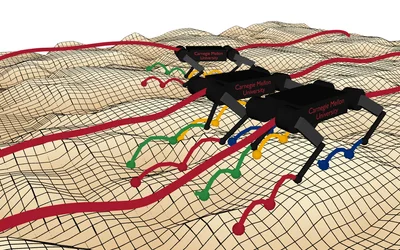
Aaron Johnson’s Robomechanics Lab has developed an open-source software that enables more agile movement in legged robots.

3 minutes read
The student article explains an artificial intelligence-based system to detect human body patterns and movements for multiple targets in real-time to recognize their behaviors and classify them as either normal or abnormal.
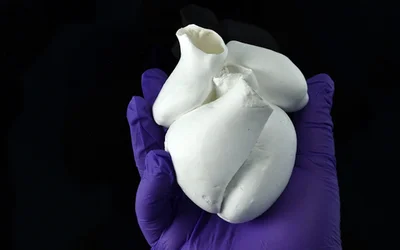
In this episode, we talk about how researchers are developing tools to better understand how different microbial communities impact our health in an effort to reverse engineer them and the critical methodology used to 3D print functional heart ventricles.

This video shows how the ML-trained MEMS-IMU performs in the INS mechanization compared to the same MEMS IMU but without using the ML
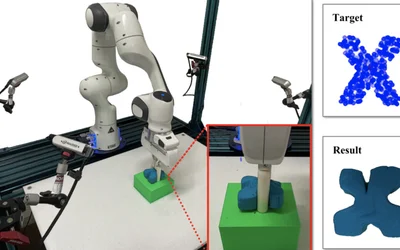
The inner child in many of us feels an overwhelming sense of joy when stumbling across a pile of the fluorescent, rubbery mixture of water, salt, and flour that put goo on the map: play dough. (Even if this happens rarely in adulthood.)
A motion sensor or passive infrared (PIR) sensor is an electronic device that detects the movement of an object, anywhere within its field of view, by measuring the infrared (IR) light emitted from, or reflected by, that object.

4 minutes read
In this episode, we talk about how engineers are tackling the problem of sorting through piles using robotics and a platform that leverages fake data to train robots more efficiently.
MATT overtakes challenges met during the process of testing in-vehicle-infotainment systems using its characteristic adaptability and capabilities to support an effective operation throughout the testing process.
4 minutes read