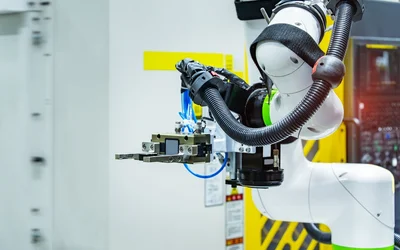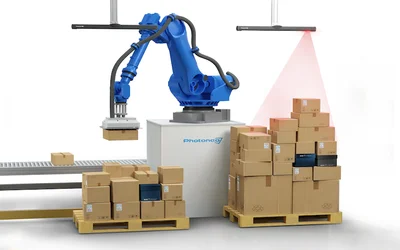
Manual singulation of huge piles of parcels and envelopes, followed by sorting and placing them on a conveyor belt, gets challenging, especially during peaks. Automation of this process can increase productivity, save costs and time, and reduce injuries.


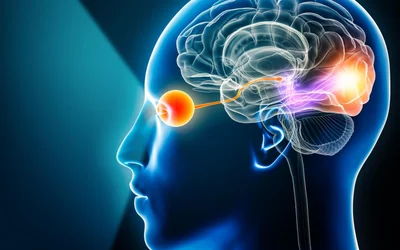
Artificial intelligence (AI) can become more efficient and reliable if it is made to mimic biological models. New approaches in AI research are hugely successful in experiments.
Artificial intelligence (AI) is a wide-ranging tool that enables people to rethink how we integrate information, analyze data, and use the resulting insights to improve decision making
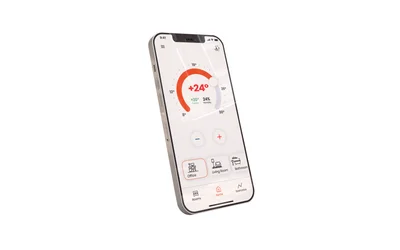
eCozy 2.0 system addresses the limitations of traditional thermostats for water heating radiators, delivering efficiency, convenience and sustainability benefits to households
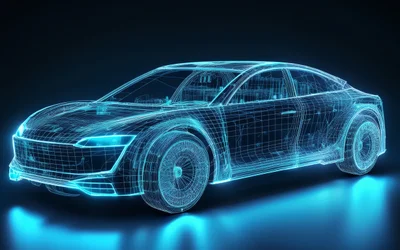
Explore the rise of intelligent EV hardware and how real-time processing, ML acceleration, and hardware virtualization are enabling safer, smarter, software-defined electric vehicles.
Understanding industrial vision systems by examining their components, imaging fundamentals, AI integration since 2020, and how to choose the right solution for every application.
Manual singulation of huge piles of parcels and envelopes, followed by sorting and placing them on a conveyor belt, gets challenging, especially during peaks. Automation of this process can increase productivity, save costs and time, and reduce injuries.

Artificial intelligence (AI) can become more efficient and reliable if it is made to mimic biological models. New approaches in AI research are hugely successful in experiments.
How will they help customers in their industrial applications? Photoneo’s Marcel Svec, Director of 3D Sensing, and Svorad Stolc, Head of R&D, have answered this and other questions.
Thanks to advances in technologies such as 3D machine vision, robotics is entering all spheres of industrial processes. The COVID-19 outbreak has boosted awareness of the pressing need to apply automation for fast and accurate order fulfillment and efficient supply chains.

When a natural disaster occurs, on-the-ground emergency response teams act quickly to make life-saving decisions. Reducing the response time in such situations is critical to reduce damage impact and save lives.

By building the enormous network of wireless sensors that forms the IoT, we’re generating more data than ever before. More data promises better decision making – but only if we don’t drown in information first.
Machine learning algorithm uses high-temporal-resolution growth curves to identify pathogens with 98% accuracy and predict antibiotic resistance just as well as genetic-based methods
Making sensors more intelligent has required substantial investment in machine learning algorithms. The SensiML platform aims to bring that cost crashing down.