Featured
The adaptive immune system serves as a template for defending neural nets from confusion-sowing attacks.

The adaptive immune system serves as a template for defending neural nets from confusion-sowing attacks.
The adaptive immune system serves as a template for defending neural nets from confusion-sowing attacks.
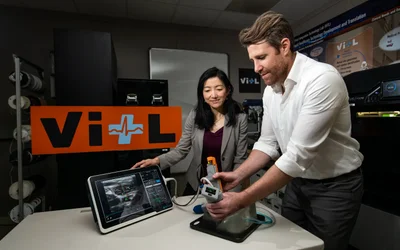
In this episode, we talk about how a group at MIT has developed an easy-to-use handheld device to treat internal bleeding and a joint effort between MIT and Imperial College London which resulted in a marine mammal call sensor that can leverage machine learning models locally
Researchers have developed a technique for making quantum computing more resilient to noise, which boosts performance.
Artificial intelligence (AI) is a wide-ranging tool that enables people to rethink how we integrate information, analyze data, and use the resulting insights to improve decision making
15 minutes read.
20 minutes read.
13 minutes read.
17 minutes read.
25 minutes read.
11 minutes read.


Entertainment
The Next Byte Podcast is hosted by two young engineers - Daniel and Farbod - who select the most interesting tech/engineering cont...
165 Posts

High Tech
High Tech Campus Eindhoven is Europe's smartest square km and has the ultim...
49 Posts

University for science and technology
Freedom and individual responsibility, entrepreneurial spirit and open-min...
43 Posts
From leading experts at the CDFAM Computational Design Symposium
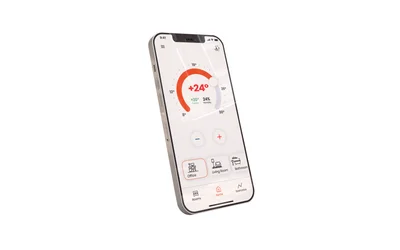
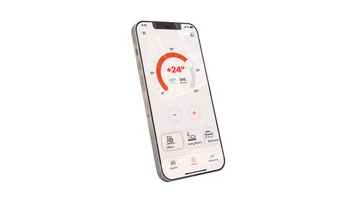
eCozy 2.0 system addresses the limitations of traditional thermostats for water heating radiators, delivering efficiency, convenience and sustainability benefits to households
Protect the cloud by securing the edge with hardware-based security, TPMs, HSMs, and resilient edge computing architectures.
Explore the rise of intelligent EV hardware and how real-time processing, ML acceleration, and hardware virtualization are enabling safer, smarter, software-defined electric vehicles.
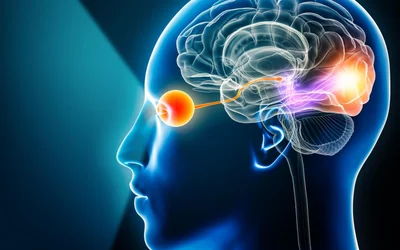
EPFL researchers are developing AI models that could one day enable vision prosthetics able to restore meaningful, object-level sight for the blind.
A deep-dive listicle guiding controls, automation, and quality engineers toward the best vision systems for manufacturing applications in 2026.
Understanding industrial vision systems by examining their components, imaging fundamentals, AI integration since 2020, and how to choose the right solution for every application.
The AI-powered tool could inform the design of better sensors and cameras for robots or autonomous vehicles.
The adaptive immune system serves as a template for defending neural nets from confusion-sowing attacks.

4 minutes read
In this episode, we talk about how a group at MIT has developed an easy-to-use handheld device to treat internal bleeding and a joint effort between MIT and Imperial College London which resulted in a marine mammal call sensor that can leverage machine learning models locally

Researchers have developed a technique for making quantum computing more resilient to noise, which boosts performance.
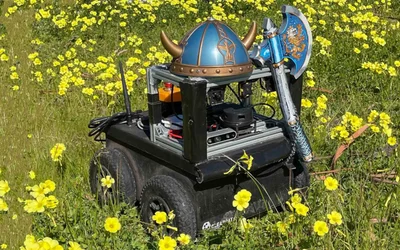
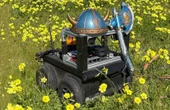
Using satellite imagery or road schematic maps as "side information," the ViKiNG robot can plan its own miles-long route to a goal — measurably outperforming its strongest competitors, even when its side information is inaccurate or outdated.
#7 of our 'Voice of Innovation' fireside chat series: Robotics and AI reporter Rachel Gordon speaks to Kokotov on his vision to understand every human voice.
There have been two distinct worlds in Artificial Intelligence for Robotics, the world of research, and the world of robotics in the factory. More and more, the promise of AI in the factory is setting these two worlds on a collision course.

Humans are usually pretty good at recognising when they get things wrong, but artificial intelligence systems are not. According to a new study, AI generally suffers from inherent limitations due to a century-old mathematical paradox.
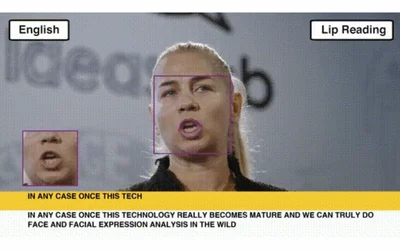
A novel approach to visual speech recognition that carefully designs the VSR model rather than increasing the size of the training data.
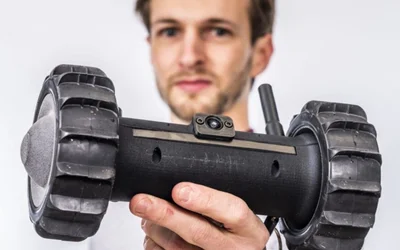
Designed to bring machine learning to the Earth's last great frontier, a prototype smart sensor platform users on-device inference to classify marine mammal calls — powering itself exclusively from the sounds it captures.
Developers at all skill levels can learn and grow from attending cutting-edge conferences and leveraging online resources.
For the second consecutive year, we have compiled a list of Campus companies that Eindhoven, the Netherlands and the world will hear more about in 2022. This year, we’re focusing on companies created in High Tech Campus’s startup ecosystem, or that landed on the Campus during 2021.

8 minutes read
Research from MIT suggests that a certain type of robust computer-vision model perceives visual representations similarly to the way humans do using peripheral vision.
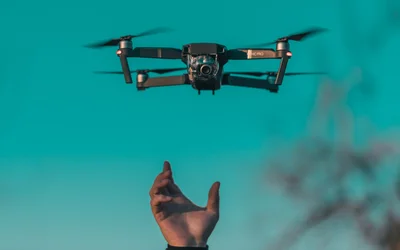
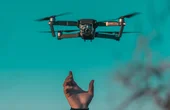
In this episode, we talk about how UAVs are being deployed to control destructive pigeon populations and to study bottlenose dolphin populations.
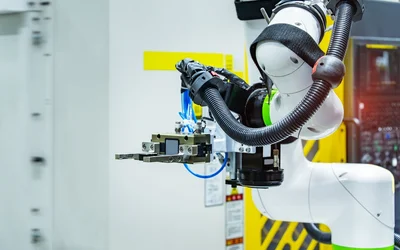
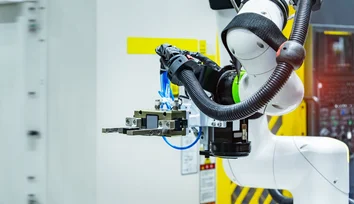
This 3D vision system for a mobile robot picker consists of an AMR with a robotic arm equipped with the Photoneo 3D camera MotionCam-3D. The hand-eye setup allows you to scan and approach each object from an appropriate angle, distance, and position.

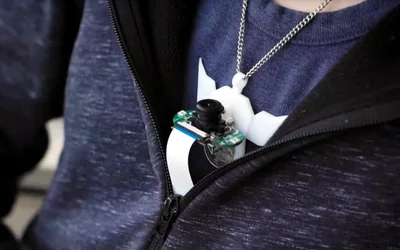
Designed as a necklace-style wearable in a 3D-printed case, SpeeChin is capable of recognizing 54 English and 44 Chinese voice commands — even if the wearer never says anything out loud.