Featured
Leopard Imaging wins global challenge.

Leopard Imaging wins global challenge.
Leopard Imaging wins global challenge.
The butterfly effect—the idea that a butterfly flapping its wings in South America could change the course of a tornado in Texas—has been a popular way to illustrate the difficulty of making predictions about the behavior of chaotic systems like the weather. Because such systems are extremely sensitive to their initial conditions, even the tiniest of changes can send their behavior careening off into unexpected directions.
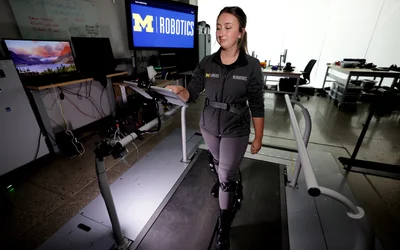
Using a simple and convenient touchscreen interface, the algorithm learns the assistance preferences of the wearer.
Artificial intelligence (AI) is a wide-ranging tool that enables people to rethink how we integrate information, analyze data, and use the resulting insights to improve decision making
15 minutes read.
20 minutes read.
13 minutes read.
17 minutes read.
25 minutes read.
11 minutes read.


Entertainment
The Next Byte Podcast is hosted by two young engineers - Daniel and Farbod - who select the most interesting tech/engineering cont...
165 Posts

High Tech
High Tech Campus Eindhoven is Europe's smartest square km and has the ultim...
49 Posts

University for science and technology
Freedom and individual responsibility, entrepreneurial spirit and open-min...
43 Posts
From leading experts at the CDFAM Computational Design Symposium
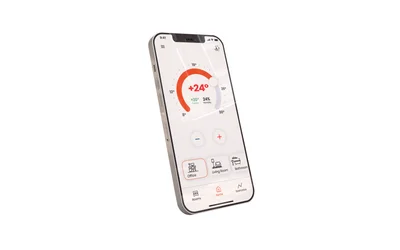
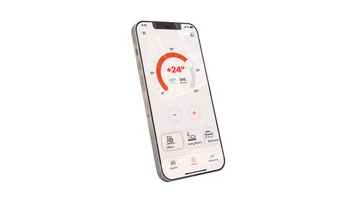
eCozy 2.0 system addresses the limitations of traditional thermostats for water heating radiators, delivering efficiency, convenience and sustainability benefits to households
Protect the cloud by securing the edge with hardware-based security, TPMs, HSMs, and resilient edge computing architectures.
Explore the rise of intelligent EV hardware and how real-time processing, ML acceleration, and hardware virtualization are enabling safer, smarter, software-defined electric vehicles.
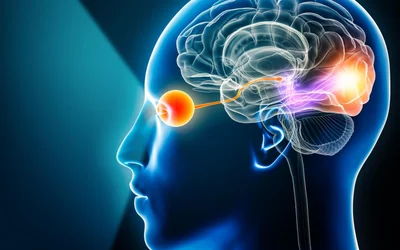
EPFL researchers are developing AI models that could one day enable vision prosthetics able to restore meaningful, object-level sight for the blind.
A deep-dive listicle guiding controls, automation, and quality engineers toward the best vision systems for manufacturing applications in 2026.
Understanding industrial vision systems by examining their components, imaging fundamentals, AI integration since 2020, and how to choose the right solution for every application.
The AI-powered tool could inform the design of better sensors and cameras for robots or autonomous vehicles.
Leopard Imaging wins global challenge.
The butterfly effect—the idea that a butterfly flapping its wings in South America could change the course of a tornado in Texas—has been a popular way to illustrate the difficulty of making predictions about the behavior of chaotic systems like the weather. Because such systems are extremely sensitive to their initial conditions, even the tiniest of changes can send their behavior careening off into unexpected directions.

4 minutes read
Using a simple and convenient touchscreen interface, the algorithm learns the assistance preferences of the wearer.
In this episode, Rob Telson speaks with Industry Expert, Michael Azoff, about neuromorphic computing in the AI space including edge AI, neural network architectures, sensory-based applications and more.

3 minutes read
Training robust AI models can be challenging when using crowdsourced or publicly available datasets. The most useful neural networks are ones that replace expert knowledge to solve real problems. One example would be a visual inspection model for the factory floor.

3 minutes read
Researchers coaxed a family of generative AI models to work together to solve multistep robot manipulation problems.
This is the first article in a new series from BrainChip highlighting their vision and technology.
3 minutes read
Its impact on Visual SLAM and beyond

4 minutes read
BrainChip's leadership shares details on the company's development of the Akida chip, future prospects, and more in this informative podcast.
4 minutes read
RISC-V Evolution: From Early Computing to Tomorrow's Tech Promise

7 minutes read
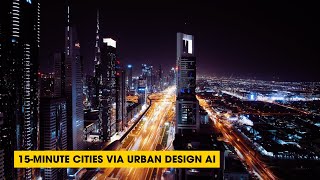
In this episode, we uncover the fascinating synergy between artificial intelligence (AI) and the urban design landscape to enable the mystical and sought after 15-minute city!

20 minutes read
Amid the race to make AI bigger and better, Lincoln Laboratory is developing ways to reduce power, train efficiently, and make energy use transparent.
Sensors are electronic devices with the function to acquire information from the outside world. There are already a wide variety of sensors that can reproduce the five senses of humans. Image sensors, microphones, accelerometers, and temperature sensors are examples of those.

6 minutes read
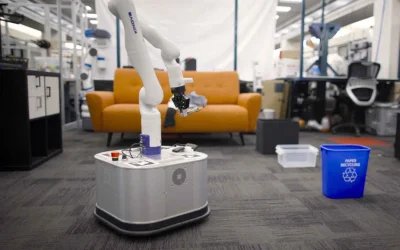
The one-armed “TidyBot” needs only a few starter examples to figure out how you like your stuff put away.

4 minutes read
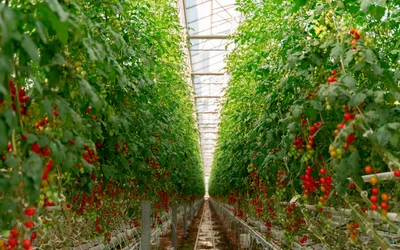
Revolutionizing Agriculture with AI-powered Robotic platform Solutions for Industrial Greenhouses