Featured
Highlights from BrainChip's latest investor podcast provide a view of the company's achievements, strategies, and future direction.

Highlights from BrainChip's latest investor podcast provide a view of the company's achievements, strategies, and future direction.
Highlights from BrainChip's latest investor podcast provide a view of the company's achievements, strategies, and future direction.
Researchers fabricate the world’s smallest QR code that, invisible to the naked eye, encrypts information to only be visible by an infrared camera lens.
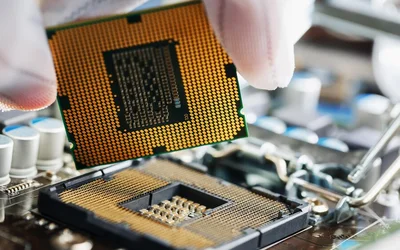
The Defense Department’s largest research organization has partnered with a Princeton-led effort to develop advanced microchips for artificial intelligence.
Artificial intelligence (AI) is a wide-ranging tool that enables people to rethink how we integrate information, analyze data, and use the resulting insights to improve decision making
15 minutes read.
20 minutes read.
13 minutes read.
17 minutes read.
25 minutes read.
11 minutes read.


Entertainment
The Next Byte Podcast is hosted by two young engineers - Daniel and Farbod - who select the most interesting tech/engineering cont...
165 Posts

High Tech
High Tech Campus Eindhoven is Europe's smartest square km and has the ultim...
49 Posts

University for science and technology
Freedom and individual responsibility, entrepreneurial spirit and open-min...
43 Posts
From leading experts at the CDFAM Computational Design Symposium
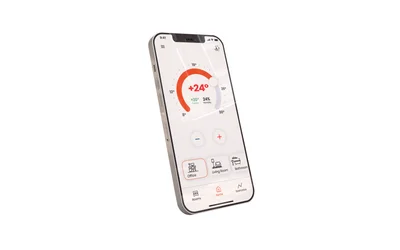
eCozy 2.0 system addresses the limitations of traditional thermostats for water heating radiators, delivering efficiency, convenience and sustainability benefits to households
Protect the cloud by securing the edge with hardware-based security, TPMs, HSMs, and resilient edge computing architectures.
Explore the rise of intelligent EV hardware and how real-time processing, ML acceleration, and hardware virtualization are enabling safer, smarter, software-defined electric vehicles.
EPFL researchers are developing AI models that could one day enable vision prosthetics able to restore meaningful, object-level sight for the blind.
A deep-dive listicle guiding controls, automation, and quality engineers toward the best vision systems for manufacturing applications in 2026.
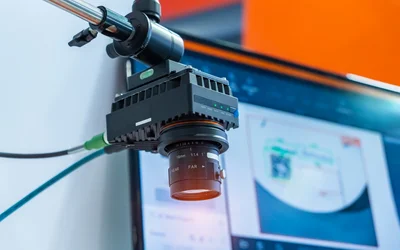
Understanding industrial vision systems by examining their components, imaging fundamentals, AI integration since 2020, and how to choose the right solution for every application.
The AI-powered tool could inform the design of better sensors and cameras for robots or autonomous vehicles.
Highlights from BrainChip's latest investor podcast provide a view of the company's achievements, strategies, and future direction.
Researchers fabricate the world’s smallest QR code that, invisible to the naked eye, encrypts information to only be visible by an infrared camera lens.

2 minutes read
The Defense Department’s largest research organization has partnered with a Princeton-led effort to develop advanced microchips for artificial intelligence.

5 minutes read
AI is having an impact on hiring processes, employee retention, and workplace conditions.
Stanford researchers have developed a new phase-change memory that could help computers process large amounts of data faster and more efficiently.

4 minutes read
Wi-Fi and Edge Computing: Transforming AI Applications
BrainChip Holdings Ltd. Initiates Pre-Orders for the Akida Edge AI Box, Elevating Edge AI Capabilities through a Strategic Alliance with VVDN Technologies
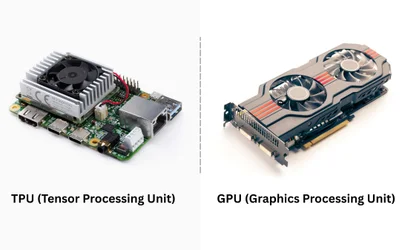
This article explores TPU vs GPU differences in architecture, performance, energy efficiency, cost, and practical implementation, helping engineers and designers choose the right accelerator for AI workloads today!
In the blink of an eye, the unruly, superheated plasma that drives a fusion reaction can lose its stability and escape the strong magnetic fields confining it within the donut-shaped fusion reactor.
6 minutes read
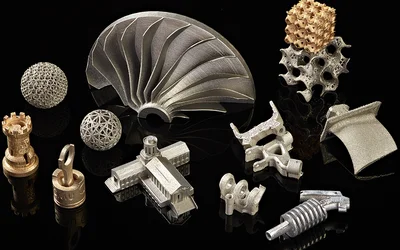
Researchers use AI and high-speed in-situ imaging to optimize process parameters for 3D printing metal alloys.
4 minutes read
This article provides an in-depth exploration of the evolution, fundamental concepts, diverse types, operating principles, and practical applications of ASICs.
Intelligence at the Edge: Bringing AI Closer to You
Researchers at EPFL have developed a new, uniquely modular machine learning model for flexible decision-making. It is able to input any mode of text, video, image, sound, and time-series and then output any number, or combination, of predictions.

3 minutes read
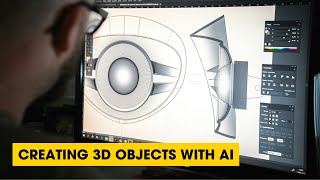
In this episode, we talk about the initiative from PolySpectra to generate 3D CAD models from text using AI.

19 minutes read
An international collaboration between EPFL and the University of Glasgow has led to an advanced machine-learning algorithm to effectively detect concealed manufacturing defects in wind turbine composite blades – before turbines are put into service.
3 minutes read