A.I.
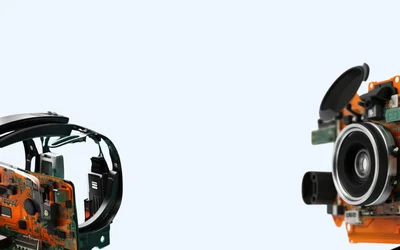
Exploring the Dynamic World of Edge AI Applications Across Industries


Three-and-a-half years on from the Bluetooth Special Interest Group’s (SIG) announcement of a new specification that defined a high quality, low-power audio codec that promised to redefine audio streaming and wireless sound, Bluetooth LE Audio is finally about to hit the commercial mainstream.


To make AI as smart as the butterflies, a team of Penn State researchers has created a multi-sensory AI platform that is both more advanced and uses less energy than other AI technologies.

Engineers Wiki. Most Asked Questions.

Artificial intelligence (AI) is a wide-ranging tool that enables people to rethink how we integrate information, analyze data, and use the resulting insights to improve decision making
What Is Unsupervised Learning? Types, Algorithms, and Examples (2026)
15 minutes read.
Understanding Nvidia CUDA Cores: A Comprehensive Guide
20 minutes read.
NPU vs GPU: Understanding the Key Differences and Use Cases
13 minutes read.
TPU vs GPU: Comprehensive Technical Comparison
17 minutes read.
Understanding Nvidia CUDA Cores: A Comprehensive Guide for 2026
25 minutes read.
Top Vision Systems for Manufacturing in 2026
11 minutes read.
ORGANIZATIONS. SHAPING THE INDUSTRY.


The Next Byte
Entertainment
The Next Byte Podcast is hosted by two young engineers - Daniel and Farbod - who select the most interesting tech/engineering cont...
165 Posts



High Tech Campus Eindhoven
High Tech
High Tech Campus Eindhoven is Europe's smartest square km and has the ultim...
49 Posts

ETH Zurich
University for science and technology
Freedom and individual responsibility, entrepreneurial spirit and open-min...
43 Posts
TAGGED WITH machine learning

From leading experts at the CDFAM Computational Design Symposium

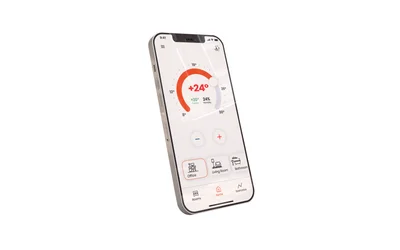
eCozy 2.0 system addresses the limitations of traditional thermostats for water heating radiators, delivering efficiency, convenience and sustainability benefits to households

Protect the cloud by securing the edge with hardware-based security, TPMs, HSMs, and resilient edge computing architectures.


Explore the rise of intelligent EV hardware and how real-time processing, ML acceleration, and hardware virtualization are enabling safer, smarter, software-defined electric vehicles.

TAGGED WITH computer vision

EPFL researchers are developing AI models that could one day enable vision prosthetics able to restore meaningful, object-level sight for the blind.

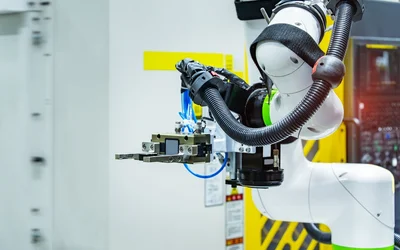
A deep-dive listicle guiding controls, automation, and quality engineers toward the best vision systems for manufacturing applications in 2026.
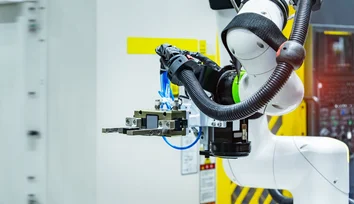
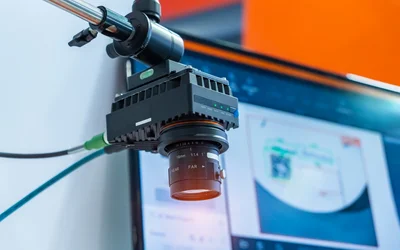
Understanding industrial vision systems by examining their components, imaging fundamentals, AI integration since 2020, and how to choose the right solution for every application.

The AI-powered tool could inform the design of better sensors and cameras for robots or autonomous vehicles.

Latest Posts
Exploring the Dynamic World of Edge AI Applications Across Industries
Three-and-a-half years on from the Bluetooth Special Interest Group’s (SIG) announcement of a new specification that defined a high quality, low-power audio codec that promised to redefine audio streaming and wireless sound, Bluetooth LE Audio is finally about to hit the commercial mainstream.

4 minutes read
To make AI as smart as the butterflies, a team of Penn State researchers has created a multi-sensory AI platform that is both more advanced and uses less energy than other AI technologies.

4 minutes read

The latest advancements in Akida Edge technology have showcased remarkable use cases across various industries.
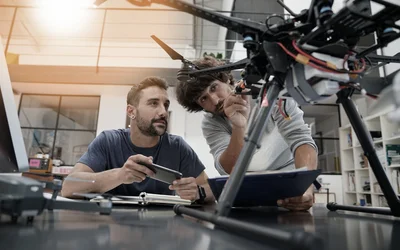
The coming years will see a surge in Edge AI advancements, driven by real-time, efficient, and privacy-focused AI applications, alongside innovations in Wi-Fi and IoT, marking a promising future shaped by researchers, industry leaders, and open-source contributions.


AI and robotics are enabling safer and more efficient space exploration.


Discover how the AI-powered Tiny Code Reader by Useful Sensors revolutionises data input and verification tasks, offering unparalleled efficiency and accuracy. Explore the benefits for businesses and developers in integrating this cutting-edge technology into their operations.


Researchers have developed a new training tool to help artificial intelligence (AI) programs better account for the fact that humans don’t always tell the truth when providing personal information.

2 minutes read

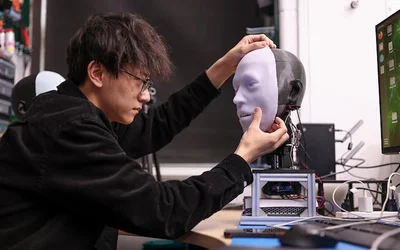
Columbia engineers build Emo, a silicon-clad robotic face that makes eye contact and uses two AI models to anticipate and replicate a person’s smile before the person actually smiles

4 minutes read

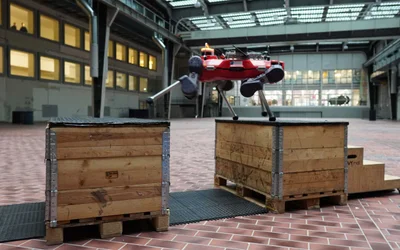
The quadrupedal robot ANYmal went back to school and has learned a lot. ETH Zurich researchers used machine learning to teach it new skills: the robot can now climb over obstacles and successfully negotiate pitfalls.

3 minutes read


A new algorithm reduces travel time by identifying shortcuts a robot could take on the way to its destination.


Learn how to reduce the risk and cost of late design, and manufacturing changes at the free Altair Virtual Global Event on May 16, 2024

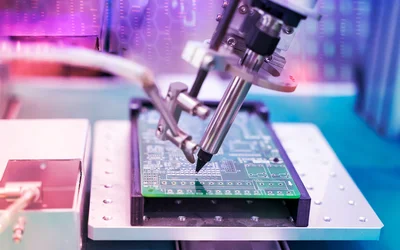
Artificial intelligence (AI) is providing an opportunity for the electronics industry to accelerate design and development and speed up part sourcing.


Wi-Fi-enabled Edge AI is redefining how technology is leveraged in real time.


Highlights from BrainChip's latest investor podcast provide a view of the company's achievements, strategies, and future direction.