Featured
In his doctoral research, Daan de Geus worked on advanced image processing methods that allow robots and cars to better recognize what they see around them.
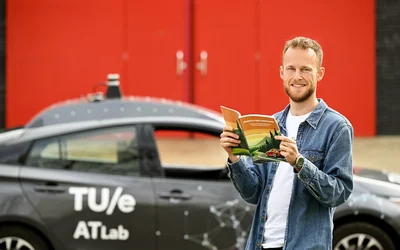
In his doctoral research, Daan de Geus worked on advanced image processing methods that allow robots and cars to better recognize what they see around them.
In his doctoral research, Daan de Geus worked on advanced image processing methods that allow robots and cars to better recognize what they see around them.
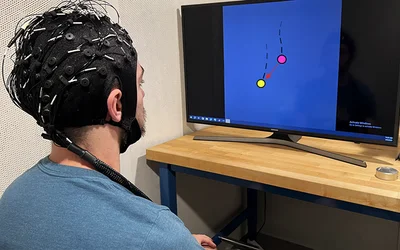
Achieving a noteworthy milestone to advance noninvasive brain-controlled interfaces, researchers used AI technology to improve the decoding of human intention and control a continuously moving virtual object all by thinking about it, with unmatched performance.
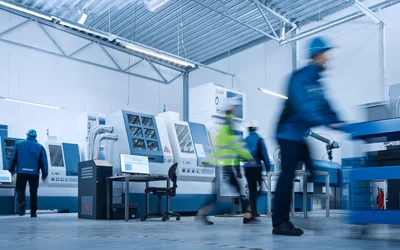
Explore the transformative impact of predictive maintenance in industrial automation. Discover how Infineon’s advanced predictive maintenance solution enables operational efficiency, reduces downtime, and fosters sustainable industrial growth through innovative edge-to-cloud integration.
Artificial intelligence (AI) is a wide-ranging tool that enables people to rethink how we integrate information, analyze data, and use the resulting insights to improve decision making
15 minutes read.
20 minutes read.
13 minutes read.
17 minutes read.
25 minutes read.
11 minutes read.


Entertainment
The Next Byte Podcast is hosted by two young engineers - Daniel and Farbod - who select the most interesting tech/engineering cont...
165 Posts

High Tech
High Tech Campus Eindhoven is Europe's smartest square km and has the ultim...
49 Posts

University for science and technology
Freedom and individual responsibility, entrepreneurial spirit and open-min...
43 Posts
From leading experts at the CDFAM Computational Design Symposium
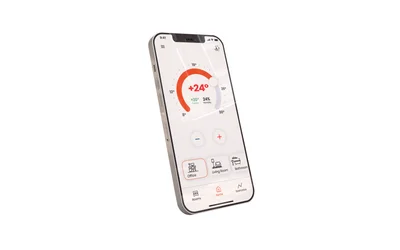
eCozy 2.0 system addresses the limitations of traditional thermostats for water heating radiators, delivering efficiency, convenience and sustainability benefits to households
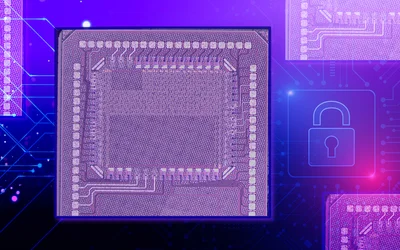
Protect the cloud by securing the edge with hardware-based security, TPMs, HSMs, and resilient edge computing architectures.
Explore the rise of intelligent EV hardware and how real-time processing, ML acceleration, and hardware virtualization are enabling safer, smarter, software-defined electric vehicles.
EPFL researchers are developing AI models that could one day enable vision prosthetics able to restore meaningful, object-level sight for the blind.
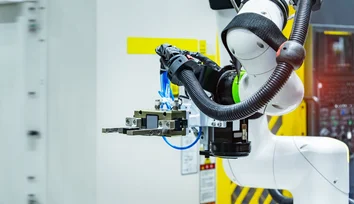
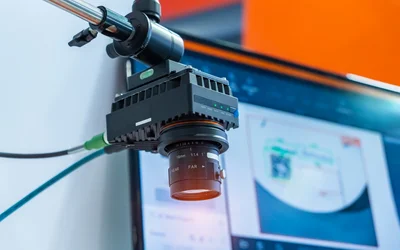
A deep-dive listicle guiding controls, automation, and quality engineers toward the best vision systems for manufacturing applications in 2026.
Understanding industrial vision systems by examining their components, imaging fundamentals, AI integration since 2020, and how to choose the right solution for every application.
The AI-powered tool could inform the design of better sensors and cameras for robots or autonomous vehicles.
In his doctoral research, Daan de Geus worked on advanced image processing methods that allow robots and cars to better recognize what they see around them.

5 minutes read
Achieving a noteworthy milestone to advance noninvasive brain-controlled interfaces, researchers used AI technology to improve the decoding of human intention and control a continuously moving virtual object all by thinking about it, with unmatched performance.

3 minutes read
Explore the transformative impact of predictive maintenance in industrial automation. Discover how Infineon’s advanced predictive maintenance solution enables operational efficiency, reduces downtime, and fosters sustainable industrial growth through innovative edge-to-cloud integration.
This podcast episode promises to supercharge your understanding of the next big thing in IoT.
Researchers have developed a security solution for power-hungry AI models that offers protection against two common attacks.
Physicists from ITMO University have created an AI-based solution to make quantum states remain stable for longer for the processing, reliable recording, and storage of information. This study, described in a recent article in Applied Physics Letters, may help pave the way to quantum computers.

2 minutes read
Wevolver was present at the recent Embedded World event in Nuremberg to launch the 2024 Edge AI report.
In this episode, we discuss research coming out of Columbia University to better connect humans with robots by having them detect, process, and respond to facial expressions!

17 minutes read
Low-cost, wearable sensors could increase access to care for patients with Parkinson’s disease. New machine-learning approaches and a baseline of data from healthy older adults improve the accuracy of the results from such sensors

3 minutes read
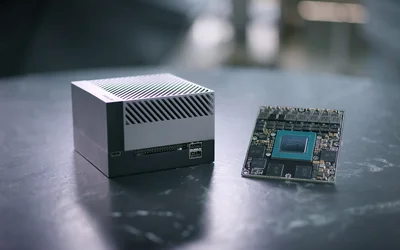
Nvidia Jetson and Edge Impulse facilitate Edge AI development, offering computational power and model training platforms for real-world applications.
A new technique can be used to predict the actions of human or AI agents who behave suboptimally while working toward unknown goals.
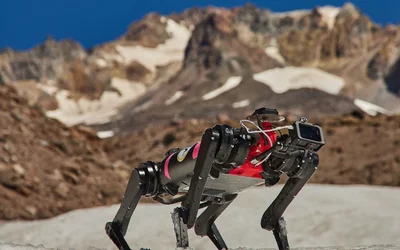
Researchers at Georgia Tech have teamed up with NASA and five peer institutions to teach dog-like robots to navigate craters of the moon and other challenging planetary surfaces.

4 minutes read
Learn how bluetooth connected AI/ML microcontrollers are setting the bar for next generation wearables.
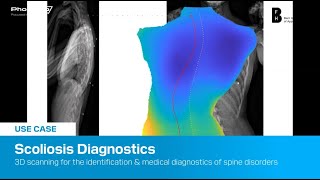
Using a 3D scanning approach such as Photoneo MotionCam-3D for scoliosis diagnosis provides a noninvasive method that can prevent invasive medical procedures and radiation risks from medical X-ray examinations.

4 minutes read
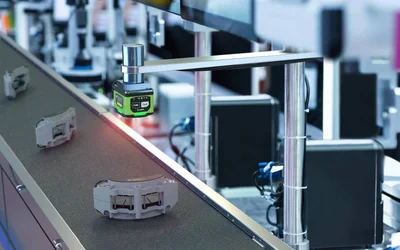
Discover the revolutionary impact of machine vision in manufacturing. Learn how integrating AI and machine vision enhances efficiency, quality, and safety in industrial automation, and explore the challenges and future advancements in this cutting-edge technology.