Featured
IT Researchers Further Develop Intelligent Speech Recognition and Translation System: Automatic Text Segmentation, Summarization, and Intelligent Query Possible

IT Researchers Further Develop Intelligent Speech Recognition and Translation System: Automatic Text Segmentation, Summarization, and Intelligent Query Possible
IT Researchers Further Develop Intelligent Speech Recognition and Translation System: Automatic Text Segmentation, Summarization, and Intelligent Query Possible
AI design tools offer engineers a key benefit: freedom from limitations.
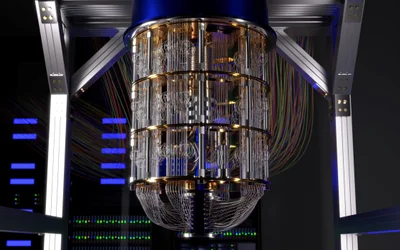
Article #2 of Engineering the Quantum Future Series: Recent breakthroughs in quantum computing made substantial strides, driving closer to practical applications that could revolutionize industries by solving complex computational problems more efficiently.
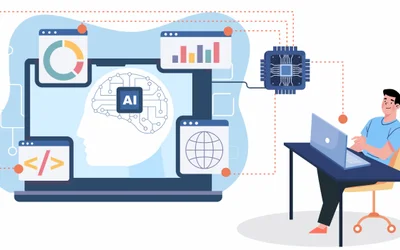
Artificial intelligence (AI) is a wide-ranging tool that enables people to rethink how we integrate information, analyze data, and use the resulting insights to improve decision making
15 minutes read.
20 minutes read.
13 minutes read.
17 minutes read.
25 minutes read.
11 minutes read.


Entertainment
The Next Byte Podcast is hosted by two young engineers - Daniel and Farbod - who select the most interesting tech/engineering cont...
165 Posts

High Tech
High Tech Campus Eindhoven is Europe's smartest square km and has the ultim...
49 Posts

University for science and technology
Freedom and individual responsibility, entrepreneurial spirit and open-min...
43 Posts
From leading experts at the CDFAM Computational Design Symposium
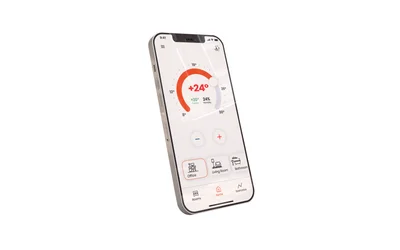
eCozy 2.0 system addresses the limitations of traditional thermostats for water heating radiators, delivering efficiency, convenience and sustainability benefits to households
Protect the cloud by securing the edge with hardware-based security, TPMs, HSMs, and resilient edge computing architectures.
Explore the rise of intelligent EV hardware and how real-time processing, ML acceleration, and hardware virtualization are enabling safer, smarter, software-defined electric vehicles.
EPFL researchers are developing AI models that could one day enable vision prosthetics able to restore meaningful, object-level sight for the blind.
A deep-dive listicle guiding controls, automation, and quality engineers toward the best vision systems for manufacturing applications in 2026.
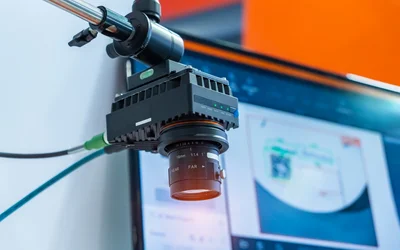
Understanding industrial vision systems by examining their components, imaging fundamentals, AI integration since 2020, and how to choose the right solution for every application.
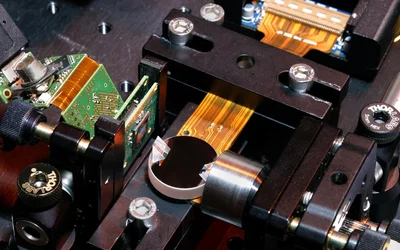
The AI-powered tool could inform the design of better sensors and cameras for robots or autonomous vehicles.
IT Researchers Further Develop Intelligent Speech Recognition and Translation System: Automatic Text Segmentation, Summarization, and Intelligent Query Possible

2 minutes read
AI design tools offer engineers a key benefit: freedom from limitations.

4 minutes read
Article #2 of Engineering the Quantum Future Series: Recent breakthroughs in quantum computing made substantial strides, driving closer to practical applications that could revolutionize industries by solving complex computational problems more efficiently.
McKelvey’s Chien-Ju Ho working with Art & Sciences’ Wouter Kool, DCDS PhD student Lauren Treiman to understand how human behavior changes in training AI

3 minutes read
Texas A&M researchers are using AI to improve the management of disasters like hurricanes before, during and after the events.

3 minutes read
EPFL scientists have developed an AI-based technique to improve chemical analysis of nanomaterials, overcoming challenges of noisy data and mixed signals.

3 minutes read
In this episode of the “This is Our Mission” podcast, Sean Hehir interviews Dr. Eric Gallo, a Senior Principal at Accenture Labs. They discuss the advantages of neuromorphic technology and its impact on edge computing, as well as advancements in SpaceTech.
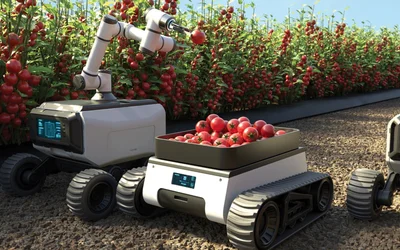
Learn about some of the trends driving the use of technology in agriculture.
9 minutes read
Moving Your ML Proof of Concept to Production Part 1: From Business Goals to ML Metrics
Columbia Engineering wins a new grant from the National Oceanic and Atmospheric Administration to develop AI-system for sustainable waterways and ocean health

3 minutes read
Research Facility 2.0 (RF 2.0) is an EU-funded research project aimed at making the operation of particle accelerators and other large-scale facilities more resource-efficient.
4 minutes read
Researchers at Fraunhofer Institute have developed a free, online tool for testing the robustness of AI models

2 minutes read
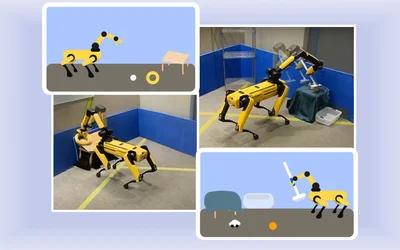
The phrase “practice makes perfect” is usually reserved for humans, but it’s also a great maxim for robots newly deployed in unfamiliar environments.
EPFL researchers have published a programmable framework that overcomes a key computational bottleneck of optics-based artificial intelligence systems.
3 minutes read
Imagine an industrial plant where machines autonomously predict maintenance needs and optimize operations. Such efficiency is powered by IoT architecture. This guide breaks down the layers of IoT, from sensors collecting data to intelligent apps providing insights.