
Enabling High-Efficiency, Safe, and Reliable Power Electronics with Advanced Passive Solutions
Be the first to know.
Get our power conversion weekly email digest.
Tagged with
power conversion
ORGANIZATIONS. SHAPING THE INDUSTRY.

Latest Posts

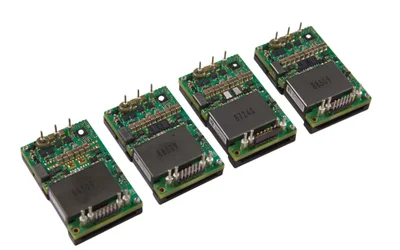
OmniOn Power's new Osprey bus converters dissipate about 30% less at 54 V input and full load. Applications include data centers and high-density computing, distributed power architectures, and 12V intermediate bus applications.

Explore power optimization in multiprotocol smart homes using integrated wireless SoCs for secure, compact, battery-powered smart locks.

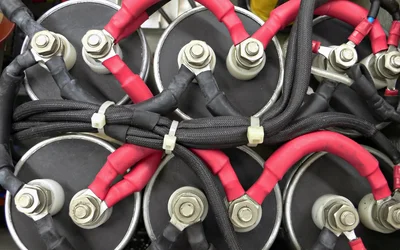
Explore power conversion efficiency in battery-powered systems, from buck-boost converters and battery chargers to low-power PMIC design.

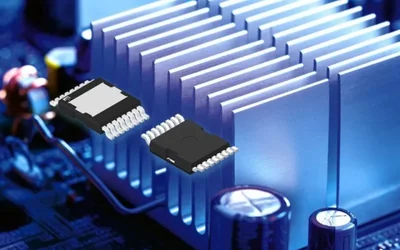
Two new parts move an existing super junction die into a top-side-cooled package. In production now, with a 16-week lead time.
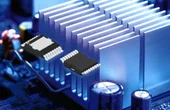

Explore how renewable energy, SiC inverters, battery storage, and smart technologies are accelerating the decentralization of power grids.


A shunt resistor turns a current you cannot measure directly into a small voltage you can. This guide covers how shunt resistors work, how to size one, why manganin dominates precision designs, and where real measurement errors come from.


The Allegro MicroSystems ACS37035 AEC-Q100 1MHz Hall-Effect Current Sensor is an isolated current sensor designed for high-frequency current measurement in power conversion and automotive applications.

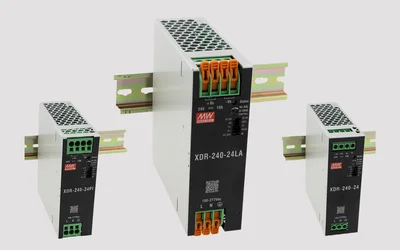
The XDR Series offers reduced inrush current, improved transient-handling capabilities, and rigorous qualification standards, giving engineers a robust, compact, and digitally integrated power architecture for their industrial designs.
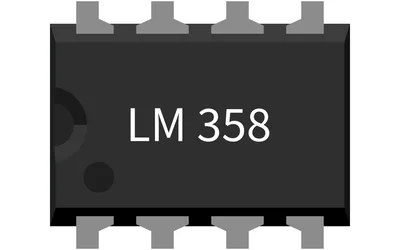
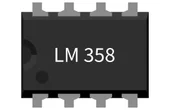
The LM358 is a dual operational amplifier that runs from a single power supply and senses all the way down to ground. This guide covers the pinout, specs that actually constrain your design, the output stage behaviour that catches engineers out, and worked circuit examples.
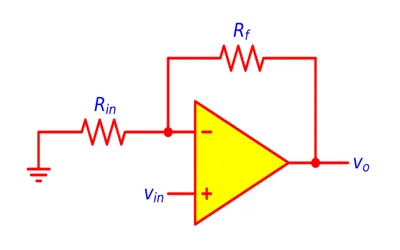
An instrumentation amplifier is a precision differential amplifier designed to amplify small voltage differences. This guide explains the three-op-amp architecture, and how to choose between INA128, AD620, LT1167, and a standard difference amplifier for sensor front-ends.
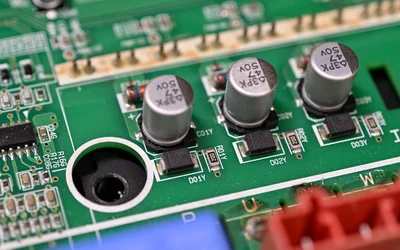
A full-wave rectifier converts both AC halves to DC, doubling efficiency. Learn working, types, filtering, and applications.
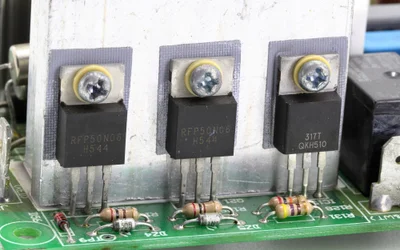
A device-level reference for the insulated gate bipolar transistor.
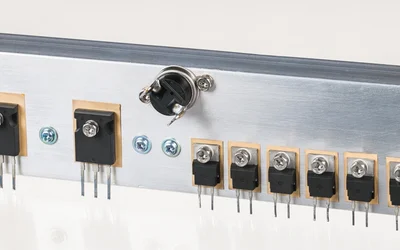
Engineering reference for high voltage, high-current power conversion.
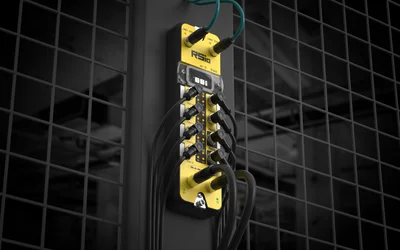
Industrial facilities are in constant need of upgrades, with machines regularly added, removed, or replaced. With the Banner RSio, safety systems engineers can transition to a more optimized distributed safety architecture, making upgrades and maintenance easier.