





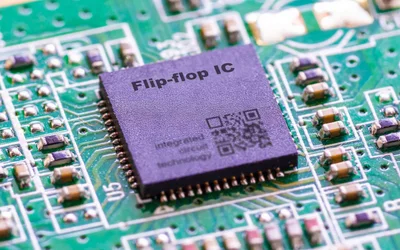
A comprehensive technical guide to flip-flop circuits for digital designers and hardware engineers. Learn the core theory behind latches and flip-flops, explore SR, D, JK, and T types, master critical timing concepts, and apply practical design strategies through real-world examples.
Be the first to know.
Get our electronics weekly email digest.
Tagged with
electronics
ORGANIZATIONS. SHAPING THE INDUSTRY.
Latest Posts

Enhance environmental control with the customizable RHT1 module by ScioSense, delivering precise, reliable humidity and temperature sensing for smarter, more efficient electronic systems.

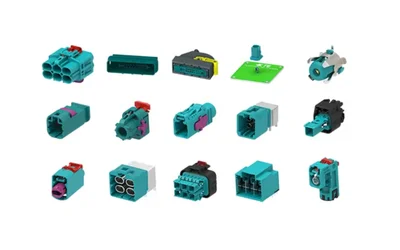
Building the Data Backbone of Vehicles with GEMnet Solutions by TE Connectivity — combining Multi-Gigabit Bandwidth, Robust EMI Shielding, and Automotive-Grade Durability
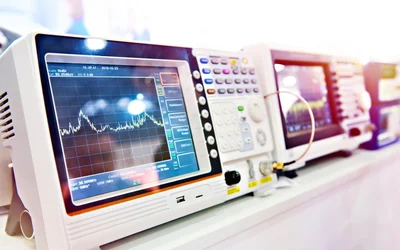
Article #7 of Mastering RF Engineering: RF testing and measurement are essential to achieving accuracy and reliability in wireless systems. They ensure that every component and signal path performs as intended across varying frequencies, environments, and applications.


Navigating Obsolescence, Supply-Chain Security, and Modernization in Industrial Systems

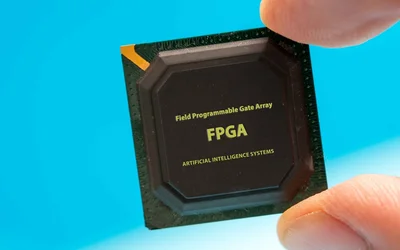
Discover how Field Programmable Gate Arrays (FPGAs) work, why they matter, and where they are used today. It covers core architectural concepts, compares FPGAs to ASICs and CPUs, and explores applications across communications, finance, aerospace, automotive, AI, medical

Article #5 of Mastering RF Engineering: Digital RF technology merges signal processing with high-frequency design, using DSP, ADCs, and DACs to enable advanced capabilities like beamforming, MIMO, and software-defined flexibility in compact modern systems.

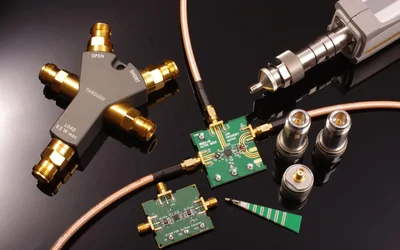
Article #4 of Mastering RF Engineering: High-frequency performance in RF systems depends on more than just components, it begins with the circuit itself. Advances in materials, fabrication, and interconnect design are redefining how modern RF systems achieve unmatched performance and reliability.
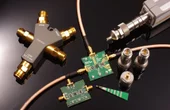
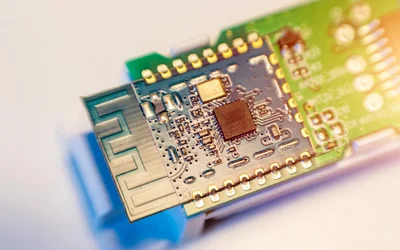
Article #3 of Mastering RF Engineering: Antenna design impacts RF system performance. This article covers selection, design, testing, and compliance for RF, microwave, and mmWave applications, ensuring efficiency, reliability, and regulatory approval.
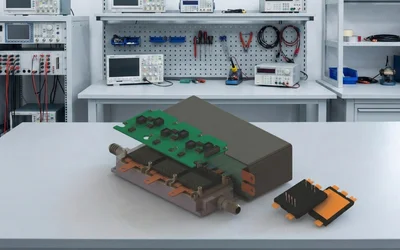
Conventional power electronic devices continue to evolve and remain widely used despite the rise of wide-bandgap technologies. Their strong cost-performance, supply, and proven reliability make them practical choices for applications where miniaturization or weight reduction dont add much value.

Discover how hardware teams accelerate development by enabling external partners to collaborate in the same live design environment—not through files, but shared context.

4 minutes read


In this episode, we explore how researchers used a fiber-optic style thermal drawing process (similar to stretching candy) to create liquid-metal smart fibers that sense motion with high precision, unlocking new possibilities for wearables, soft prosthetics, and touch-sensitive humanoid robots.

13 minutes read
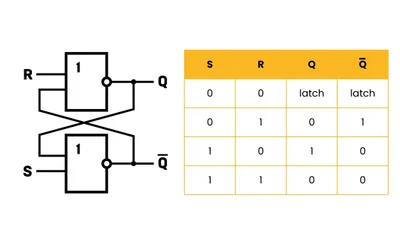
This article explores the basics of SR Latch, covering its fundamental principles and implementation using NOR and NAND gates, metastability and race conditions, illustration of gated variants and real world applications such as switch debouncing and integrated latch ICs.

Article #2 of Mastering RF Engineering: RF signal chains are key to wireless systems. Learn how components like amplifiers, filters, and mixers help plan RF designs, balance performance needs, and decide between custom-built or pre-made modules.


The Photonics & Intelligence Behind TDK's Innovative AR Stack