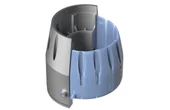





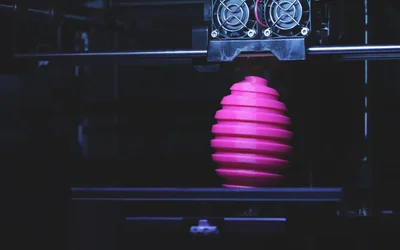
Nozzle diameter and layer height can both greatly affect the resolution, printing time, and appearance of 3D printed parts. They are also connected to each other in an important way.
Be the first to know.
Get our digital manufacturing weekly email digest.
Tagged with
digital manufacturing
ORGANIZATIONS. SHAPING THE INDUSTRY.
Latest Posts

CNC machining is a great option for many projects, but you need to be aware of what using the technology means for your design. In this video we explore CNC milling and lathing, features such as holes and threading, wall thickness, and how to test that your design is suitable for CNC machining.

4 minutes read

3D printers promise endless applications. However, sometimes reality gets in the way of that promise. One example of where that can happen is when trying to print something that needs to hold water, only to watch it leak like a sieve. Read on to find out to avoid such a tragic waste of liquid.

8 minutes read


Researchers at Texas A&M University are seeking to implement a new method of manufacturing 3D nanostructured surfaces consisting of multiple materials by using a high-throughput, high-precision technique.

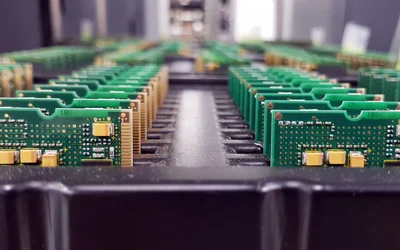
Maintaining supply chain resilience in the face of increasing global uncertainty.

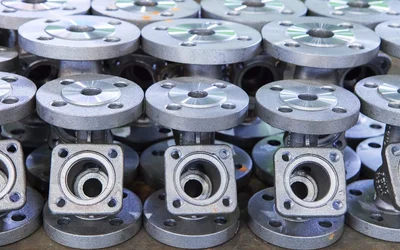
Manufacturers of pumps and assemblies are usually faced with the challenge of accurately measuring complex components with internal contours, such as flow channels inside impellers or pump housings with their complex geometries.

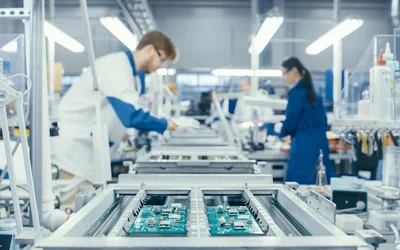
Cloud manufacturing enables new rapid prototype approaches under uncertain supply chain conditions.

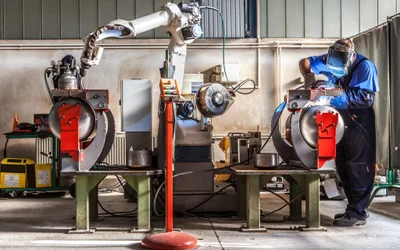
Digital transformations can have significant upside for the businesses that undertake them: improved efficiency, increased output, reduced costs, and more stable operations to name a few.

3 minutes read

This video will look deeper into CNC automation, but perhaps not in the way you think. We will aim to give you insights on how automation can help prove your design and optimise your part and process for cost effective, quick CNC production.
4 minutes read

During material supply shortages, consider these resin substitutes for ABS, PC, PP, and other commonly moulded thermoplastics.


Typical industries that use 3D printing are automotive and medical, but you probably don't expect to hear fashion and jewellery. However, these industries are increasingly turning to 3D printing due to its ability to produce fine details, iterate designs quickly and display quality finishes.
3 minutes read

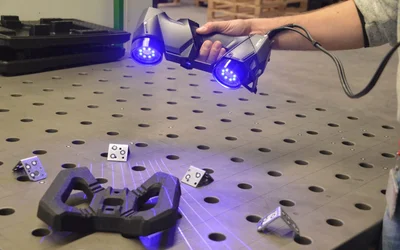
The HandySCAN BLACK Elite 3D scanner has become an integral part of quality control
2 minutes read


Protolab's supported General Drones with the creation of numerous high-density and low-porosity parts that made up the Auxdron LFG; a purpose-built drone which responds to emergencies at sea.
4 minutes read

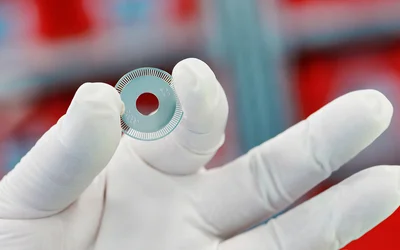
Based on electrodeposition, electroforming is a unique process that enables the production of accurate metal components with complex features like micro-precision perforations.

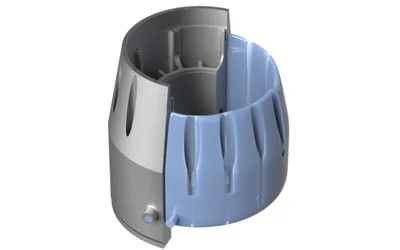
Lightweighting isn’t a new concept in engineering, but its relevance and importance are evolving. Find out why lightweighting matters today and how you can maximize its potential benefits by applying the latest developments in engineering design technology.

6 minutes read