Next-Gen Connectors for Satellites and Spacecraft: Enabling Reliability Beyond Earth
Explore how next-generation connectors enable reliable power and data transmission in satellites and spacecraft, overcoming extreme temperature, vacuum, radiation, and launch stresses.

26 Feb, 2026. 7 minutes read
Why Connector Reliability Matters in Space
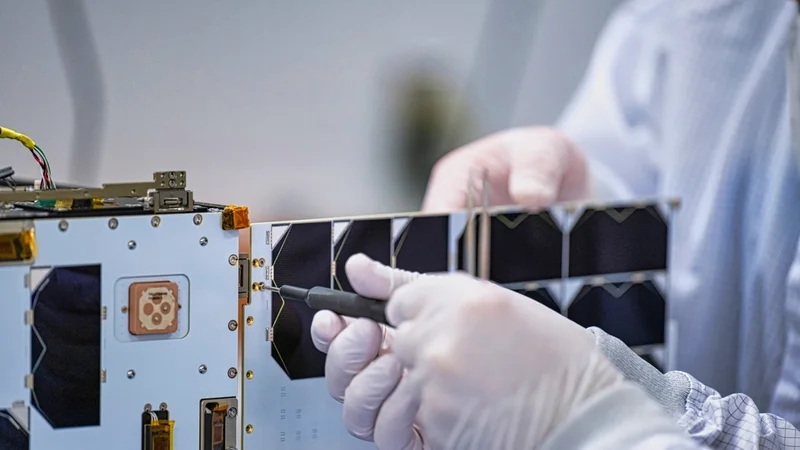
Modern spacecraft and satellites need uninterrupted electrical power and data transmission to perform their functions. Earth-observation satellites, CubeSats, and deep-space probes depend on reliable interconnects to support all onboard systems. Power distribution, sensor data transfer, command execution, and communications all rely on connectors functioning without interruption for years.
Although connectors are small and relatively low-cost compared to other subsystems, they have a huge influence on mission success. A single intermittent contact or mechanical failure can disrupt communications, compromise data integrity, or lead to complete system loss. These problems can be tackled in terrestrial or industrial systems, but space offers no opportunity for maintenance or repair once deployed. This makes connector selection a critical engineering decision.
This article explores next-generation connector requirements for satellites and spacecraft and examines how harsh space environments influence connector performance. It also considers how careful engineering decisions and established connector technologies, including solutions from companies such as Harwin1, can contribute to long-term mission reliability.
The Harsh Realities of Space Environments
Space presents a fundamentally different environment from any Earth-based application. Connectors used in space should operate reliably under such conditions.
Temperature Extremes and Thermal Cycling
Satellites and spacecraft routinely experience extreme temperature variations. Their components may be exposed to intense solar heating in direct sunlight and then plunge into deep cold as they pass through Earth’s shadow. These temperature swings can recur during each orbit, resulting in continuous thermal cycling throughout a mission’s lifetime.
Thermal expansion and contraction place stress on connector housings, contacts, and solder joints. Differences in the coefficients of thermal expansion between metals and insulating materials can lead to micro-fractures, gradual loosening of contacts, or changes in contact resistance. Over time, these effects can result in intermittent electrical connections that are difficult to predict or model during ground testing. Therefore, it is necessary to prioritize material stability and mechanical tolerance to repeated thermal stress for connectors used in space applications.
Vacuum Conditions
The vacuum of space poses challenges, particularly for polymer-based materials. In low-pressure environments, certain plastics and insulating compounds can outgas, releasing trapped volatile compounds. These vapors may condense on sensitive surfaces such as optical sensors, solar panels, or thermal control elements, and can potentially degrade system performance.
Outgassing can also affect the connector itself, leading to insulation breakdown or contamination of contact surfaces. Therefore, materials used in space-qualified connectors need to meet strict outgassing requirements defined by organizations like NASA and ESA. Low-outgassing plastics and carefully selected plating materials are essential for maintaining long-term electrical integrity in vacuum conditions.
Radiation Exposure
Spacecraft electronics get exposed to ionizing radiation from solar activity and cosmic sources. Over long-duration missions, this radiation can alter the physical and electrical properties of materials used in connectors. For instance, radiation can make plastics brittle, and metallic surfaces can experience gradual degradation that affects conductivity and contact resistance. Radiation effects accumulate over time, making radiation-tolerant material selection very important for missions with extended lifespans.
Vibration & Shock During Launch
The most physically violent stage of any mission is the launch, during which components are subjected to intense vibration and shock. High g-loads and resonant vibrations place substantial strain on all onboard components, including connectors. Poorly secured contacts or inadequate retention mechanisms can fail during this phase, leading to latent defects that become apparent once the spacecraft is operational.
Connectors used in space applications require robust locking mechanisms, secure mating interfaces, and housings that withstand high g-forces without deformation. Even though these stresses are short-lived compared to on-orbit conditions, launch survivability is a central requirement for connector qualification and testing processes.
Key Connector Requirements for Spaceborne Electronics
High Signal Integrity in Miniaturized Systems
Modern satellites and spacecraft are expected to deliver high-level functionality within constrained volumes, particularly for small satellites and CubeSats. These platforms usually carry advanced sensors, onboard processing systems, and high-speed communication links despite their reduced size. Connectors should support higher data rates and tighter signal routing without introducing excessive noise or loss within these constrained volumes. Connector performance depends on controlled impedance, stable contact resistance, and consistent mating interfaces. Small variations in connector performance in dense electronic assemblies can degrade signals, making electromagnetic compatibility and shielding considerations an integral part of connector design.
Low Mass Without Sacrificing Strength
Mass constraints in space systems directly influence launch costs and mission feasibility. Every gram saved at the component level can contribute to greater payload capacity or reduced launch expenses. Although connectors are individually lightweight, they can add up significantly across complex systems.
However, reducing connector mass should not come at the expense of mechanical strength or reliability. Instead, a balance among factors such as material thickness, contact size, and housing design is needed to achieve weight reduction while preserving structural integrity. Advanced alloys, optimized geometries, and high-density layouts are commonly used to meet these competing requirements.
Long-Term Mechanical Stability
Spaceborne systems are typically deployed with no opportunity for maintenance, repair, or replacement. Once launched, connectors are expected to perform reliably for years, sometimes decades, under constant exposure to thermal cycling, radiation, and mechanical stress. Therefore, long-term mechanical stability is extremely important.
In this regard, the key considerations include contact retention force and resistance to wear. Mating cycles are typically limited in space applications, but connectors must still tolerate assembly, testing, and integration processes without degradation. Mechanical stability also includes resistance to fretting corrosion, micro-motion under vibration, and gradual relaxation of contact springs. Designs prioritizing long-term stability help reduce the risk of intermittent faults that compromise mission objectives.
Where Harwin’s Technologies Fit Naturally?
Developing connectors that meet space constraints requires experience in extreme environments and rigorous quality control. Harwin’s background in aerospace, defense, and high-reliability markets positions its technologies well for space applications.
High-Reliability Interconnects for Extreme Conditions
Harwin has extensive experience supplying interconnect solutions for extreme conditions applications, including military systems, unmanned aerial vehicles, and space platforms. This experience informs connector designs that emphasize mechanical robustness, stable electrical performance, and consistent manufacturing quality.
Many of Harwin’s high-reliability connectors are designed to withstand vibration, shock, and wide temperature ranges, making them suitable for the mechanical and thermal stresses encountered during launch and orbital operation. For instance, Harwin’s M300 Series high-reliability power connectors are engineered with features that support space applications. These connectors use a proven four-finger beryllium copper contact design that maintains electrical continuity under high vibration and shock, and they incorporate stainless-steel jackscrews to secure mating interfaces during launch stresses.2,3,4
The M300 Series components are rated to operate across a wide temperature range from -65°C to +175°C, exhibit low outgassing properties that meet NASA space vacuum requirements, and are durable through more than 1,000 mating cycles, making them suitable for both system integration and long-term in-orbit performance.2,3,4
Lightweight, High-Density Connectors
Satellite architectures are moving toward superior functionality within smaller volumes. Harwin’s miniature connector families address the need for high-density interconnects without excessive mass. Fine-pitch designs allow engineers to route power and data efficiently while maintaining controlled impedance and reducing electromagnetic interference. These connectors support compact avionics, modular subsystems, and densely packed electronics commonly found in CubeSats and small satellite platforms.
Proven Flight Heritage
In space engineering, proven flight heritage is an important factor in component selection. Harwin connectors have been used in a range of space missions, including CubeSats, low Earth orbit satellites, and space robotics applications. This heritage provides engineers with confidence that the connectors have performed reliably under real mission conditions.
A practical example of a lightweight, high-density connector supporting modern small-satellite designs is Harwin’s 1.25 mm pitch high-reliability Gecko series. These connectors were selected for use in a research CubeSat mission, where they linked the imaging payload to the onboard controller and remained fully operational after launch and deployment in low Earth orbit. Engineers chose the Gecko connectors over traditional Micro-D interconnects in part because their glass-filled thermoplastic housings provide substantial weight savings, while still maintaining the necessary insulation and environmental resilience.5
The housings tolerate temperatures from -65 °C to +150 °C and exhibit low outgassing, which is advantageous around sensitive optical components. Moreover, the Gecko’s four-finger beryllium copper contact design enhances mechanical robustness against vibration and shock, supporting reliable data transmission and mission longevity in spaceborne environments.5
Practical Selection Guidelines for Aerospace Engineers
Selecting the right connector for a space application requires a systematic evaluation of electrical, mechanical, and environmental factors.
Defining Electrical & Signal Needs Early
Early in the design process, engineers should clearly define electrical requirements, including pin count, current ratings, voltage levels, and data rates. High-speed interfaces may require controlled impedance and shielding, whereas power connections should accommodate expected loads with appropriate safety margins. Addressing these needs early helps narrow down suitable connector families and avoids late-stage redesigns that can impact schedules and costs.
Evaluating Mechanical Robustness
Evaluating mechanical performance is also important. Engineers should assess retention forces, vibration resistance, mating mechanisms, and allowable mating cycles. Connectors should be compatible with the expected assembly processes and capable of surviving both launch loads and long-term operational stresses. Testing data on shock, vibration, and thermal cycling can provide insight into real-world performance.
Considering Total System Integration
Connector selection should not occur in isolation. Board-to-board layouts, cabling and harnessing strategies, thermal management, and accessibility during assembly all influence connector suitability. Poor integration can introduce unnecessary stress on connectors or complicate system assembly. Close collaboration between electrical, mechanical, and systems engineers helps ensure that connectors are integrated to support overall system reliability.
Qualification & Testing Standards
Usually, space programs require compliance with recognized quality and manufacturing standards such as EN/AS 9100D which govern quality management systems in the aviation, space, and defense sectors. Working with suppliers like Harwin, that already design and test connectors to these standards, can reduce qualification effort and improve confidence in component reliability. Environmental testing, including thermal-vacuum, vibration, and radiation exposure, is a critical part of connector validation for space applications.
Conclusion
In space systems, connectors are far more than simple hardware components. They are mission-critical elements that must perform reliably in environments characterized by extreme temperatures, vacuum conditions, radiation exposure, and mechanical stress. Failure at the connector level can compromise entire missions. Engineers can reduce risk and support long-term mission success by understanding environmental challenges and aligning connector choices with system-level requirements.
For engineers developing space platforms, working with experienced suppliers and flight-proven interconnect technologies can provide valuable assurance. Harwin’s range of high-reliability, lightweight connectors offers solutions designed to meet the demanding requirements of modern space missions. More information on these solutions can be found on Harwin’s website.
References
Harwin. [Online] Available at: harwin.com (Accessed on January 09, 2026)
M300. Compact power solution, resistant to vibration & shock [Online] Harwin. Available at: harwin.com/hri-range/m300 (Accessed on January 09, 2026)
M300 Series Connectors [Online] Digiki. Available at: digikey.no/harwin/m300-series-connectors
Harwin for Space [Online] Harwin. Available at: harwin.com/markets/space (Accessed on January 09, 2026)
New Space Success for Harwin's 1.25mm Pitch High-Reliability Gecko Connectors [Online] Harwin. Available at: harwin.com (Accessed on January 09, 2026)