Featured
The virtual VideoCAD tool could boost designers' productivity and help train engineers learning computer-aided design.

The virtual VideoCAD tool could boost designers' productivity and help train engineers learning computer-aided design.
The virtual VideoCAD tool could boost designers' productivity and help train engineers learning computer-aided design.
Join Prof. Fei Chen as he explores advanced bimanual manipulation and teleoperation techniques shaping the future of intelligent human-like robots in this expert-led robotics session.
The landscape of IoT development is evolving rapidly, and staying ahead requires more than just technical know-how, it demands a strategic shift in how we approach building connected devices.
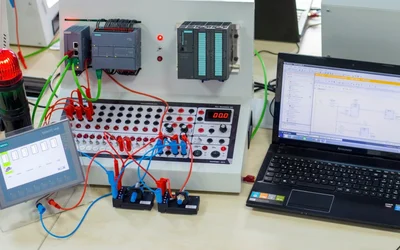
In this article, we'll see how PLC and SCADA systems differ, how they work together, and which protocols, scan times and security controls matter in industrial automation.
18 minutes read.
17 minutes read.
23 minutes read.
18 minutes read.
18 minutes read.
15 minutes read.

Semiconductors
Nordic Semiconductor is a fabless semiconductor company specializing in wireless technology that powers the IoT.
181 Posts

High Tech
High Tech Campus Eindhoven is Europe's smartest square km and has the ultim...
49 Posts

University for science and technology
Freedom and individual responsibility, entrepreneurial spirit and open-min...
43 Posts

Higher Education
Work together. Create smart machines. Serve society. University of Michiga...
40 Posts
A modern vehicle's competitive advantage lies in compiled firmware. Binary-level protection secures that code without source access, hardware changes, or a heavy memory budget.
AI-ready tools for embedded development evolve how engineers address real-world challenges.
Mario Mauerer, maxon's Global Business Development Manager, Robotics, discusses what it takes for robotic deployments to be successful in complex real-world environments.
Join Prof. Fei Chen as he explores advanced bimanual manipulation and teleoperation techniques shaping the future of intelligent human-like robots in this expert-led robotics session.
'Link-bots' can move, explore, cooperate without sensing or computation
This article is part 4 of a 4-part article series on TDK's advanced robotics.
The virtual VideoCAD tool could boost designers' productivity and help train engineers learning computer-aided design.
Join Prof. Fei Chen as he explores advanced bimanual manipulation and teleoperation techniques shaping the future of intelligent human-like robots in this expert-led robotics session.
The landscape of IoT development is evolving rapidly, and staying ahead requires more than just technical know-how, it demands a strategic shift in how we approach building connected devices.

3 minutes read
Today almost 30 percent of embedded projects have over 100,000 lines of code, and this increasing complexity is now the number one driver of project delays, and the reason 60 percent of an embedded development project's cost is software.

4 minutes read
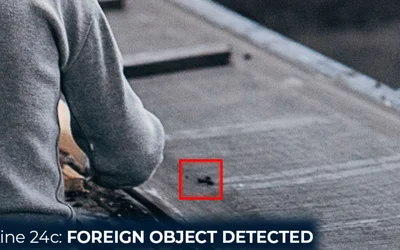
In large-scale warehousing and distribution operations, conveyor belts are an essential infrastructure that must operate with near-zero downtime to ensure the timely delivery of products. The presence of loose or foreign items on a conveyor belt can pose a serious risk to these operations.

2 minutes read
Integrating Non-Terrestrial Networks (NTN) with cellular IoT delivers seamless global connectivity, powered by the nRF9151 module for hybrid GEO, LEO, and terrestrial communication.
Discover how no-code/low-code platforms are transforming embedded development by enabling rapid prototyping and deployment with minimal coding. Explore tools like LabVIEW, Node-RED, and XOD that simplify IoT, automation, and industrial system design.
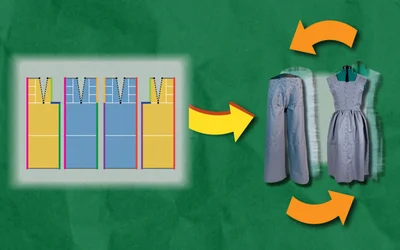
To reduce waste, the Refashion program helps users create outlines for adaptable clothing, such as pants that can be reconfigured into a dress. Each component of these pieces can be replaced, rearranged, or restyled.
Smart eyewear promises to transform how we see and interact with the world. Among its many potential advantages, the technology offers hands-free access to information, vision enhancement, and accessibility tools.
4 minutes read
Machine learning, wearable sensors could help reduce injury, improve form

4 minutes read
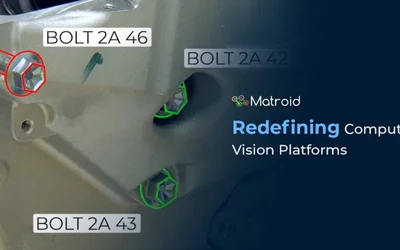
The no-code platform from Matroid trains ordinary cameras to act like expert inspectors, turning simple footage into a pixel-level defect checklist. Even a handheld GoPro can spot issues human eyes miss—using remarkably small datasets.
4 minutes read
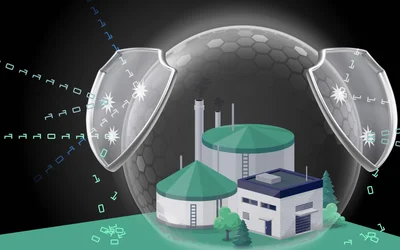
Texas A&M researchers have developed a new cyber defense system to improve the safety of critical infrastructure.

2 minutes read
Learn more about the engineering considerations for integrating NTN capabilities into IoT devices, covering the trade-offs of remote reporting, fallback connectivity, and continuous satellite use.
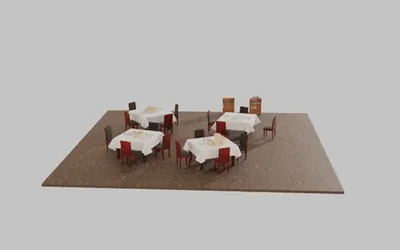
New tool from MIT CSAIL creates realistic virtual kitchens and living rooms where simulated robots can interact with models of real-world objects, scaling up training data for robot foundation models.
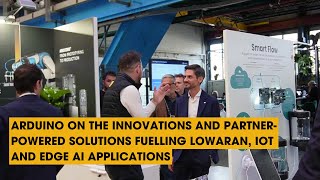
At The Things Conference, Stefano Implicito, Marketing Director at Arduino, highlighted the innovations and partner-driven solutions powering LoRaWAN, IoT, and edge AI applications. Wevolver got an exclusive firsthand look at some of the exciting projects.