Featured
Article #2 of the IoT Foundation Series. Smart homes are created by well-matched devices and communication protocols.

Article #2 of the IoT Foundation Series. Smart homes are created by well-matched devices and communication protocols.
Article #2 of the IoT Foundation Series. Smart homes are created by well-matched devices and communication protocols.
Article #1 of the IoT Foundation Series. An overview of the key technologies that will enable smarter, more convenient, and sustainable cities.
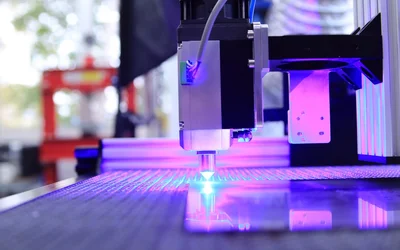
In this episode, we talk about how a breakthrough with compact laser nano-printers can make them more accessible for researchers and how leveraging 3D printing technology and machine learning will provide essential insight for developing next-gen cochlear implants.
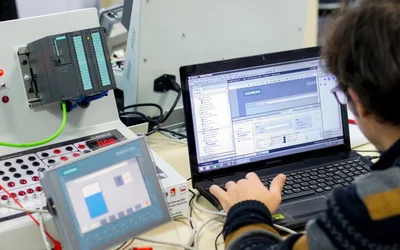
This article is a practical PLC programming guide covering the five IEC 61131-3 languages, the scan cycle that governs how your code actually runs, ladder and structured text examples, and the mistakes that cost engineers the most commissioning time.
23 minutes read.
18 minutes read.
18 minutes read.
15 minutes read.
13 minutes read.
17 minutes read.

Semiconductors
Nordic Semiconductor is a fabless semiconductor company specializing in wireless technology that powers the IoT.
181 Posts

High Tech
High Tech Campus Eindhoven is Europe's smartest square km and has the ultim...
49 Posts

University for science and technology
Freedom and individual responsibility, entrepreneurial spirit and open-min...
43 Posts

Higher Education
Work together. Create smart machines. Serve society. University of Michiga...
40 Posts
embedded world North America is the premier trade show and conference dedicated to the community of innovators and developers in the embedded tech ecosystem.
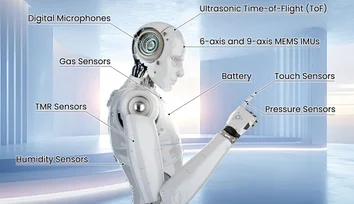
How Embedded Systems, AI, and Human-Centered Design Are Driving the Future of Robotics
Learn why teams still lose half their development time to test and fix, and what changes when you get real visibility into the target.
Mario Mauerer, maxon's Global Business Development Manager, Robotics, discusses what it takes for robotic deployments to be successful in complex real-world environments.
Join Prof. Fei Chen as he explores advanced bimanual manipulation and teleoperation techniques shaping the future of intelligent human-like robots in this expert-led robotics session.
'Link-bots' can move, explore, cooperate without sensing or computation
This article is part 4 of a 4-part article series on TDK's advanced robotics.
Article #2 of the IoT Foundation Series. Smart homes are created by well-matched devices and communication protocols.
Article #1 of the IoT Foundation Series. An overview of the key technologies that will enable smarter, more convenient, and sustainable cities.
In this episode, we talk about how a breakthrough with compact laser nano-printers can make them more accessible for researchers and how leveraging 3D printing technology and machine learning will provide essential insight for developing next-gen cochlear implants.

Removing litter from oceans and seas is a costly and time-consuming process. As part of a European cooperative project, a team at the Technical University of Munich (TUM) is developing a robotic system that uses machine learning methods to locate and collect waste under water.
Ultra-precise lasers can be used for optical atomic clocks, quantum computers, power cable monitoring, and much more. But all lasers make noise, which researchers from DTU Fotonik want to minimize using machine learning.

4 minutes read
At READY we want to engage the landscape of developers outside the robotics industry to be programmers in the robotics industry.

4 minutes read
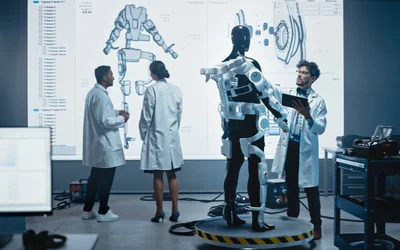
People living with disabilities don't want special treatment; they want equal opportunity. The ability to act independently of, and at the same time connect with, others when moving, communicating, learning, working, and socializing.

3 minutes read
A guide to leverage energy harvesting technology, meet peak power requirements for data transmission, and pairing batteries with supercapacitors as an energy storage system.

7 minutes read
A smart building uses technology to obtain data. The data is then used to enable automatic, efficient, and economical use of resources while maintaining a safe and pleasant environment for occupants.

4 minutes read
In this article, we take a look at two tinyML projects that have the potential to make contributions towards sustainable development goals. While the first project is about revolutionising precision farming, the second one aims to create a network of low-cost sensors for mapping carbon emissions.
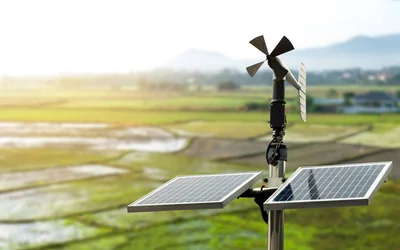
Energy harvesting will reduce the constant battery replacements in IoT sensors, benefitting maintenance engineers and future generations alike.
3 minutes read
Consumer demand for wearables is increasing, but after purchase, engagement is declining – why? Wearable technology has enjoyed a meteoric rise. Five years ago, approximately 115 million connected wearables were shipped. This year that figure is on target to hit 232 million units.
3 minutes read
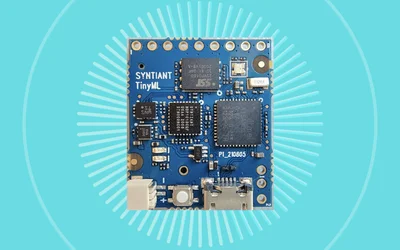
Edge Impulse recently announced official support for the Syntiant NDP101 processor, an always-on sensor and speech recognition processor, with ultra-low power consumption of less than 140 uW while recognizing words.

A guide for manufacturing enterprises looking to accelerate their pace of innovation

13 minutes read
This article describes how custom notification and alert services can help facility managers improve their processes, reduce response time, and increase the overall user satisfaction of modern facilities.

3 minutes read