Featured
Trustworthy and reliable applications are fueling the worldwide IoT success story. This article explains why protecting IoT edge devices is crucial in an environment with threats on the rise.
Trustworthy and reliable applications are fueling the worldwide IoT success story. This article explains why protecting IoT edge devices is crucial in an environment with threats on the rise.
Trustworthy and reliable applications are fueling the worldwide IoT success story. This article explains why protecting IoT edge devices is crucial in an environment with threats on the rise.
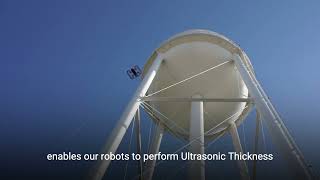
Intelligent flying robots are making their way into the Non-Destructive Testing industry. These robots are gaining attention in providing the industry with a safer and superior alternative to traditional methods.
Study shows that if autonomous vehicles are widely adopted, hardware efficiency will need to advance rapidly to keep computing-related emissions in check.
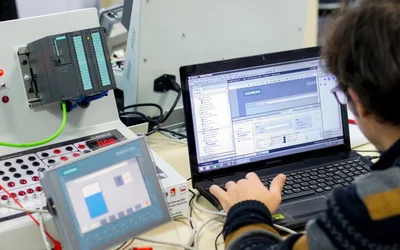
This article is a practical PLC programming guide covering the five IEC 61131-3 languages, the scan cycle that governs how your code actually runs, ladder and structured text examples, and the mistakes that cost engineers the most commissioning time.
23 minutes read.
18 minutes read.
18 minutes read.
15 minutes read.
13 minutes read.
17 minutes read.


Semiconductors
Nordic Semiconductor is a fabless semiconductor company specializing in wireless technology that powers the IoT.
181 Posts

High Tech
High Tech Campus Eindhoven is Europe's smartest square km and has the ultim...
49 Posts

University for science and technology
Freedom and individual responsibility, entrepreneurial spirit and open-min...
43 Posts

Higher Education
Work together. Create smart machines. Serve society. University of Michiga...
40 Posts
embedded world North America is the premier trade show and conference dedicated to the community of innovators and developers in the embedded tech ecosystem.
How Embedded Systems, AI, and Human-Centered Design Are Driving the Future of Robotics
Learn why teams still lose half their development time to test and fix, and what changes when you get real visibility into the target.
Mario Mauerer, maxon's Global Business Development Manager, Robotics, discusses what it takes for robotic deployments to be successful in complex real-world environments.
Join Prof. Fei Chen as he explores advanced bimanual manipulation and teleoperation techniques shaping the future of intelligent human-like robots in this expert-led robotics session.
'Link-bots' can move, explore, cooperate without sensing or computation
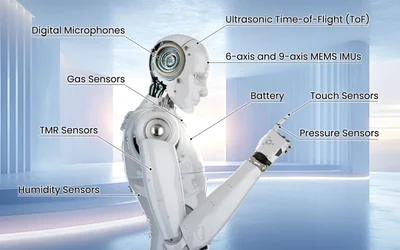
This article is part 4 of a 4-part article series on TDK's advanced robotics.
Trustworthy and reliable applications are fueling the worldwide IoT success story. This article explains why protecting IoT edge devices is crucial in an environment with threats on the rise.
Intelligent flying robots are making their way into the Non-Destructive Testing industry. These robots are gaining attention in providing the industry with a safer and superior alternative to traditional methods.

Study shows that if autonomous vehicles are widely adopted, hardware efficiency will need to advance rapidly to keep computing-related emissions in check.
Wi-Fi 6 has brought significant enhancements to IoT applications, but the Wi-Fi Alliance is already working ahead.

4 minutes read
Traditional washroom management faces many challenges. This article describes the benefits of using the YouTissue solution to equip custom projects with integrated hygiene solutions.

4 minutes read
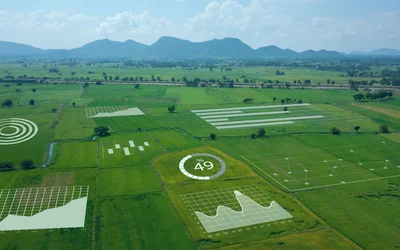
It is hard to think of a profession facing a more trying set of circumstances than farming. Climate change has brought higher temperatures and lower winter rainfall. Soil erosion, a loss of biodiversity, as well as myriad pests and diseases add to the farmer’s burden.
4 minutes read
In this episode, we talk about about how an ant inspired robotics platform could be the future of swarm robotics due to its simple, affordable, flexible, and scalable nature.

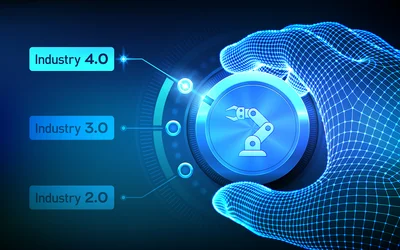
The Industrial Revolution began in Britain sometime around 1760. It ushered in a period where coal-fired steam engines powered increased mechanization and productivity and transformed a largely agrarian society into a manufacturing one.
4 minutes read
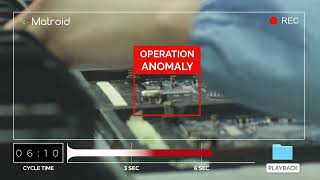
Deep-Learning technology helps industrial engineers with continuous improvement, line balancing, and optimizing manual labor.

2 minutes read
The natural resources around us represent the basis for all human activity on Earth. We use these resources to produce food, clean drinking water, clothes, electrical energy, and everything else we need to survive. But these resources are limited.
4 minutes read
Lightweight Machine to Machine, a simplified communication and device management standard for the Internet of Things.

5 minutes read
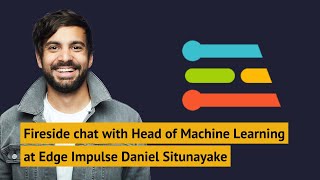
#10 of our Voice of Innovation fireside chat series: Robotics and AI reporter Rachel Gordon speaks to Daniel Situnayake, a founder, engineer, and teacher, on what it means to run sophisticated machine learning algorithms on small devices at the edge of a network.
Investors use ESG (environmental, social, and governance factors) to screen potential investments based on a company’s non-financial performance. IoT can make the collection and reporting of this data more accurate.
4 minutes read
You've probably heard about the amazing capabilities of some recent AI models, such as GPT, AI21, or BLOOM. Perhaps you use one of these models yourself. Either directly, or through another product like Wordtune, YouWrite, Jasper – or ChatGPT. It turns out that while these models are trained on language data, they can be used for other applications as well. In my latest article, you can read more about applications in materials discovery, cybersecurity, and even building management.

5 minutes read
The global agricultural and farming industry is facing a perfect storm. Earlier this month, the world population hit eight billion for the first time, in the two weeks since it has grown another 1.5 million. That is a lot of extra mouths to feed when there are already 690 million people going hungry, according to the Food and Agriculture Organization of the United Nations (FAO).
4 minutes read