Featured
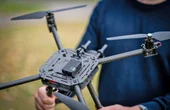
Beyond leisure, drones offer enormous potential for developing a wide array of innovative applications that benefit society.
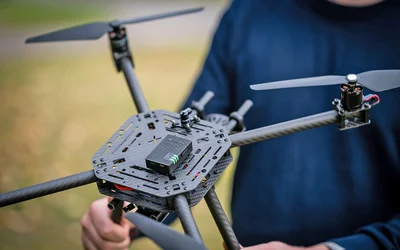
Beyond leisure, drones offer enormous potential for developing a wide array of innovative applications that benefit society.
Beyond leisure, drones offer enormous potential for developing a wide array of innovative applications that benefit society.
Introducing the Next-Gen Wi-Fi Applications and Solutions Series: Dive into the world of cutting-edge wireless communication. This new series introduces and explains the developments in Wi-Fi, 5G, and other RF technologies.
An effective IoT business model delivers added value to customers and allows seamless product monetization.
Exploring the design, development, connectivity, security, and more aspects of IoT devices
18 minutes read.
21 minutes read.
20 minutes read.
17 minutes read.
25 minutes read.
28 minutes read.

Electronics
Mouser Electronics is a worldwide leading authorized distributor of semiconductors and electronic components.
219 Posts
Semiconductors
Nordic Semiconductor is a fabless semiconductor company specializing in wir...
181 Posts
What a programmable automation controller is, how PACs are built and programmed, and how to choose between a PLC and a PAC.
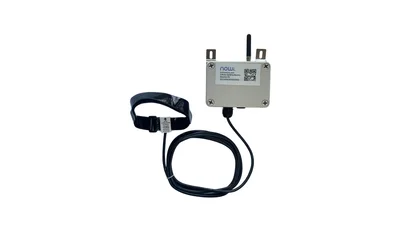
Explore how low-power sensor gateways enable reliable, long-range data collection for remote and distributed industrial IoT assets.
A compact, battery-powered sensing platform that wirelessly brings environmental and equipment-condition data from locations where traditional monitoring is difficult or impossible.
A Cat 1 bis platform that provides engineers with a practical path for long-term Global connectivity.
Real-time water monitoring and leak detection just got streamlined thanks to the nRF9151 – Nordic's low-power cellular IoT solution
A Cat 1 bis platform that provides engineers with a practical path for long-term Global connectivity.
The G+D Single Pane of Glass Delivers Secure, Remote, SGP.32-Driven IoT Management
As AI moves from screens into real environments, reliable and always-on connectivity are becoming a safety and scale requirement.
Beyond leisure, drones offer enormous potential for developing a wide array of innovative applications that benefit society.

3 minutes read
Introducing the Next-Gen Wi-Fi Applications and Solutions Series: Dive into the world of cutting-edge wireless communication. This new series introduces and explains the developments in Wi-Fi, 5G, and other RF technologies.
An effective IoT business model delivers added value to customers and allows seamless product monetization.

11 minutes read
Platform Integrity must be an essential design priority to ensure data protection.
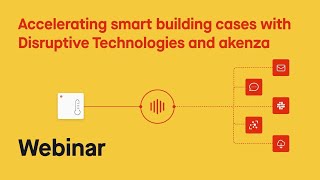
Establishing a Smart Building sounds difficult? It doesn’t have to be. In this webinar, we explain how you can make use of the smallest sensors in this world provided by Disruptive Technologies and the easiest low-code, self-service IoT enablement platform, akenza.

The IC manufacturing lifecycle is the foundation of IoT security.
The fourth industrial revolution has the potential to fundamentally transform the way humans and machines work today. Will it lead to an improvement in the quality of life? Or will it be a cause of widespread job losses and unrest?
Cellular IoT in both its LTE-M and NB-IoT flavors took longer than competing proprietary Local Wide Area (LWA) network technologies to come to market. As a direct result of this, they lost a lot of early market share.
4 minutes read
The technologies LTE-M, NB-IoT and LTE Cat 1bis are widely available as of today. 2022 might be the perfect year to kickstart your cellular IoT journey.

3 minutes read
Choosing Cellular or WiFi Article #2: Learn how you can determine the best choice for your IoT deployment.
Choosing Cellular or WiFi Article #1:Cellular and WiFi connectivity have their own distinct benefits for IoT. Learn about the strengths and weaknesses and application examples of each one.
The ins and outs of microcontrollers, and an overview of the difference between MCU and microprocessors (MPU).
IoT infrastructure has many weak spots which demand robust security assurance methods.
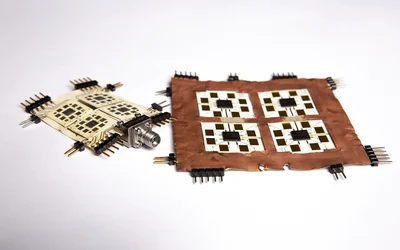
Manos Tentzeris and his team of Georgia Tech researchers flex their novel 5G+‐enabled massively scalable tile arrays

4 minutes read
The COVID-19 pandemic has accelerated the need for remote patient monitoring. New technologies that emerge from this need can forever improve healthcare and healthcare systems.
3 minutes read