Featured
Researchers have developed a new training tool to help artificial intelligence (AI) programs better account for the fact that humans don’t always tell the truth when providing personal information.

Researchers have developed a new training tool to help artificial intelligence (AI) programs better account for the fact that humans don’t always tell the truth when providing personal information.
Researchers have developed a new training tool to help artificial intelligence (AI) programs better account for the fact that humans don’t always tell the truth when providing personal information.
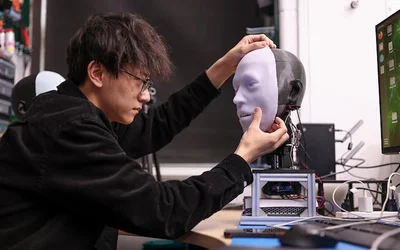
Columbia engineers build Emo, a silicon-clad robotic face that makes eye contact and uses two AI models to anticipate and replicate a person’s smile before the person actually smiles
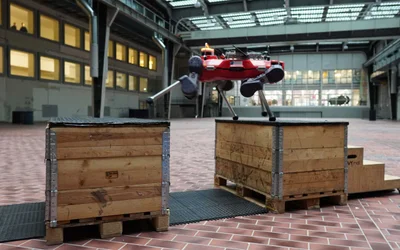
The quadrupedal robot ANYmal went back to school and has learned a lot. ETH Zurich researchers used machine learning to teach it new skills: the robot can now climb over obstacles and successfully negotiate pitfalls.
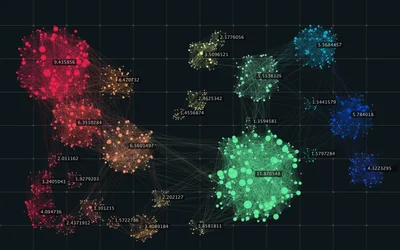
Unsupervised learning is a machine learning approach that finds patterns, structure, or useful representations in unlabeled data. It groups similar observations, compresses high-dimensional features, detects outliers, discovers item relationships, and supports modern representation learning.
13 minutes read.
17 minutes read.
11 minutes read.
16 minutes read.
14 minutes read.
14 minutes read.



High Tech
High Tech Campus Eindhoven is Europe's smartest square km and has the ultim...
49 Posts

University for science and technology
Freedom and individual responsibility, entrepreneurial spirit and open-min...
43 Posts
Protect the cloud by securing the edge with hardware-based security, TPMs, HSMs, and resilient edge computing architectures.
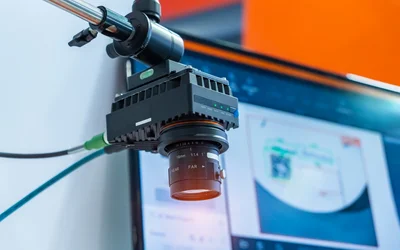
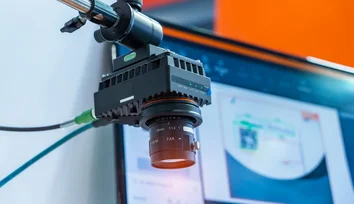
Understanding industrial vision systems by examining their components, imaging fundamentals, AI integration since 2020, and how to choose the right solution for every application.
Explore the rise of intelligent EV hardware and how real-time processing, ML acceleration, and hardware virtualization are enabling safer, smarter, software-defined electric vehicles.
A detailed engineering reference on performance, signaling, and power differences in current graphics memory standards.
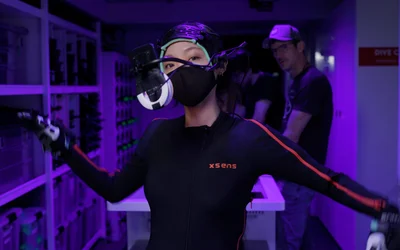
how Last Praetorian Interactive made Project Vesperi with one Xsens suit
With Xsens Motion Capture
With Xsens Indie Program
Researchers have developed a new training tool to help artificial intelligence (AI) programs better account for the fact that humans don’t always tell the truth when providing personal information.

2 minutes read
Columbia engineers build Emo, a silicon-clad robotic face that makes eye contact and uses two AI models to anticipate and replicate a person’s smile before the person actually smiles

4 minutes read
The quadrupedal robot ANYmal went back to school and has learned a lot. ETH Zurich researchers used machine learning to teach it new skills: the robot can now climb over obstacles and successfully negotiate pitfalls.

3 minutes read
A new algorithm reduces travel time by identifying shortcuts a robot could take on the way to its destination.
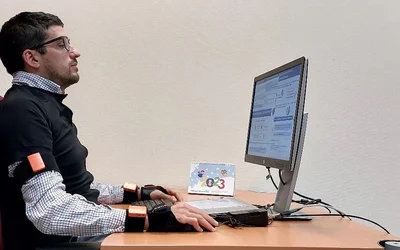
FREMAP uses Xsens motion capture to analyze the ergonomic impact of progressive lenses in the workplace and makes recommendations for improvement

4 minutes read
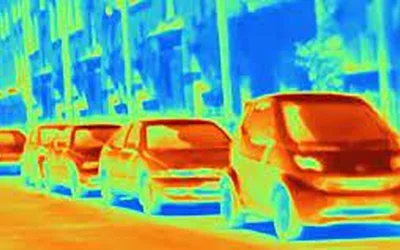
Researchers fabricate the world’s smallest QR code that, invisible to the naked eye, encrypts information to only be visible by an infrared camera lens.

2 minutes read
In the blink of an eye, the unruly, superheated plasma that drives a fusion reaction can lose its stability and escape the strong magnetic fields confining it within the donut-shaped fusion reactor.

6 minutes read
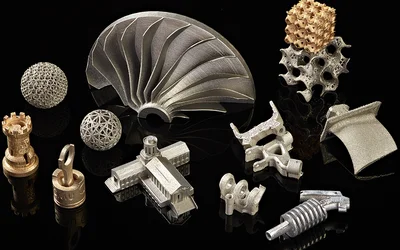
Researchers use AI and high-speed in-situ imaging to optimize process parameters for 3D printing metal alloys.
4 minutes read
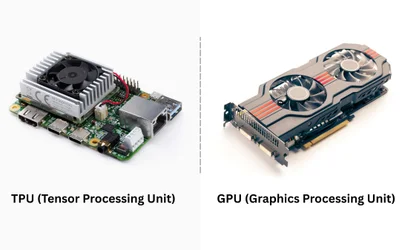
This article explores TPU vs GPU differences in architecture, performance, energy efficiency, cost, and practical implementation, helping engineers and designers choose the right accelerator for AI workloads today!
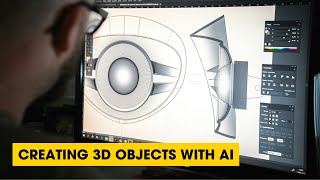
In this episode, we talk about the initiative from PolySpectra to generate 3D CAD models from text using AI.

19 minutes read
Researchers at EPFL have developed a new, uniquely modular machine learning model for flexible decision-making. It is able to input any mode of text, video, image, sound, and time-series and then output any number, or combination, of predictions.

3 minutes read
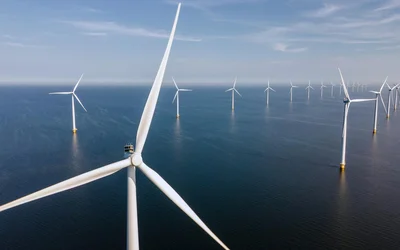
An international collaboration between EPFL and the University of Glasgow has led to an advanced machine-learning algorithm to effectively detect concealed manufacturing defects in wind turbine composite blades – before turbines are put into service.
3 minutes read
As network reliability is increasingly tested by aging power infrastructure and the complex demands of renewable energy, cellular IoT provides timely solutions.

5 minutes read
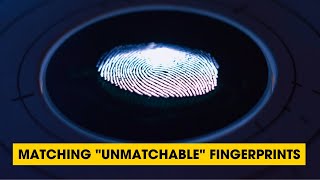
In this episode, we talk about how a driven undergraduate student from Columbia University mapped fingerprints from different fingers of the same person - which was widely known to be impossible by the experts in the field - using publicly available data and machine learning.
15 minutes read
Researchers have developed a virtual reality application where a range of 3D modelling tools can be opened and controlled using just the movement of a user’s hand.

3 minutes read