Featured
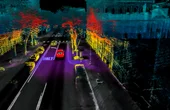
Texas A&M University is creating advanced mapping technologies to further the evolution of autonomous vehicles.
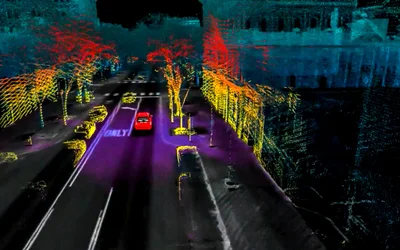
Texas A&M University is creating advanced mapping technologies to further the evolution of autonomous vehicles.
Texas A&M University is creating advanced mapping technologies to further the evolution of autonomous vehicles.
EPFL researchers have developed 4M, a next-generation, open-sourced framework for training versatile and scalable multimodal foundation models that go beyond language.
Using this model, researchers may be able to identify antibody drugs that can target a variety of infectious diseases.
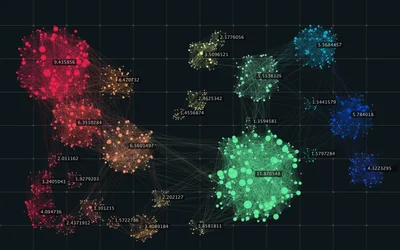
Unsupervised learning is a machine learning approach that finds patterns, structure, or useful representations in unlabeled data. It groups similar observations, compresses high-dimensional features, detects outliers, discovers item relationships, and supports modern representation learning.
13 minutes read.
17 minutes read.
11 minutes read.
16 minutes read.
14 minutes read.
14 minutes read.



High Tech
High Tech Campus Eindhoven is Europe's smartest square km and has the ultim...
49 Posts

University for science and technology
Freedom and individual responsibility, entrepreneurial spirit and open-min...
43 Posts
From leading experts at the CDFAM Computational Design Symposium
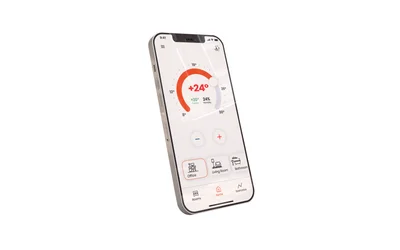
eCozy 2.0 system addresses the limitations of traditional thermostats for water heating radiators, delivering efficiency, convenience and sustainability benefits to households
Protect the cloud by securing the edge with hardware-based security, TPMs, HSMs, and resilient edge computing architectures.
Explore the rise of intelligent EV hardware and how real-time processing, ML acceleration, and hardware virtualization are enabling safer, smarter, software-defined electric vehicles.
With MVN Analyze
how Last Praetorian Interactive made Project Vesperi with one Xsens suit
With Xsens Motion Capture
Texas A&M University is creating advanced mapping technologies to further the evolution of autonomous vehicles.

3 minutes read
EPFL researchers have developed 4M, a next-generation, open-sourced framework for training versatile and scalable multimodal foundation models that go beyond language.

4 minutes read
Using this model, researchers may be able to identify antibody drugs that can target a variety of infectious diseases.
GPUs excel in parallel processing for graphics and AI training with scalability, while NPUs focus on low-latency AI inference on edge devices, enhancing privacy by processing data locally. Together, they complement each other in addressing different stages of AI workloads efficiently.
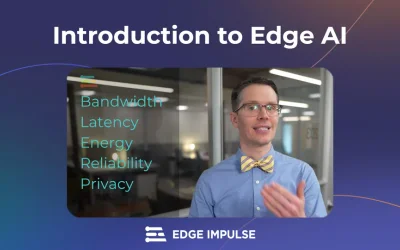
Edge AI is the process of running artificial intelligence (AI) and machine learning (ML) algorithms on computing devices at the periphery of a network, rather than on large cloud servers.

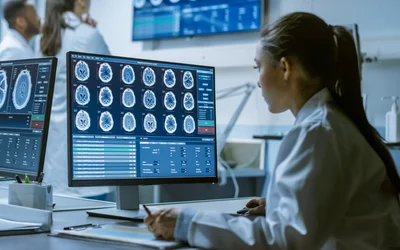
Artificial intelligence (AI) is rapidly transforming healthcare by leveraging machine learning techniques to analyze medical images, patient data, and genetic information with unprecedented speed and accuracy, significantly improving early disease detection and enhancing diagnostic precision.
A new technique identifies and removes the training examples that contribute most to a machine-learning model’s failures.
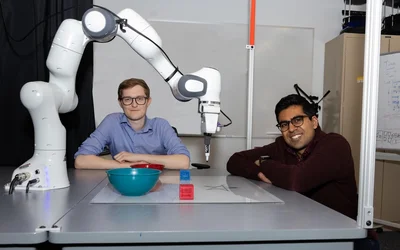
The “PRoC3S” method helps an LLM create a viable action plan by testing each step in a simulation. This strategy could eventually aid in-home robots to complete more ambiguous chore requests.
Researchers at Stanford Engineering have developed an AI-trained model to accurately recreate the hand movements of elite-level pianists and the physical stresses they endure while playing.

4 minutes read
According to , the global AI robotics market will reach $17 billion in 2024 and will keep growing by 24% annually. Today, robots deliver packages, conduct geological surveys, and entertain visitors of parks and exhibitions – however, that’s not the limit of their abilities.

5 minutes read
Brain–machine interfaces (BMIs) have enabled a handful of test participants who are unable to move or speak to communicate simply by thinking.

4 minutes read
Recently we launched new Edge Impulse functionality that shows just one of the powerful ways that LLMs can be utilized on the edge: using GPT-4o to train a 2,000,000x smaller model, that runs directly on device.
4 minutes read
A team of Caltech researchers has developed an analogous algorithm for autonomous robots—a planning and decision-making control system that helps freely moving robots determine the best movements to make as they navigate the real world.
4 minutes read
AI in the IoT also needs to be performed as close to the sensors as possible, all the way to the edge, on increasingly capable devices in terms of compute power.

4 minutes read
Creating realistic 3D models for applications like virtual reality, filmmaking, and engineering design can be a cumbersome process requiring lots of manual trial and error.