Featured
Arnaud Hubaux, Senior Technical Program Manager explains about optimization of ASML machines as part of a series from the founding partners of the AI Innovation Center at High Tech Campus Eindhoven.

Arnaud Hubaux, Senior Technical Program Manager explains about optimization of ASML machines as part of a series from the founding partners of the AI Innovation Center at High Tech Campus Eindhoven.
Arnaud Hubaux, Senior Technical Program Manager explains about optimization of ASML machines as part of a series from the founding partners of the AI Innovation Center at High Tech Campus Eindhoven.
Interesting discussion with Hod Lipson, the head of Creative Machines Lab, Columbia University in New York. In this episode, Can robots be Self-aware? Can robots design other robots and self-repair? Why should we evolve robots to do tasks that animals do so well?
The cloud accelerates innovation by enabling reducing the need for investment through pay-as-you-go models and increasing collaborative design opportunities.
Artificial intelligence (AI) is a wide-ranging tool that enables people to rethink how we integrate information, analyze data, and use the resulting insights to improve decision making
15 minutes read.
20 minutes read.
13 minutes read.
17 minutes read.
25 minutes read.
11 minutes read.


Entertainment
The Next Byte Podcast is hosted by two young engineers - Daniel and Farbod - who select the most interesting tech/engineering cont...
165 Posts

High Tech
High Tech Campus Eindhoven is Europe's smartest square km and has the ultim...
49 Posts

University for science and technology
Freedom and individual responsibility, entrepreneurial spirit and open-min...
43 Posts
From leading experts at the CDFAM Computational Design Symposium
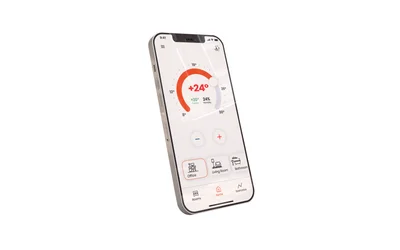
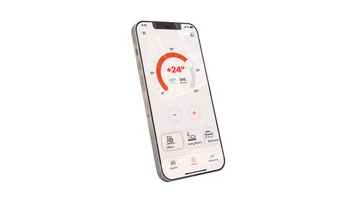
eCozy 2.0 system addresses the limitations of traditional thermostats for water heating radiators, delivering efficiency, convenience and sustainability benefits to households
Protect the cloud by securing the edge with hardware-based security, TPMs, HSMs, and resilient edge computing architectures.
Explore the rise of intelligent EV hardware and how real-time processing, ML acceleration, and hardware virtualization are enabling safer, smarter, software-defined electric vehicles.
EPFL researchers are developing AI models that could one day enable vision prosthetics able to restore meaningful, object-level sight for the blind.
A deep-dive listicle guiding controls, automation, and quality engineers toward the best vision systems for manufacturing applications in 2026.
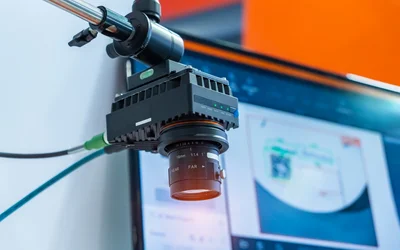
Understanding industrial vision systems by examining their components, imaging fundamentals, AI integration since 2020, and how to choose the right solution for every application.
The AI-powered tool could inform the design of better sensors and cameras for robots or autonomous vehicles.
Arnaud Hubaux, Senior Technical Program Manager explains about optimization of ASML machines as part of a series from the founding partners of the AI Innovation Center at High Tech Campus Eindhoven.

5 minutes read
Interesting discussion with Hod Lipson, the head of Creative Machines Lab, Columbia University in New York. In this episode, Can robots be Self-aware? Can robots design other robots and self-repair? Why should we evolve robots to do tasks that animals do so well?

The cloud accelerates innovation by enabling reducing the need for investment through pay-as-you-go models and increasing collaborative design opportunities.

5 minutes read
You can now build tiny machine learning (TinyML) models that interpret sensor data in realtime, from detecting lions roaring to tracking sheep workouts.

Neuralink is an ambitious startup backed by Elon Musk that hopes to rid the world of brain-related illnesses using a coin-sized chip
#3 of our 'Voice of Innovation' fireside chat series, in which Syntiant CEO Kurt Busch talks with innovator Fabio Violante
An introduction to the world of artificial intelligence
What may have started as a technology to have fun with, may very well change the way we tackle data protection and identity frauds.
Sebastiaan Laurijsse, Chief Transformation Strategist at Splunk and initiator of the AI Leadership Forum explains about the future of data as part of a series from the founding partners of the AI Innovation Center at High Tech Campus Eindhoven.
7 minutes read
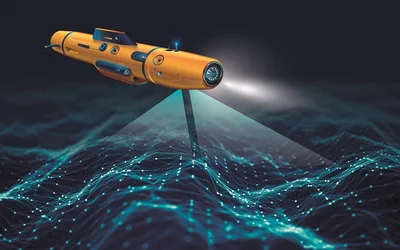
In the new DeeperSense project, an international consortium led by the German Research Center for Artificial Intelligence (DFKI) is working on technologies that combine the strengths of visual and acoustic sensors with the help of artificial intelligence.
In this episode, we talk about cutting vehicle emissions testing using IoT devices, creating shape memory textiles from recycled wool, and an initiative to develop hydrogen fuel cell powered airplanes.

Dedicated audio edge processors with machine learning will deliver increasingly natural communication experiences.

6 minutes read
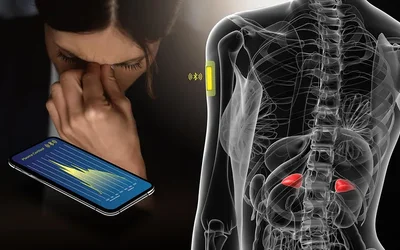
In this episode, we talk about a novel approach to detect Alzheimer's using retinal images, monitoring stress levels using sweat, and a new method of processing biomass which leads to better bioplastics.
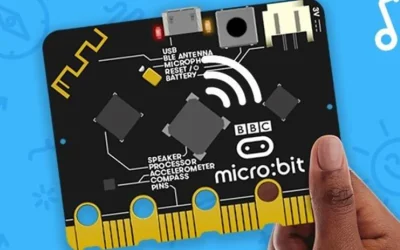
As children grow up in an increasingly connected world, it’s essential they understand not only the potential but also the inherent risks of emerging connected technologies.

3 minutes read
Embedded Machine Learning is not just another cool technology; Rather it is an enabler for better business results and improved bottom lines for enterprises in many different sectors