Featured
KIT researchers have developed first early-warning system that quantifies team performance drops and identifies crises at an early stage

KIT researchers have developed first early-warning system that quantifies team performance drops and identifies crises at an early stage
KIT researchers have developed first early-warning system that quantifies team performance drops and identifies crises at an early stage
Co-packaged optics integrates photonic engines directly with switch ASICs and AI accelerators, cutting power draw and latency at the board level. This article explains how CPO works, how it compares to pluggable and near-packaged optics, and what its benefits and challenges are.
Artificial intelligence (AI) is a wide-ranging tool that enables people to rethink how we integrate information, analyze data, and use the resulting insights to improve decision making
15 minutes read.
20 minutes read.
13 minutes read.
17 minutes read.
25 minutes read.
11 minutes read.


Entertainment
The Next Byte Podcast is hosted by two young engineers - Daniel and Farbod - who select the most interesting tech/engineering cont...
165 Posts

High Tech
High Tech Campus Eindhoven is Europe's smartest square km and has the ultim...
49 Posts

University for science and technology
Freedom and individual responsibility, entrepreneurial spirit and open-min...
43 Posts
From leading experts at the CDFAM Computational Design Symposium
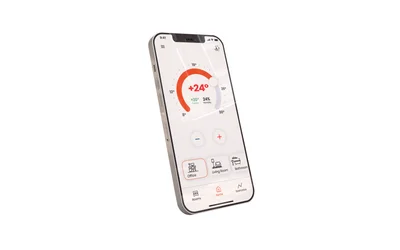
eCozy 2.0 system addresses the limitations of traditional thermostats for water heating radiators, delivering efficiency, convenience and sustainability benefits to households
Protect the cloud by securing the edge with hardware-based security, TPMs, HSMs, and resilient edge computing architectures.
Explore the rise of intelligent EV hardware and how real-time processing, ML acceleration, and hardware virtualization are enabling safer, smarter, software-defined electric vehicles.
EPFL researchers are developing AI models that could one day enable vision prosthetics able to restore meaningful, object-level sight for the blind.
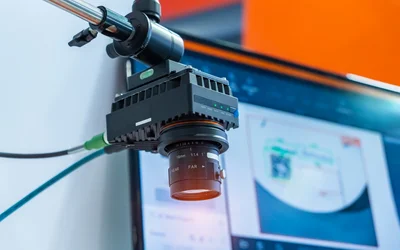
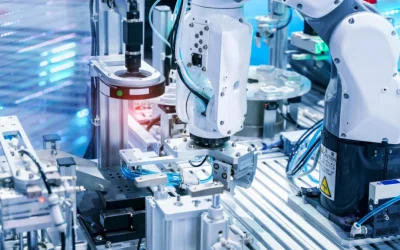
A deep-dive listicle guiding controls, automation, and quality engineers toward the best vision systems for manufacturing applications in 2026.
Understanding industrial vision systems by examining their components, imaging fundamentals, AI integration since 2020, and how to choose the right solution for every application.
The AI-powered tool could inform the design of better sensors and cameras for robots or autonomous vehicles.
KIT researchers have developed first early-warning system that quantifies team performance drops and identifies crises at an early stage
Scale AI capabilities on the edge.
Co-packaged optics integrates photonic engines directly with switch ASICs and AI accelerators, cutting power draw and latency at the board level. This article explains how CPO works, how it compares to pluggable and near-packaged optics, and what its benefits and challenges are.
For the first time researchers have used an advanced AI model that understands both images and language allowing them to model dyslexia, paving the way for potential new treatments.
Learn how edge AI in wireless vibration sensors improves machine health monitoring, extends battery life, and enables smarter predictive maintenance in factories.
Explore IoT security solutions with insights into the threat landscape, secure architectures, and best practices for engineers building resilient connected systems.
Practical and architectural insights into IoT gateways, including edge versus cloud placement, protocol translation, data aggregation, hardware designs, and deployment patterns for industrial IoT.
Researchers at ETH Zurich have now developed chip technology that enables verification of the authenticity of sensor data, including images or videos.

3 minutes read
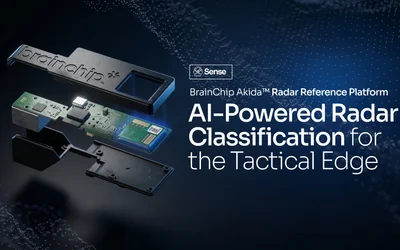
Adding Intelligence to Radar with the BrainChip Real-Time Micro-Doppler Classification
Training AI models is costly, forcing a trade-off between compressing large models or accepting weaker performance from smaller ones trained from scratch.
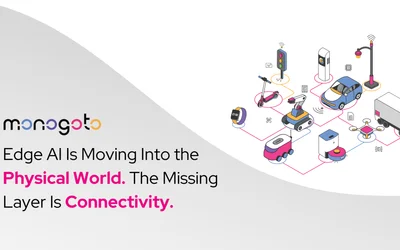
This is the real evolution of Edge AI: machines that perceive, reason, and act in the physical world.

Explore the Dead Internet Theory in the age of AI and learn how businesses can preserve trust, authenticity, and meaningful online communities despite the rise of automated content and bots.
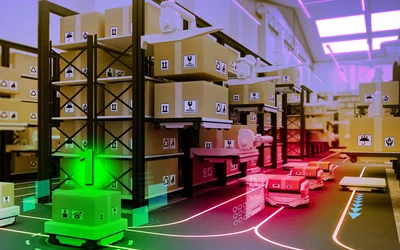
This new approach adapts to decide which robots should get the right of way at every moment, avoiding congestion and increasing throughput.
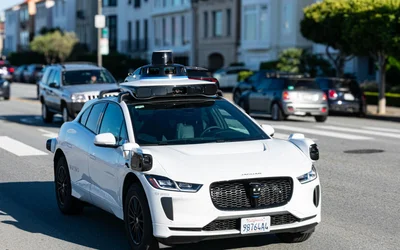
Driven by AI, the advent of autonomous mobility has accelerated in recent years. It has advantages that go beyond the asphalt.

4 minutes read
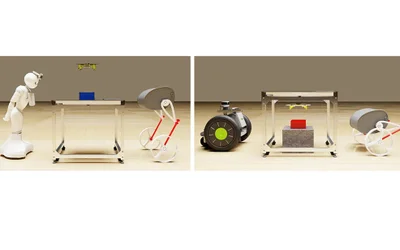
A team that included Chongzie Zhang from McKelvey Engineering developed a method that allows robots to teach other robots with different features to perform the same task.

2 minutes read