Using AI-Driven Digital Tools to Unlock Zero-Defect Manufacturing
AI tools like predictive maintenance, automated visual inspection, and intelligent supplier matching are setting a new standard for zero-defect manufacturing across the supply chain.

12 Nov, 2025. 6 minutes read
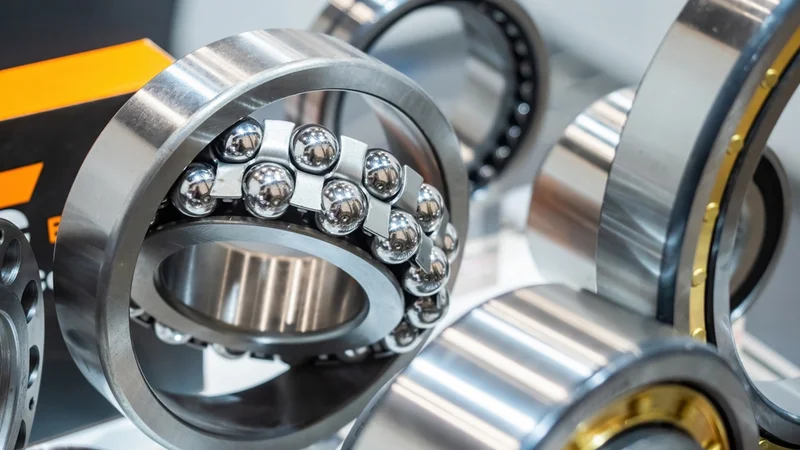
Zero-Defect Manufacturing: Industrial Bearings of Different Sizes
In the high-stakes world of modern manufacturing, a single defect can have cascading consequences. A microscopic crack in a turbine blade, an improperly seated component in a medical device, or a dimensional error in an automotive part can lead to catastrophic failures, costly recalls, and irreparable brand damage. It is therefore imperative that manufacturers can deliver high-quality components in a cost and time-efficient manner.
Central to this is the concept of zero-defect manufacturing (ZDM), a strategy that manufacturers in demanding industries, such as automotive and aerospace, subscribe to ensure that parts are made to specification the first time. While the original concept of “Zero Defects”—popular in the mid-1960s—was related to preventing production mistakes through worker motivation, today zero-defect manufacturing is made possible using cutting-edge digital tools, like AI-powered predictive maintenance and visual inspection, which enhance manufacturing workflows and ensure that no time or money is wasted on production errors.
Achieving flawless production across the broader manufacturing industry relies on two critical pillars: the optimization of in-house manufacturing processes using AI tools and the strategic refinement of external supply chains via intelligent digital platforms. In this article, we’ll be illuminating how AI-driven solutions are transforming factory floors into self-correcting ecosystems and how innovative digital manufacturing networks like FACTUREE are unlocking zero-defect manufacturing in the supply chain using data-driven solutions, ultimately making ZDM a tangible reality for businesses of all sizes.
The Aim of Zero-Defect Manufacturing
In its simplest terms, zero-defect manufacturing is a quality management strategy that aims to eliminate errors and defects from all stages of the production process, thereby enhancing efficiency in terms of both cost and time. If a zero-defect manufacturing strategy is effective, manufacturers will perform well in terms of the First Time Right (FTR) KPI.
While other quality management strategies have relied on quality control and inspection processes to weed out failed parts, zero-defect manufacturing puts a greater onus on earlier stages in the production workflow, aiming to prevent issues before any time and resources are spent on producing a failed component. To put it succinctly: zero-defect manufacturing eliminates rework, waste, and unpleasant surprises.
ZDM has been a particularly popular strategy in demanding industries like automotive and aerospace, which are bound by strict safety and compliance standards and have a significant interest in keeping production costs as streamlined as possible. In these industries and others, manufacturers have increasingly embraced digital production tools to underpin manufacturing steps and exert greater control over previously variable factors. As we’ll see in more detail, AI-driven tools are unlocking greater automation and stability across the production chain, providing real-time process monitoring, data-driven optimization, predictive maintenance, enhanced traceability, and overall greater efficiency.
Pillar One: Tighter In-House Process Controls with AI
For companies operating their own manufacturing facilities, artificial intelligence has become integral to achieving zero-defect manufacturing, with AI-driven technologies like machine learning and computer vision enabling manufacturers to exploit data from along the production chain to predict and prevent manufacturing failures, thus dramatically reducing (if not completely eliminating) waste and guaranteeing first-time-right parts.
AI is used in four key ways by manufacturers, taking a zero-defect approach in-house:
Predictive Quality Control
At its foundation, predictive quality control is about preventing defects rather than simply identifying them in the final stages of production. This works by using machine learning models that have been trained on process data (i.e., temperature, humidity levels, material properties, and machine settings) and can effectively identify patterns in this data that may lead to defects. For example, a machine learning tool could alert operators if a temperature range previously correlated with a defective component or batch is about to be reached, allowing for the production to be paused and recalibrated before defects occur.
Automated Visual Inspection
AI computer vision can reinforce predictive quality control by automating visual inspection processes, which were previously carried out manually and prone to human error. This has huge benefits in production workflows, as cameras equipped with computer vision can analyze parts in real time—and at various production stages—to identify defects or imperfections, like scratches, cracks and dimensional inaccuracies. This immediate identification can remove defective parts as they occur, thereby shortening the time and resources required to finish and inspect a faulty component. In sum, leveraging AI for visual inspection in the production chain accelerates inspection times, minimizes human error, and boosts overall inspection accuracy.
Predictive Maintenance
AI-driven predictive maintenance systems significantly contribute to the overall goal of zero-defect manufacturing. AI tools analyze machine data (gathered from sensors that measure temperature, vibration, gas, and humidity, among other things) to predict machine failures and alert operators to maintenance requirements. This proactive approach to maintenance can eliminate unplanned machine downtimes and ensure that when machines are running, they are consistently making flawless components. For example, predictive maintenance tools can detect when a CNC machine requires a tool change before the quality of machined parts is affected by the worn component.
Root Cause Analysis
Finally, AI-enabled root cause analysis is central to achieving long-term, sustainable zero-defect manufacturing. AI algorithms can analyze vast quantities of production data from both successful production runs and defective batches, and from this data can find patterns and inconsistencies that show precisely where issues are born. From there, manufacturers can rapidly implement measures to eliminate the root cause of the problem, thus reinforcing the production chain and increasing efficiency through continuous improvement.
Pillar Two: Applying ZDM to the Supply Chain with FACTUREE
A zero-defect approach doesn’t stop at the factory gate. No matter how refined internal processes may be, a production chain is only as strong as its weakest link. In an era where components are increasingly sourced through global networks, it is essential that each link in the supply chain adheres to the same zero-defect principles.
This is where the second pillar of ZDM begins: with the intelligent, AI-driven optimization of external procurement processes, where procurement is evolved from a logistical task to a core pillar of quality assurance.
With Germany-based FACTUREE, this vision becomes reality. The company’s platform takes a data-first approach, leveraging AI to apply the preventative principles of in-house ZDM to its vast manufacturing network of over 2,000 qualified manufacturers. The intelligent supplier matching platform eliminates uncertainty by embedding quality from the start and creates seamless quality assurance across the entire supply chain.
Here’s how FACTUREE’s AI delivers on the promise of zero-defect sourcing:
Deep Technical Analysis
From the start, FACTUREE’s AI performs an analysis of a customer's technical requirements. Using sophisticated algorithms to interpret CAD files that users upload to FACTUREE’s platform, the AI deconstructs the geometry into key manufacturability features like tolerances, complexity, and material. It matches these against a dataset of its manufacturing partners' proven capabilities. FACTUREE knows a supplier’s capabilities and matches parts based on proven experience, material, and quality history. This ensures a perfect technical fit, preventing defects that arise from a supplier being challenged beyond their demonstrated expertise.
Data-Driven Supplier Scoring
FACTUREE’s AI also employs a dynamic supplier scoring system that creates a "living profile" for every production partner. This profile is continuously updated with real-world performance data from every job they complete, tracking quality and reliability across all projects. It also integrates data on delivery records, standards compliance (ISO 9001, AS9100), and equipment calibration. This means the AI doesn't rely on a supplier's stated capabilities, but on their proven, documented performance, ensuring every project is awarded to a partner with a verifiable track record of excellence.
Quality Assurance and Process Transparency
The company’s intelligent supplier matching is reinforced by a system that brings transparency to the entire production process. FACTUREE coordinates the process and ensures that suppliers have proper documentation, such as material certificates. This allows FACTUREE’s engineers to monitor progress for their customers. This managed process culminates in a rigorous secondary inspection conducted by FACTUREE's quality team. This final check acts as the ultimate failsafe, verifying every dimension and requirement before the parts are ever shipped, guaranteeing a zero-defect outcome for the customer.
Conclusion
Zero-defect manufacturing is all about maximizing resources while consistently delivering on quality. Digital tools and AI systems are playing a key role in achieving ZDM in-house through the optimisation of internal processes, as well as ensuring it across external supply chains through intelligent networks like FACTUREE’s. Ultimately, both pillars are vital to creating a cohesive, data-driven manufacturing ecosystem that delivers on ZDM. By embracing both pillars, companies can finally move beyond the reactive cycle of defect detection and build a proactive, preventative strategy that delivers on the ultimate promise of zero-defect manufacturing: perfect quality, every time.
Learn more about FACTUREE’s digital manufacturing network or get a quote for a production job here.