Featured
Building on the success of conventional wearables, smart rings have been enthusiastically embraced by early adopters with a finger on the pulse of cutting-edge yet fashionable health and fitness wireless products.

Building on the success of conventional wearables, smart rings have been enthusiastically embraced by early adopters with a finger on the pulse of cutting-edge yet fashionable health and fitness wireless products.
Building on the success of conventional wearables, smart rings have been enthusiastically embraced by early adopters with a finger on the pulse of cutting-edge yet fashionable health and fitness wireless products.
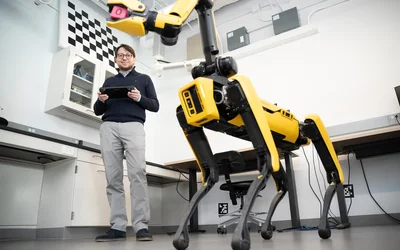
Associate Professor Luca Carlone is working to give robots a more human-like awareness of their environment.
Yevgeniy Vorobeychik, Ning Zhang and William Yeoh receive $1.5 million DoD grant to enhance multiple facets of generative AI
Artificial intelligence (AI) is a wide-ranging tool that enables people to rethink how we integrate information, analyze data, and use the resulting insights to improve decision making
15 minutes read.
20 minutes read.
13 minutes read.
17 minutes read.
25 minutes read.
11 minutes read.


Entertainment
The Next Byte Podcast is hosted by two young engineers - Daniel and Farbod - who select the most interesting tech/engineering cont...
165 Posts

High Tech
High Tech Campus Eindhoven is Europe's smartest square km and has the ultim...
49 Posts

University for science and technology
Freedom and individual responsibility, entrepreneurial spirit and open-min...
43 Posts
From leading experts at the CDFAM Computational Design Symposium
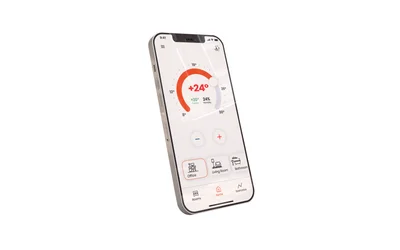
eCozy 2.0 system addresses the limitations of traditional thermostats for water heating radiators, delivering efficiency, convenience and sustainability benefits to households
Protect the cloud by securing the edge with hardware-based security, TPMs, HSMs, and resilient edge computing architectures.
Explore the rise of intelligent EV hardware and how real-time processing, ML acceleration, and hardware virtualization are enabling safer, smarter, software-defined electric vehicles.
EPFL researchers are developing AI models that could one day enable vision prosthetics able to restore meaningful, object-level sight for the blind.
A deep-dive listicle guiding controls, automation, and quality engineers toward the best vision systems for manufacturing applications in 2026.
Understanding industrial vision systems by examining their components, imaging fundamentals, AI integration since 2020, and how to choose the right solution for every application.
The AI-powered tool could inform the design of better sensors and cameras for robots or autonomous vehicles.
Building on the success of conventional wearables, smart rings have been enthusiastically embraced by early adopters with a finger on the pulse of cutting-edge yet fashionable health and fitness wireless products.

3 minutes read
Associate Professor Luca Carlone is working to give robots a more human-like awareness of their environment.
Yevgeniy Vorobeychik, Ning Zhang and William Yeoh receive $1.5 million DoD grant to enhance multiple facets of generative AI

2 minutes read
A new study in Nature by last year's Nobel Laureate in Chemistry reveals a possible game-changer in snakebite treatment. Researchers have created new proteins that neutralise lethal toxins found in snake venom, potentially offering a safer and more effective alternative to traditional antivenoms.

3 minutes read
NPUs are integrated units that excel in real-time AI tasks on edge devices like smartphones and IoT systems with low power consumption. TPUs are standalone processors designed for large-scale AI workloads in data centers, delivering exceptional performance in deep learning tasks.
Struggling with safety compliance and quality control in manufacturing? Discover how Matroid’s no-code computer vision platform is transforming the industry with real-time defect detection, PPE monitoring, and predictive maintenance.
Missed out latest webinar? Watch it on demand now to stay up to date with all the latest from Generative AI at the Edge.
Professor Anna Erickson highlights the reopening of Three Mile Island Unit 1 as a crucial step in meeting the growing energy demands of AI data centers with carbon-free nuclear power, aligning with Microsoft's sustainability goals.

3 minutes read
The use of generative artificial intelligence in protein design stands to revolutionize new drug development. EPFL ambitions putting together a consortium to further explore this avenue.

5 minutes read
Learn how agnostic systems like Awentia's No-Data Vision Foundation Model addresses key barriers to AI adoption such as data dependency, cost, and complexity across industries like agriculture, robotics and manufacturing.
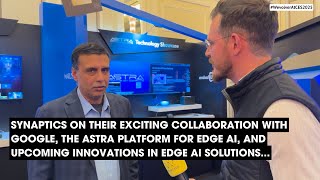
In an interview from CES 2025, Vikram Gupta, Chief Product Officer at Synaptics, discusses the company's strategic collaboration with Google to enhance Edge AI processors, emphasizing the importance of context-aware computing and AI-native platforms for improving user experience and efficiency.
Infineon’s Power System Reliability Modeling enhances power reliability in data centers by enabling real-time power supply monitoring, predictive maintenance, and lifetime estimation from component to system level.
This article is a detailed analysis of In-Memory Compute technology, covering its architecture, use cases, recent advancements, and practical implementation strategies to enhance computational efficiency.
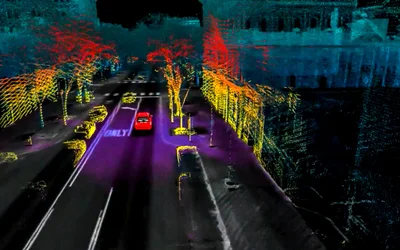
Texas A&M University is creating advanced mapping technologies to further the evolution of autonomous vehicles.

3 minutes read
In this episode, we recap our favorite episodes from 2024!

25 minutes read