Featured
Specialized microchips that manage signals at the cutting edge of wireless technology are astounding works of miniaturization and engineering. They’re also difficult and expensive to design.

Specialized microchips that manage signals at the cutting edge of wireless technology are astounding works of miniaturization and engineering. They’re also difficult and expensive to design.
Specialized microchips that manage signals at the cutting edge of wireless technology are astounding works of miniaturization and engineering. They’re also difficult and expensive to design.
EPFL researchers have developed 4M, a next-generation, open-sourced framework for training versatile and scalable multimodal foundation models that go beyond language.
Using this model, researchers may be able to identify antibody drugs that can target a variety of infectious diseases.
Artificial intelligence (AI) is a wide-ranging tool that enables people to rethink how we integrate information, analyze data, and use the resulting insights to improve decision making
15 minutes read.
20 minutes read.
13 minutes read.
17 minutes read.
25 minutes read.
11 minutes read.


Entertainment
The Next Byte Podcast is hosted by two young engineers - Daniel and Farbod - who select the most interesting tech/engineering cont...
165 Posts

High Tech
High Tech Campus Eindhoven is Europe's smartest square km and has the ultim...
49 Posts

University for science and technology
Freedom and individual responsibility, entrepreneurial spirit and open-min...
43 Posts
From leading experts at the CDFAM Computational Design Symposium
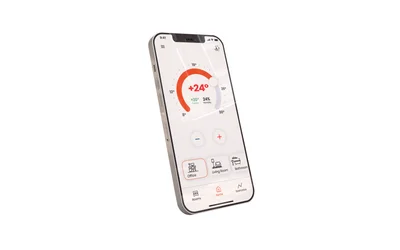
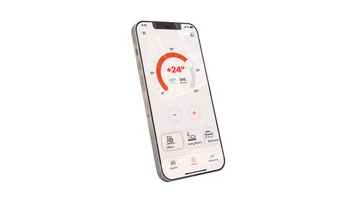
eCozy 2.0 system addresses the limitations of traditional thermostats for water heating radiators, delivering efficiency, convenience and sustainability benefits to households
Protect the cloud by securing the edge with hardware-based security, TPMs, HSMs, and resilient edge computing architectures.
Explore the rise of intelligent EV hardware and how real-time processing, ML acceleration, and hardware virtualization are enabling safer, smarter, software-defined electric vehicles.
EPFL researchers are developing AI models that could one day enable vision prosthetics able to restore meaningful, object-level sight for the blind.
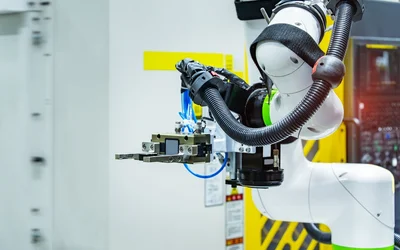
A deep-dive listicle guiding controls, automation, and quality engineers toward the best vision systems for manufacturing applications in 2026.
Understanding industrial vision systems by examining their components, imaging fundamentals, AI integration since 2020, and how to choose the right solution for every application.
The AI-powered tool could inform the design of better sensors and cameras for robots or autonomous vehicles.
Specialized microchips that manage signals at the cutting edge of wireless technology are astounding works of miniaturization and engineering. They’re also difficult and expensive to design.

4 minutes read
EPFL researchers have developed 4M, a next-generation, open-sourced framework for training versatile and scalable multimodal foundation models that go beyond language.

4 minutes read
Using this model, researchers may be able to identify antibody drugs that can target a variety of infectious diseases.
Researchers show how the use of machine learning enormously accelerates the search for new semiconducting molecules for perovskite solar cells

3 minutes read
GPUs excel in parallel processing for graphics and AI training with scalability, while NPUs focus on low-latency AI inference on edge devices, enhancing privacy by processing data locally. Together, they complement each other in addressing different stages of AI workloads efficiently.
An electronic stacking technique could exponentially increase the number of transistors on chips, enabling more efficient AI hardware.
AI is transforming healthcare by enhancing diagnostic accuracy, optimizing patient care, and improving treatment outcomes, while also necessitating careful consideration of ethics, privacy, and data security.
The term "smart building" refers to buildings with a building management system that automatically manages and controls various types of energy used in the building, such as lighting, air-conditioning, and water heating, using technologies such as IoT and AI.

6 minutes read
Edge AI is the process of running artificial intelligence (AI) and machine learning (ML) algorithms on computing devices at the periphery of a network, rather than on large cloud servers.

Artificial intelligence (AI) is rapidly transforming healthcare by leveraging machine learning techniques to analyze medical images, patient data, and genetic information with unprecedented speed and accuracy, significantly improving early disease detection and enhancing diagnostic precision.
A new technique identifies and removes the training examples that contribute most to a machine-learning model’s failures.
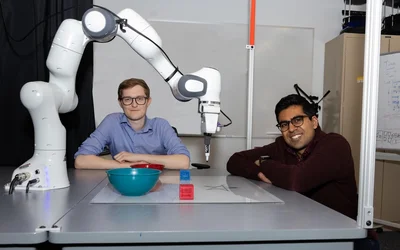
The “PRoC3S” method helps an LLM create a viable action plan by testing each step in a simulation. This strategy could eventually aid in-home robots to complete more ambiguous chore requests.
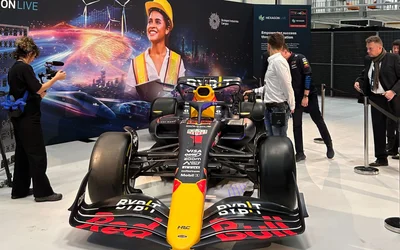
Wevolver was at the center of action during the Hexagon LIVE in Eindhoven, reporting live on cutting-edge tech and smarter manufacturing solutions, interviewing experts and exploring innovation in digital workflows, sustainability, and precision engineering. Watch the livestream on demand here!
In the final chapter of the Edge AI Technology Report: Generative AI Edition explores the technical hurdles organizations face as they attempt to leverage edge-based generative AI. It also examines strategic opportunities for innovation in hardware, deployment configurations, and security measures.
Researchers at Stanford Engineering have developed an AI-trained model to accurately recreate the hand movements of elite-level pianists and the physical stresses they endure while playing.

4 minutes read