


What if your next critical manufacturing project was halted by an unexpected supply chain disruption? In modern manufacturing, that is a constant risk. Staying on track requires agile sourcing, real-time coordination, and partners who can adapt when plans shift.
Be the first to know.
Get our manufacturing systems weekly email digest.
Tagged with
manufacturing systems
ORGANIZATIONS. SHAPING THE INDUSTRY.


READY Robotics
Robotics & Automation
READY Robotics is a robotics software company that vastly simplifies robot ...
24 Posts

polySpectra
Additive Manufacturing
We help innovative engineers 3D print end-use components they can trust usi...
12 Posts
Latest Posts

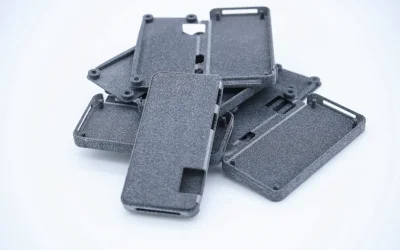
3D printing is no longer just a prototyping tool—it's a viable option for serial production. For small to mid-sized batches, especially where agility, customization, or geometric freedom matters, 3D printing can beat traditional methods like injection molding or CNC machining.

5 minutes read

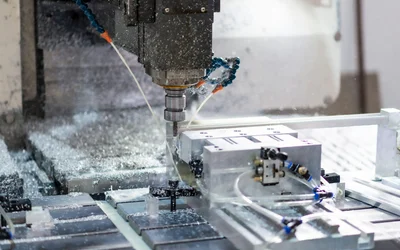
The future of electric vehicles (EVs) is growing rapidly, and their battery packs are a vital part of that growth. The components in EV battery packs require precision and durability this is what CNC machining delivers, with unmatched speed, accuracy, and performance.

2 minutes read

Learn how vacuum casting helps engineers and designers produce high-quality plastic parts fast—without investing in hard tooling. This article covers the process, material options, key design rules, and how it compares to 3D printing, CNC machining, and injection molding.
6 minutes read

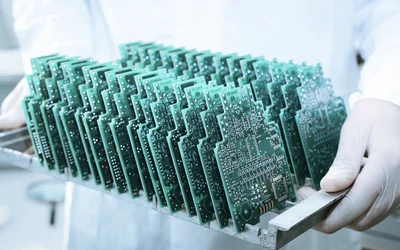
Are you looking to cut costs on PCB batch production without sacrificing quality? In this comprehensive guide, we'll walk you through proven strategies for PCB batch cost reduction, dive into PCB manufacturing cost analysis, and share tips for optimizing PCB production costs.
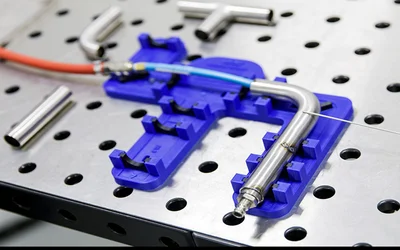
3D printing has revolutionized manufacturing processes, offering versatile solutions that enhance efficiency and precision. Among these advancements, 3D printed jigs and fixtures stand out as transformative tools.

7 minutes read
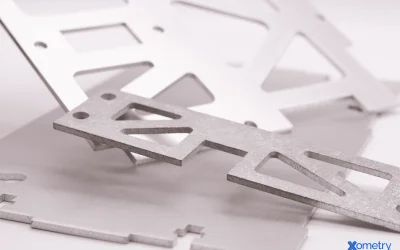
This guide explains the gauge system, provides conversion charts for various metals—including steel, aluminum, copper, and brass—and answers common questions about gauge limitations, corrosion resistance, and industry standards.
2 minutes read

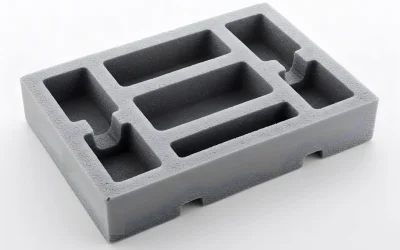
Foam injection molding enables the production of lightweight, durable components by integrating a cellular structure within thermoplastic materials. This process is particularly advantageous for applications requiring high strength-to-weight ratios, thermal insulation, and impact resistance.
7 minutes read

Many industries are turning to additive manufacturing (AM) - commonly known as 3D printing - as a smart, flexible solution. With 3D printing, companies can produce parts in-house and on demand, drastically reducing lead times and improving agility on the factory floor.
3 minutes read

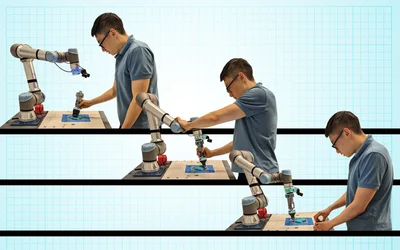
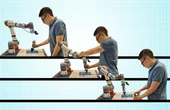
MIT engineers designed a versatile interface that allows users to teach robots new skills in intuitive ways.
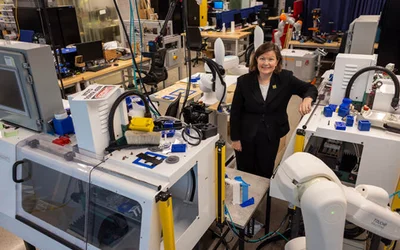
Focusing on precompetitive problems, such as enabling communication between digital twins, U-M and ASU are seeking industry partners for an NSF research center.

3 minutes read

Injection molding is a manufacturing process that is fast, reliable and cost-effective. Its importance in the electronics industry is so high because it brings efficiency in making plastic molded parts and there is uniformity in every product
2 minutes read

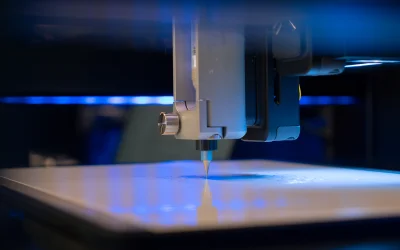
In this article, we will provide a brief overview of fluid dispensing systems, highlight their applications, discuss common challenges with the technology, and share an overview of NOVA, our materials dispensing system.

5 minutes read

Vision-driven, multi-arm robotics are set to transform the factory itself into a configurable product, capable of switching from one assembly task to the next with a software update instead of a hardware rebuild. Learn more now in our latest report.


The new MAESTRO by Hexagon is setting a new benchmark in CMM technology with its fast, user-friendly and fully connected design to meet the real-time demands of aerospace & defence manufacturer.