What Are Stepper Motors?
Stepper motors are named after their internal mechanism, which moves the motor shaft in precise, incremental steps, each representing a fixed rotation angle.

This article was first published on
www.rowse-pneumatics.co.ukThe angular position of the stepper motor shaft can be determined by counting the number of steps, eliminating the need for external sensors. This precise positioning capability makes stepper motors suitable for various industrial applications.
Stepper motors are ideal for transferring precise movements to mechanical components, as they divide a full rotation into smaller steps at fixed rotational increments. They are typically controlled digitally and serve as the primary components in an open-loop motion control positioning system.
Stepper motors are primarily used for tasks that require precise rotational positioning, high-speed control, or consistent torque.
How Does A Stepper Motor Work?
A stepper motor operates by converting electrical energy into precise rotational motion. It consists of a rotor, typically a permanent magnet, surrounded by stator windings arranged in discrete steps.
When electrical current flows through these windings in a specific sequence, the stator becomes magnetised, causing the rotor to move incrementally from one position to the next.
The motor is driven by a controller or driver, which sends a series of electrical pulses to the stator. Each pulse advances the rotor by one step, with the total rotation determined by the number of pulses sent. The speed of rotation is directly proportional to the frequency of these pulses, allowing for precise control of both position and speed.
Types Of Stepper Motors
There are various types of stepper motors designed for different applications. Selecting the right one depends on the requirements of the task:
Variable Stepper Motor
A variable reluctance stepper motor features a soft iron rotor and a stator with multiple teeth, each equipped with its own winding. When electrical current flows through these windings, it generates a magnetic field. As the magnetic field shifts from one stator tooth to the next in a controlled sequence, the rotor moves in smooth, incremental rotations.
VR stepper motors are known for their smooth motion, which significantly reduces noise and vibration and leads to more precise and reliable operation. One of their key advantages is the ability to deliver high torque at low speeds, making them suitable for demanding applications. As a result, VR stepper motors are commonly used in high-power systems such as robotics, CNC machines, and industrial equipment.
Hybrid Stepper Motor
Hybrid stepper motors combine the characteristics of both variable reluctance (VR) and permanent magnet (PM) stepper motors. Their hybrid design features a rotor similar to that of a PM motor and a stator resembling that of a VR motor, resulting in enhanced precision and torque.
Hybrid stepper motors can achieve even more precision with microstepping and half-stepping. The internal design of this motor has poles that are offset on two interleaved cups surrounding the permanent magnet rotor. This design enables less noise in operation, enhanced torque-to-size ratios and greater output speeds.
Bipolar Stepper Motor
Bipolar stepper motors house an onboard driver that utilises an H-bridge circuit to reverse the current flow through the motor's phases. By energising the phases and alternating the polarity, all coil windings are fully utilised to drive the motor efficiently. The coil windings are therefore more efficiently used in a bipolar motor when compared to a standard unipolar stepper motor, which uses just 50% of its winding coils at a particular time.
This feature renders bipolar stepper motors stronger and more efficient to operate; however, they are more complex and tend to be more expensive than unipolar motors.
What Is A Stepper Motor Used For?
Stepper motors have applications across the industrial and electronics industries. The following are some the best application for stepper motors:
3D printing: Stepper motors are commonly used with 3D printers because of their precision and cost-efficiency in translating digital scans to 3D objects. A key advantage is that they achieve high accuracy without the need for additional sensors or encoders. Most 3D printers use multiple stepper motors in the build platform and filament extruders to control movement and feed filament into the machine.
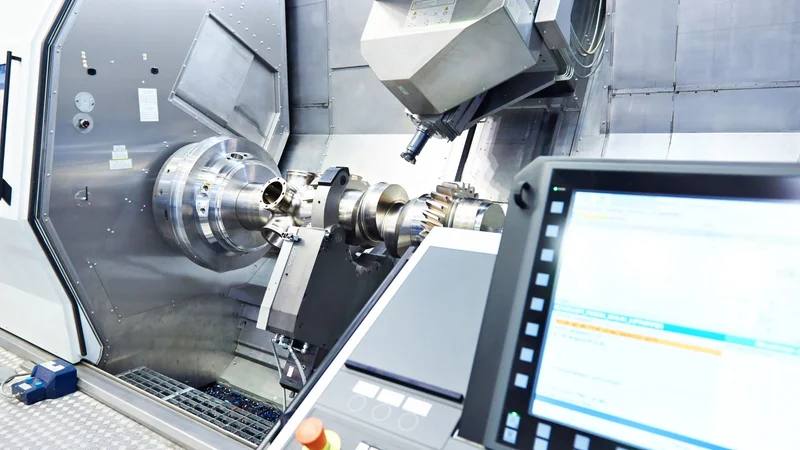
CNC machines: CNC machines have a range of applications in the manufacturing industry. They are controlled by pre-programmed computer software which controls the movement of the machine’s tools in factory environments. Stepper motors are often used as a cost-effective alternative to servo motors in powering CNC machines. Due to their lower cost, they are widely adopted in a variety of applications, ranging from industrial machines to consumer electronics like printers and desktop computers. In addition, stepper motors are less complex than servo motors because servo motors require an encoder, which is more susceptible to failure.
Cameras: High-end camera technologies incorporate stepper motors for precise control of internal mechanisms, including in-lens autofocus and aperture adjustments. They are also commonly used in the external mechanics of security cameras and surveillance systems, enabling accurate positioning. Stepper motors offer numerous advantages in surveillance systems. They have full torque (even at stationary positions), highly precise responses to movement commands, and consistent repeatability of pre-programmed motion patterns.
Robotics: Stepper motors are used in small robotics to control end effectors and robotic grips.
The Benefits Of Stepper Motors
Stepper motors function by rotating in controlled steps for the precise control of positioning and speed. They are easily integrated with microcontrollers and other digital control systems. In addition, their compact size and high torque-to-size ratio make them suited to applications where space is limited.
Given their features, they are used across industries, from pick and place machines and conveyor belts in industrial automation to consumer electronics and surveillance cameras.