Custom Anodizing Solutions That Strengthen and Elevate Your Machined Parts
Anodizing is a surface treatment that strengthens aluminum parts by turning the outer layer into a hard, protective coating.

09 Sep, 2025. 3 minutes read
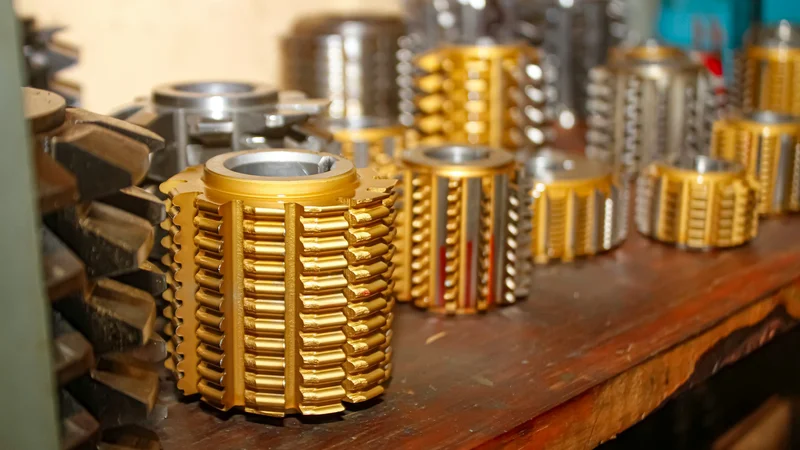
Photo by Guick on Unsplash
All metal parts are vulnerable to corrosion—it’s just chemistry. But you can greatly improve a part’s performance and lifespan in challenging environments with the right material choices and surface treatments.
One powerful solution for aluminum parts is anodizing. It's not just a surface coating—it actually changes the surface of the metal itself to make it stronger, more resistant, and longer lasting.
What Is Anodizing?
Anodizing is a surface treatment that strengthens aluminum parts by turning the outer layer into a hard, protective coating. Unlike traditional coatings that sit on top, anodizing modifies the metal itself, making it:
More resistant to corrosion, ideal for outdoor or high-humidity environments
Harder to wear down, perfectly for parts exposed to friction or frequent handling
Better looking, optional coloring adds a sleek, professional appearance
Electrically insulating, useful for parts near electronics or human contact
Whether you need durability, safety, or aesthetics, anodizing brings long-term value to your parts.
What’s Involved in the Anodizing Process?
Although anodizing relies on electrochemical reactions, the process itself is well controlled and practical. It typically includes:
Pre-cleaning
Parts are degreased, rinsed, and cleaned to remove oils, oxides, and contaminants.Etching
A light etching step may be used to smooth surfaces or remove alloy residues—ensuring a uniform finish.Anodizing (Electrochemical Oxidation)
Parts are submerged in an acid electrolyte and connected to a power supply. An electric current oxidizes the aluminum surface, forming a porous aluminum oxide layer.Coloring (Optional)
If desired, the porous surface absorbs dyes or inorganic colorants to achieve decorative or functional colors.Sealing
The oxide layer is sealed using hot water or chemicals to close the pores, improving corrosion resistance and preventing staining or fading.Neutralization & Final Rinse
A final rinse and neutralization step ensures no residual chemicals remain on the part surface.
The result: a durable, functional, and visually appealing part, ready for high-performance use.
Types of Anodizing: Understanding Anodizing Options
Type | Electrolyte | Layer Thickness | Key Features | Typical Applications |
Type I | Chromic acid | 2–7 μm | Thin, non-porous, good for fatigue-sensitive parts | Aerospace components |
Type II | Sulfuric acid | 5–25 μm | Decorative, supports coloring | Medical housings, consumer electronics |
Type III (Hard Anodizing) | Sulfuric acid | 25–150 μm | High hardness (up to 500 HV), excellent wear/corrosion resistance | Automation parts, mechanical components |
Phosphoric Anodizing | Phosphoric acid | Variable | Used for adhesive bonding in aerospace | Structural bonding prep |
Borate/Boric-Sulfuric | Borate-based | Similar to Type I | Environmentally friendlier alternative to chromic acid | Defense/aerospace sectors |
Why Choose RPWORLD for Anodizing?
At RPWORLD, precision and customization are at the heart of everything we do. Alongside our core on-demand manufacturing capabilities, we operate a dedicated in-house anodizing facility—ensuring your parts are manufactured and finished under one roof, with full process control and traceability.
Built for Customization
Every application is different—and so is every anodizing requirement. That’s why we offer a fully adaptable process to meet your functional, visual, and compliance needs.
We support your anodizing needs, including Type II and Type III, and can tailor the process to your standards:
Film thickness adjustments based on durability or electrical insulation requirements
Color choices aligned with product design or branding
Custom racking to protect critical features and improve coating consistency
Cleaning and inspection steps matched to your internal specifications
Adaptation to your documentation or testing criteria for traceability and compliance
Whether you're producing a small batch of prototypes or scaling up low-volume production, we ensure every part meets your exact expectations.
End-to-End Quality Assurance
With anodizing, machining, and inspection handled in-house, we eliminate handoffs and delays. Our lab supports a wide range of testing to verify surface performance and finish quality:
Film thickness measurement
Surface hardness testing (up to 500 HV for Type III)
Gloss and color consistency inspection
Salt spray and high-humidity resistance
UV and thermal aging tests
These capabilities allow us to validate both appearance and long-term reliability—before your parts ever leave our facility.
Looking for an end-to-end manufacturing partner that delivers both precision and protection? Talk to us today about custom anodizing solutions designed around your parts.