Featured
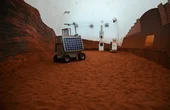
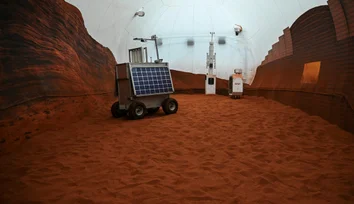
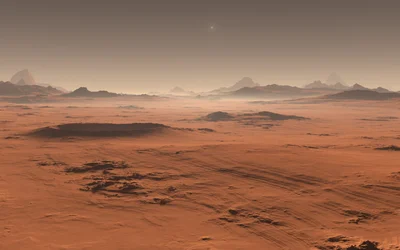
Humanity's drive to explore has taken us across the solar system, with astronaut boots, various landers and rovers' wheels exploring the surfaces of several different planetary bodies.

This white paper explains how precision timing solutions support reliable PNT architectures across aerospace, defense, and industrial systems.
Humanity's drive to explore has taken us across the solar system, with astronaut boots, various landers and rovers' wheels exploring the surfaces of several different planetary bodies.
Learn more about the engineering considerations for integrating NTN capabilities into IoT devices, covering the trade-offs of remote reporting, fallback connectivity, and continuous satellite use.
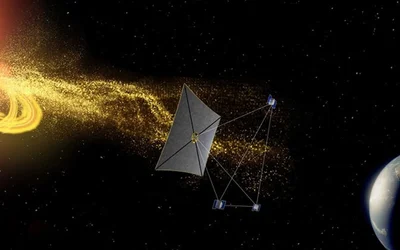
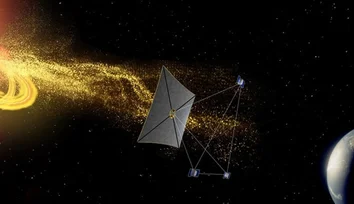
A spacecraft that sails on light could provide new vantage point on solar eruptions that can disrupt modern electrical and navigation systems.
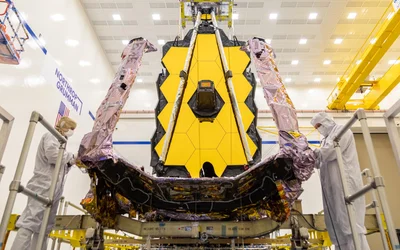
James Webb Space Telescope aims to take us to the unexplored realm of our cosmic origins. From observing the formation of the first stars and galaxies to looking for the possibility of life on other planets, the telescope will play a major role in the future of space exploration.

Nuclear fusion reactors
PULSAR Fusion develops and manufactures components for use in Nuclear Fusio...
1 Post
James Webb Space Telescope aims to take us to the unexplored realm of our cosmic origins. From observing the formation of the first stars and galaxies to looking for the possibility of life on other planets, the telescope will play a major role in the future of space exploration.
HEAD acoustics helps aerospace teams move from complex rotor noise to actionable, human-centered design decisions.
Humanity's drive to explore has taken us across the solar system, with astronaut boots, various landers and rovers' wheels exploring the surfaces of several different planetary bodies.
A spacecraft that sails on light could provide new vantage point on solar eruptions that can disrupt modern electrical and navigation systems.
In space, maintenance isn't possible, so satellites must operate reliably for their entire mission. This makes fault detection, isolation, and recovery (FDIR) a critical requirement in satellite design.
Humanity's drive to explore has taken us across the solar system, with astronaut boots, various landers and rovers' wheels exploring the surfaces of several different planetary bodies.

6 minutes read
Learn more about the engineering considerations for integrating NTN capabilities into IoT devices, covering the trade-offs of remote reporting, fallback connectivity, and continuous satellite use.
A spacecraft that sails on light could provide new vantage point on solar eruptions that can disrupt modern electrical and navigation systems.

5 minutes read
In space, maintenance isn't possible, so satellites must operate reliably for their entire mission. This makes fault detection, isolation, and recovery (FDIR) a critical requirement in satellite design.
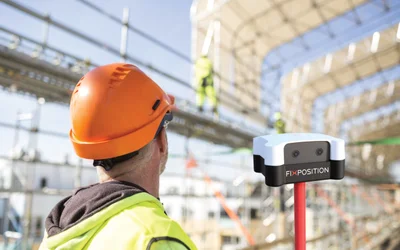
Discover how Fixposition's Vision-RTK Pro overcomes GNSS-challenged environments by fusing computer vision, GNSS, and IMU technology to deliver reliable centimeter-level accuracy for surveyors and mapping professionals.
Small devices can loft into mesosphere for climate sensing

4 minutes read
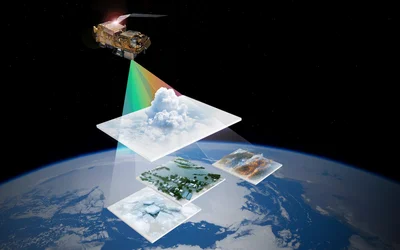
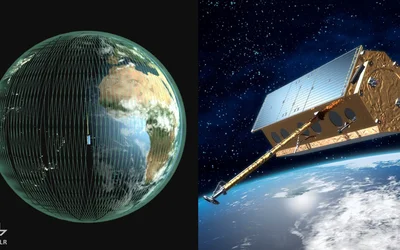
METimage will deliver highly accurate global measurements of clouds, water vapour and aerosols, land- and sea-surface temperatures, ice cover, vegetation and wildfires.
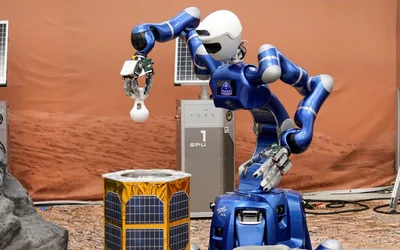
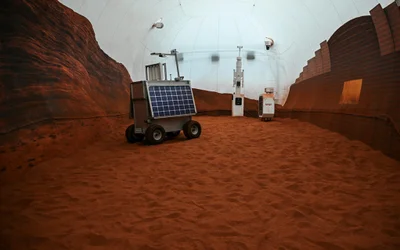
On 24 July, the Surface Avatar team carried out the final and most challenging experiment of the campaign to date. Astronaut Jonny Kim, aboard the Space Station, took command of the intelligent robot team on the ground, which helped him safely explore the 'Martian landscape' and collect samples

6 minutes read
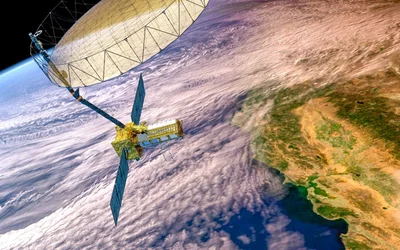
When the NASA-ISRO SAR satellite launches into orbit on July 30, it will ping nearly all of the planet's land and ice surfaces with a form of imaging called synthetic aperture radar twice every 12 days.

4 minutes read
Researchers are testing a virtual assistant that may help astronauts solve unexpected problems during space travel.

3 minutes read
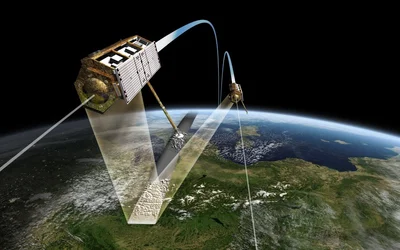
The German radar satellite TerraSAR-X will complete its 100,000th Earth orbit on 26 June 2025.
3 minutes read
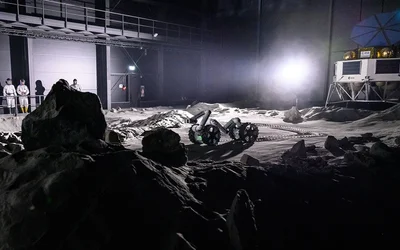
In recent days, rovers from Japan's Tohoku University have driven across LUNA's 'moon dust'. The robots, developed to operate and adapt using artificial intelligence (AI), have practised picking up stones, navigating independently and assembling themselves into larger robotic units.
5 minutes read
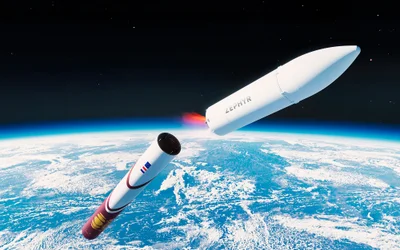
French company leverages AdaCore's tools, training, and mentorship services to produce flight software for small satellite launchers
In this episode, we explore how the simple act of popcorn popping inspired researchers at Carnegie Mellon University to revolutionize the synthesis of MXenes—a class of 2D materials known for their radiation shielding properties.

11 minutes read
One of the goals of building the Mars Rover is to demonstrate SPARK. As an early step, Fabien introduced a new hardware abstraction layer (HAL) on top of the existing HALs that had been developed for the various pieces of hardware that make up the Mars Rover.