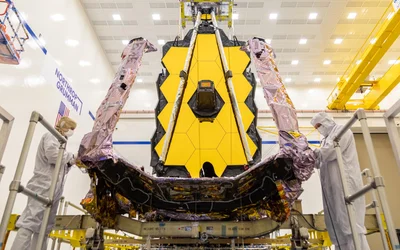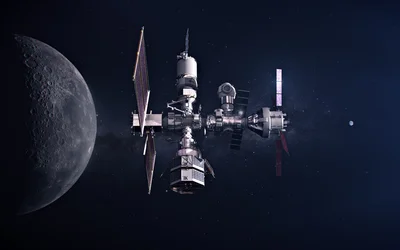
James Webb Space Telescope aims to take us to the unexplored realm of our cosmic origins. From observing the formation of the first stars and galaxies to looking for the possibility of life on other planets, the telescope will play a major role in the future of space exploration.


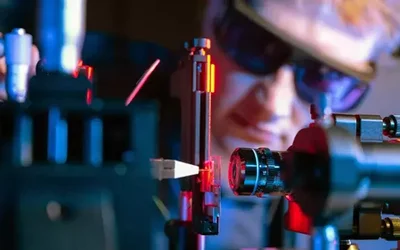
Humanity's drive to explore has taken us across the solar system, with astronaut boots, various landers and rovers' wheels exploring the surfaces of several different planetary bodies.
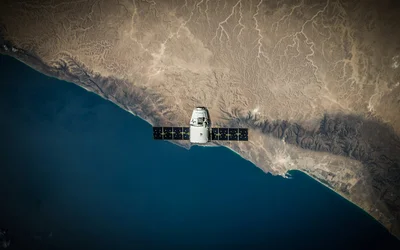
In space, maintenance isn't possible, so satellites must operate reliably for their entire mission. This makes fault detection, isolation, and recovery (FDIR) a critical requirement in satellite design.
A research team from EPFL and Wageningen University has developed a new artificial intelligence model that recognises floating plastics much more accurately in satellite images than before. This could help to systematically remove plastic litter from the oceans with ships.
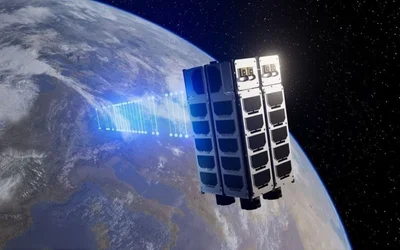
Small satellites are becoming increasingly compact and powerful. The technology of conventional radio channels is reaching its limits due to the rising number of satellites.
Students from the University of Applied Sciences Northwestern Switzerland (FHNW) build a functional Mars rover using SLS 3D printed parts and take 6th place at the European Mars Rover Challenge (ERC) in Poland.
In this episode, we embark on a journey to the red planet and unveil the remarkable success of the NASA JPL MOXIE (Mars Oxygen In-Situ Resource Utilization Experiment) mission on Mars.
MOXIE successfully turned Martian carbon dioxide into usable oxygen – a monumental achievement with even bigger implications for the future of space exploration
See how the student group from Technical University of Munich reached an altitude of nearly 13 kilometers with their rocket launched in the US. Some key components were made by MakerVerse, the on-demand manufacturing platform for industrial-quality parts.
In this episode, we discuss the fascinating world of bioinspired robotics. Discover how researchers have created versatile robots inspired by nature's flight, rolling, and walking abilities.
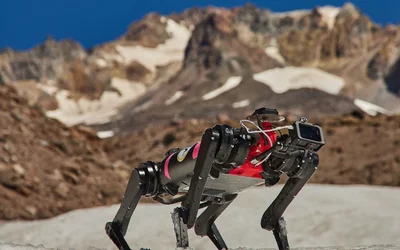
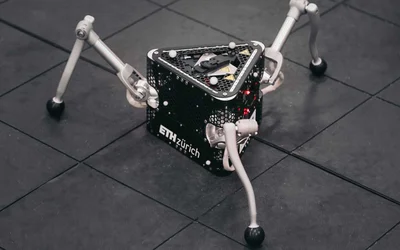
Swiss engineers are training legged robots for future lunar missions that will search for minerals and raw materials. To ensure that the robots can continue to work even if one of them malfunctions, the researchers are teaching them teamwork.
Caracol has introduced Wire Arc Additive Manufacturing to explore how to manufacture advanced applications such as space vehicles, leveraging the benefits of AM and robotics. This project enabled the production of propulsion tanks for CubeSat carrier space vehicles,
In this episode, we talk about a new satellite system from NASA that leverages technologies used in other missions to accomplish the same performance that has been delivered by heritage satellites but smaller and less complex while also being a fraction of the cost.
In places across the U.S., tree cover is shrinking – forests are burned by wildfires on the West Coast and drowned by rising sea levels along the East. From the ground, it’s hard to assess the scale of the losses and the effects disappearing trees have on atmospheric carbon dioxide levels and climate change.
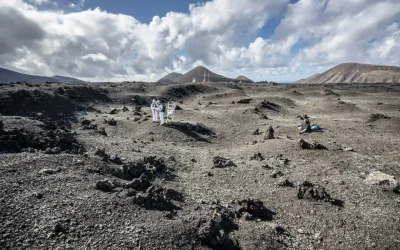
As potential locations for future base camps, the lava caves on the moon are of great interest. But how can they be reached and explored? This has been investigated by a European consortium coordinated by the German Research Center for Artificial Intelligence (DFKI) in the project CoRob-X