Featured
Explore the future of connected communities in intelligent cities and underserved regions, highlighting the role of technologies like 5G, AI, and blockchain in enhancing connectivity and promoting inclusive development.

Explore the future of connected communities in intelligent cities and underserved regions, highlighting the role of technologies like 5G, AI, and blockchain in enhancing connectivity and promoting inclusive development.
Explore the future of connected communities in intelligent cities and underserved regions, highlighting the role of technologies like 5G, AI, and blockchain in enhancing connectivity and promoting inclusive development.
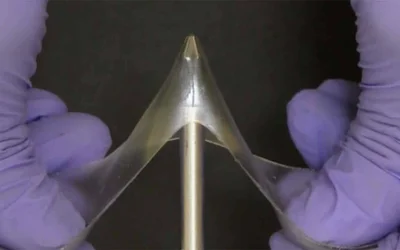
Researchers have created a new class of materials called “glassy gels” that are very hard and difficult to break despite containing more than 50% liquid. Coupled with the fact that glassy gels are simple to produce, the material holds promise for a variety of applications.
Combining a deep curiosity and “recreational biology,” Stanford researchers have discovered how a simple cell produces remarkably complex behavior, all without a nervous system. It’s origami, they say.
Explore AMD's Zynq UltraScale+ MPSoC and RFSoC for 5G, ADAS, and embedded applications.
16 minutes read.
12 minutes read.

Additive Manufacturing
The ever growing need for precise micro-parts is restricted by current tech...
1 Post

Machinery Manufacturing
We Are Giving Human Materials the Superpowers of Nature Using Lasers
1 Post

Explore AMD's Zynq UltraScale+ MPSoC and RFSoC for 5G, ADAS, and embedded applications.
Discover how wireless technologies like 5G, LoRa, Wi-Fi, and Zigbee are transforming industrial automation by enabling flexible, scalable, and cost-efficient connectivity.
Discover how 5G RedCap enables cost-efficient, low-power connectivity for industrial gateways and rugged IoT, bridging the gap between LTE and full 5G performance.
New System Strengthens Security for the Biotech Industry
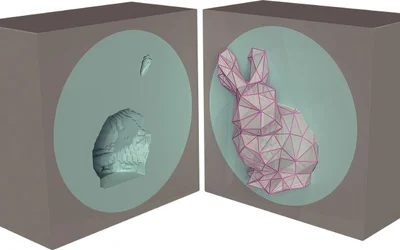
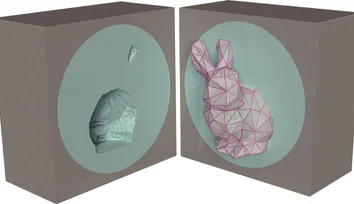
Whether designing a window in an airliner or a cable conduit for an engine, manufacturers devote a lot of effort to reinforcing openings for structural integrity. But the reinforcement is rarely perfect and often creates structural weaknesses elsewhere.
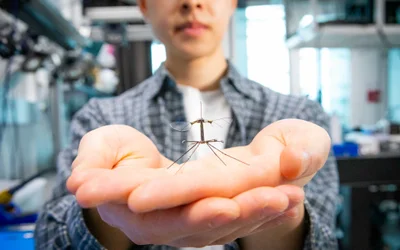
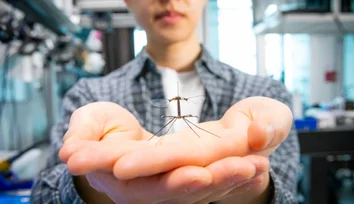
Microrobot gets crane fly-inspired legs for soft touchdowns
Explore the future of connected communities in intelligent cities and underserved regions, highlighting the role of technologies like 5G, AI, and blockchain in enhancing connectivity and promoting inclusive development.
Researchers have created a new class of materials called “glassy gels” that are very hard and difficult to break despite containing more than 50% liquid. Coupled with the fact that glassy gels are simple to produce, the material holds promise for a variety of applications.

3 minutes read
Combining a deep curiosity and “recreational biology,” Stanford researchers have discovered how a simple cell produces remarkably complex behavior, all without a nervous system. It’s origami, they say.

4 minutes read
The work could lead to ultra-efficient electronics and more.
The future of data, Edge Data Center, is equivalent to a mini data centre. Its proximity to enterprises eliminates latency and other limitations, giving access to real-time data. In this article, we will delve into its core concepts, advancements, operational challenges, and real-time applications.
Smaller than a coin, this optical device could enable rapid prototyping on the go.
In this episode, discuss how big of a problem lead contaminated water still is across the world and how a collaboration between MIT & Nanyang University plans to tackle it with a highly accurate and inexpensive water pollution sensor.

16 minutes read
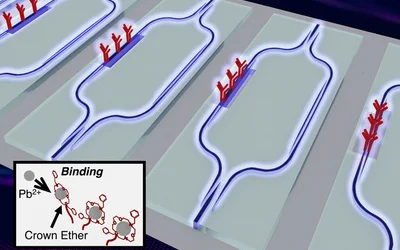
The chip-scale device could provide sensitive detection of lead levels in drinking water, whose toxicity affects 240 million people worldwide.
Using an ultrasensitive photonic crystal, TU/e researchers were able to detect single particles down to 50 nanometers in diameter. The new research has just been published in the journal Optica.

4 minutes read
In this episode, we discuss research coming out of George Mason University which could provide an affordable and accessible way to get clean water using spent coffee grounds as a filter!
15 minutes read
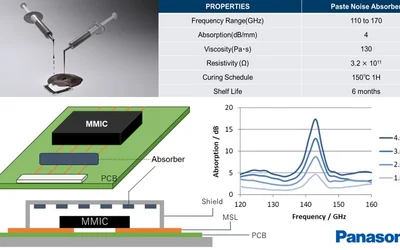
Properties and application of paste technology for noise reduction in high frequency (110-170 GHz) electronic devices and packaging . This is a dispensable material can be easily installed in narrow spaces, suppressing noise inside electronic devices used in beyond 5G/6G

Innovative wire mesh filters set new standards in medical technology, where smooth processes mean the difference between life and death. The same is true for the chemical industry. Here, filtration components must function perfectly even under extreme conditions and in contact with corrosive media.

3 minutes read
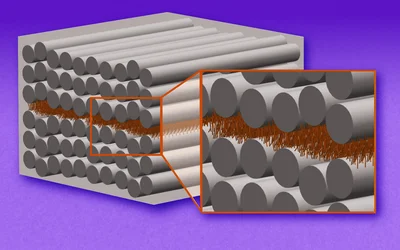
In research that may lead to next-generation airplanes and spacecraft, MIT engineers used carbon nanotubes to prevent cracking in multilayered composites.
How George Mason University's Nanotechnology Research Is Turning Waste From Your Daily Brew into a Powerful Pollution Solution
Digital quantum simulations can be used to solve problems in solid-state research, for example conductivity, magnetism or superconductivity.

3 minutes read