Featured
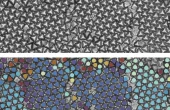
Stanford materials engineers have 3D printed tens of thousands of hard-to-manufacture nanoparticles long predicted to yield promising new materials that change form in an instant.
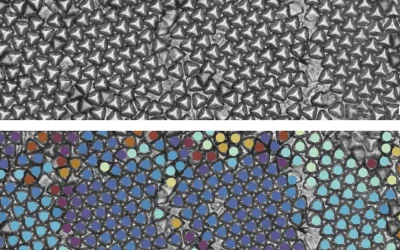
Stanford materials engineers have 3D printed tens of thousands of hard-to-manufacture nanoparticles long predicted to yield promising new materials that change form in an instant.
Stanford materials engineers have 3D printed tens of thousands of hard-to-manufacture nanoparticles long predicted to yield promising new materials that change form in an instant.
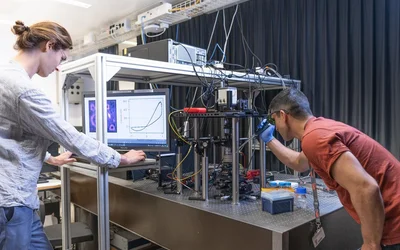
In a step toward nanofluidic-based neuromorphic – or brain-inspired – computing, EPFL engineers have succeeded in executing a logic operation by connecting two chips that use ions, rather than electrons, to process data.
In the future, the IoT will become ubiquitous with billions or even trillions of ‘things’ connected to the Cloud. These things aren’t just the PCs, servers, smart TVs, and smartphones traditionally associated with the Internet, they’re also small sensors and actuators
Explore AMD's Zynq UltraScale+ MPSoC and RFSoC for 5G, ADAS, and embedded applications.
16 minutes read.
12 minutes read.

Additive Manufacturing
The ever growing need for precise micro-parts is restricted by current tech...
1 Post

Machinery Manufacturing
We Are Giving Human Materials the Superpowers of Nature Using Lasers
1 Post

Explore AMD's Zynq UltraScale+ MPSoC and RFSoC for 5G, ADAS, and embedded applications.
Discover how wireless technologies like 5G, LoRa, Wi-Fi, and Zigbee are transforming industrial automation by enabling flexible, scalable, and cost-efficient connectivity.
Discover how 5G RedCap enables cost-efficient, low-power connectivity for industrial gateways and rugged IoT, bridging the gap between LTE and full 5G performance.
New System Strengthens Security for the Biotech Industry
Whether designing a window in an airliner or a cable conduit for an engine, manufacturers devote a lot of effort to reinforcing openings for structural integrity. But the reinforcement is rarely perfect and often creates structural weaknesses elsewhere.
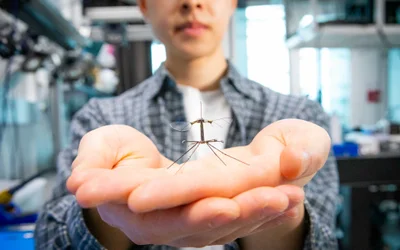
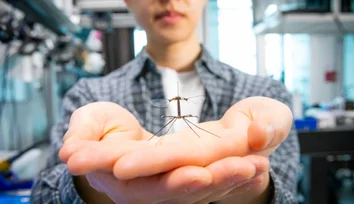
Microrobot gets crane fly-inspired legs for soft touchdowns
Stanford materials engineers have 3D printed tens of thousands of hard-to-manufacture nanoparticles long predicted to yield promising new materials that change form in an instant.

3 minutes read
In a step toward nanofluidic-based neuromorphic – or brain-inspired – computing, EPFL engineers have succeeded in executing a logic operation by connecting two chips that use ions, rather than electrons, to process data.

3 minutes read
In the future, the IoT will become ubiquitous with billions or even trillions of ‘things’ connected to the Cloud. These things aren’t just the PCs, servers, smart TVs, and smartphones traditionally associated with the Internet, they’re also small sensors and actuators

4 minutes read
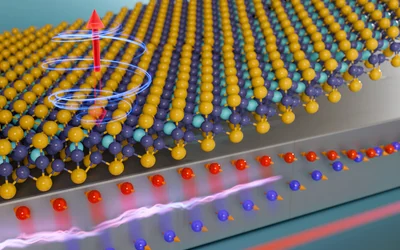
An MIT team precisely controlled an ultrathin magnet at room temperature, which could enable faster, more efficient processors and computer memories.
Rechargeable batteries are an important part of many modern-day technologies. Researchers, manufacturers and end-user companies are always looking to improve the efficiencies of batteries, making them safer, smaller, and more lightweight to fit in the requirements of new technologies

4 minutes read
Nanorobotics is the next step in creating life-changing technology for the medical industry. These microscopic robots will be able to travel and think autonomously to find and fix health issues in the body.
4 minutes read
The researchers developed a light-based means of printing nano-sized metal structures that is 480 times faster and 35 times cheaper than the current conventional method.

3 minutes read
Advanced chips are critical in unlocking unparalleled speed, connectivity, and efficiency in modern telecommunications.
Columbia Engineers pair vibrating particles, called phonons, with particles of light, called photons, to enhance the nonlinear optical properties of hexagonal boron nitride. The finding could lead to new ways of using light to modify materials. Learn more.

The work demonstrates control over key properties leading to better performance.
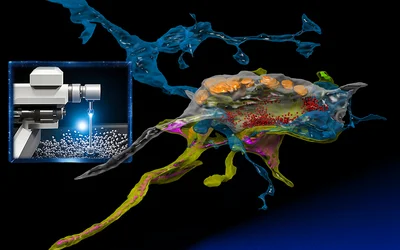
In this episode, we talk all about connectomics - the study of animal brains - and how researchers at MIT have started leveraging AI to break through the primary bottleneck: brain image acquisition.

18 minutes read
Developed by EPFL researchers, the first large-scale in-memory processor using 2D semiconductor materials could substantially cut the ICT sector’s energy footprint.
4 minutes read
Taking inspiration from the word-predicting large language models, a U-M team is kickstarting an atom-predicting model with 200,000 node hours on Argonne’s Polaris.

3 minutes read
MIT CSAIL researchers combine AI and electron microscopy to expedite detailed brain network mapping, aiming to enhance connectomics research and clinical pathology.
I've argued before that the IoT is more than hype. In fact, there is no question today that the IoT has gone mainstream.
5 minutes read